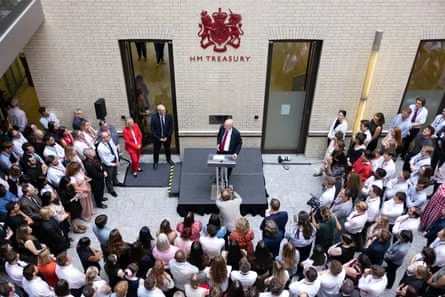
John Healey, the veteran lawmaker known for his relentless work ethic and cross-factional appeal, has been appointed Chancellor of the Exchequer by newly minted Prime Minister Andy Burnham in a move that signals a strategic shift for the British government. The appointment, confirmed Monday during Burnham’s first day at 10 Downing Street, marks a significant promotion for Healey, who previously served as the nation’s defense secretary.
The selection of Healey is being viewed by political analysts as a stabilizing measure for a party that has recently weathered internal turmoil. While Healey is often characterized by his colleagues as a diligent administrator—frequently seen working at a desk tethered to the floor of military transport planes during foreign trips—his elevation to the Treasury brings immediate questions regarding his fiscal philosophy. As the nation faces a precarious economic landscape, observers are questioning whether Healey will act as a disciplined fiscal hawk or lean into the "big spender" tendencies some critics associated with his previous cabinet tenure.
The Strategic Choice of Andy Burnham
Prime Minister Andy Burnham’s decision to tap Healey for the most powerful role in the cabinet was largely unexpected. Healey replaces Rachel Reeves, who had maintained a strict "iron discipline" over the nation’s finances. Burnham’s allies suggest that Healey was chosen because of a shared ideological commitment to re-industrialization and the aggressive devolution of power from London to regional hubs.
The appointment follows a period of intense internal friction within the Labour Party, characterized by what insiders described as a "vicious briefing war" between supporters of various candidates. In this context, Healey emerged as a "safe choice." He is perceived as a figure who can unify a fractured parliamentary party without triggering a negative reaction from international financial markets, which remain sensitive to any sign of fiscal instability in the United Kingdom.
However, the transition from defense to the Treasury is not merely a change in scenery. Healey is now the primary architect of an economic plan that must balance Burnham’s ambitious social promises with the reality of limited tax revenue.
A History of Diligence and Independent Thinking
Healey’s reputation for meticulousness is well-documented. During his time at the Ministry of Defence, he was known for immersing himself in the minutiae of policy papers, even while traveling between global hotspots. This diligence was a primary factor in Burnham’s decision, as the new Prime Minister seeks to project an image of a government that is both serious and focused on delivery.
Despite his reputation as a "factotum" or a loyalist, those close to the new Chancellor warn that he possesses a strong ideological streak. Comparisons have been drawn to the relationship between former Prime Minister Gordon Brown and his Chancellor, Alistair Darling. While Darling was initially expected to be a placeholder who would follow orders from the Prime Minister’s office, he eventually asserted his independence, leading to notable policy disagreements.
"There is a risk that Downing Street views John as someone who will simply execute the Prime Minister’s will," noted one senior official. "But Healey has been in the room for decades. He has his own views on how the economy should function, and he is not afraid to push back when he believes a policy is unfunded or impractical."
The Defense Spending Controversy: Fiscal Hawk or Big Spender?
The most significant debate surrounding Healey’s appointment stems from his recent tenure as defense secretary. During that time, he earned a reputation as a staunch ally of the armed forces, prioritizing the modernization of military housing and the expansion of the UK’s strategic capabilities.
The controversy began when Healey requested an additional £28 billion ($35 billion) to fund the Defence Investment Plan (DIP). This request came just months after he had negotiated a multi-year budget, a move that reportedly infuriated his predecessor at the Treasury. Critics argued that Healey had been "hoodwinked" by military chiefs into overcommitting resources, while his supporters insisted the extra funding was necessary to meet the geopolitical challenges posed by conflicts in Ukraine and the Gulf.
One former government official suggested that Healey’s actions during the defense budget row reveal his true colors. "He is definitely not a fiscal hawk or even a firm hand on the tiller as he’s being portrayed by some," the official said. "When presented with a choice between austerity and investment, he chose the latter. He is a big spender."

Navigating the "Fiscal Straitjacket"
As Chancellor, Healey now faces the challenge of funding a wide array of campaign promises within a rigid set of fiscal rules. Prime Minister Burnham has pledged not to raise income tax, Value Added Tax (VAT), or National Insurance. Furthermore, the new administration has committed to sticking to the borrowing rules established by the previous government.
This creates what economists call a "fiscal straitjacket." Healey must find the capital to fund:
- Higher defense spending to meet NATO commitments.
- The transition of major utilities into public control.
- A comprehensive plan to reduce the cost of living for struggling households.
- The "re-industrialization" of the North and Midlands.
The tension between these goals and the self-imposed tax limits will be the defining feature of Healey’s first budget. If he fails to find new revenue streams or efficiency savings, he may be forced to choose between breaking campaign promises or allowing the national debt to rise—a move that would test his standing with fiscal conservatives.
A Unifying Figure in a Divided Party
One of Healey’s greatest assets is his ability to maintain relationships across the ideological spectrum of the Labour Party. Since entering Parliament in 1997, he has avoided becoming a permanent member of any single faction. He served in the Treasury for five years under Gordon Brown but maintained the respect of the Blairite wing of the party.
More recently, he acted as a bridge between the centrist allies of former Prime Minister Keir Starmer and the "soft left" members who were instrumental in Burnham’s rise to power. His personal warmth and ability to remember the names and personal details of junior staffers have made him a popular figure in Westminster.
David Walker, the Bishop of Manchester and a longtime observer of Healey’s career, noted that the Chancellor’s commitment to his local community in Wentworth has been a cornerstone of his political identity. "John was always committed to putting down roots and showing up for the community, even when he was busy with national politics," Walker said. This "man of the people" image may help him sell difficult economic decisions to the public.
Adjudicating the Future of UK Policy
The coming months will test whether Healey can maintain his popularity while serving as the government’s chief "no-man." As Chancellor, he must adjudicate the competing demands of various government departments, many of which are led by ambitious ministers seeking to make their mark.
Wes Streeting, who replaced Healey as defense secretary, has already signaled that the military will continue to seek additional resources, though he acknowledged that "sacrifices" would be required from other departments. Healey now finds himself on the other side of that negotiation.
The central question remains: when a fellow minister approaches the Treasury with a plea for emergency funding—much like Healey did himself just months ago—will the new Chancellor loosen the purse strings, or will he enforce the discipline he once fought against?
Market Reactions and Global Implications
Global markets have reacted cautiously to Healey’s appointment. While his experience is seen as a plus, the uncertainty regarding the "fiscal hawk or big spender" debate has kept investors on edge. The UK economy continues to grapple with stagnant growth and high interest rates, leaving little room for error.
International partners, particularly in Washington and Brussels, will be watching closely to see how Healey handles the defense budget. His previous resignation in protest of defense cuts suggests he will prioritize security, but his new role requires a broader view of national stability.
As John Healey takes his seat at the center of the UK’s financial power, the transition from a focused department head to the nation’s economic steward is complete. Whether he becomes a transformative figure who reshapes the British economy or a cautionary tale of a minister trapped by conflicting loyalties will depend on his first 100 days in office. For now, the "safe choice" faces the most dangerous economic environment in a generation.