The Trump administration’s decision to impose sweeping new tariffs on 85 countries has ignited a firestorm of opposition on Capitol Hill, with leading Democrats and international trade partners characterizing the move as a strategic bypass of the U.S. legal system. U.S. Trade Representative Jamieson Greer announced the measures on Thursday, citing a failure by these nations to effectively combat forced labor, but critics quickly dismissed the human rights justification as a legal "sham" intended to resurrect a trade policy previously invalidated by the judiciary.
The newly announced duties target a vast array of economies, ranging from major allies like Australia, Canada, and the United Kingdom to adversaries such as Russia and China. This move represents the latest escalation in a multi-year trade conflict that has seen the executive branch testing the limits of its authority over international commerce. As the administration prepares to implement these taxes, the political and economic ramifications are rippling through global markets and the halls of Congress.
The Legal Battle Over Global Trade Authority
The core of the controversy lies in the administration’s use of Section 301 of the Trade Act of 1974 to justify the new levies. This follows a significant setback for the White House earlier this year when the U.S. Supreme Court struck down the so-called "Liberation Day" tariffs. Those previous duties, which ranged from 10% to 50%, had been imposed under national emergency laws that the high court ruled did not apply to the administration’s broad trade objectives.

In response to that judicial defeat, President Trump initially implemented a temporary 10% global tariff for a 150-day period. With that temporary measure set to expire this Friday, the administration pivoted to the forced labor justification as a new legal footing. By framing the tariffs as a response to human rights abuses rather than a national security emergency, the White House is attempting to utilize a different set of statutory powers that may be more difficult for the courts to immediately enjoin.
Lawmakers were quick to identify what they view as a pattern of executive overreach. Democrats criticize Trump’s new tariffs as ‘end-run around the supreme court and Congress,’ arguing that the administration is simply rebranding its protectionist agenda to evade the recent Supreme Court ruling. Representative Linda Sánchez, a California Democrat, was among the first to denounce the pretext, stating that the administration is not serious about human rights but is instead focused on reimposing "illegal tariffs" through a "sham" investigation.
Allegations of Selective Enforcement and Political Pretext
The credibility of the forced labor justification has come under intense scrutiny due to the perceived inconsistency of its application. Critics have pointed out that the 12.5% tariff rate applies equally to countries with vastly different human rights records. For instance, Australia, which has some of the world’s most stringent modern slavery legislation, is being penalized at the same rate as nations with documented systemic labor abuses.
Representative Sánchez noted the irony in the administration’s targeting of allies, suggesting that the policy is more about punishing countries that do not align with the president’s personal or corporate interests. "If he was serious, he would not be applying the same tariff rate to China, one of the worst forced labor abusers in the world, as he does to countries like Australia," Sánchez said. She further alleged that the administration has historically gutted funding for the Bureau of International Labor Affairs, the very agency tasked with combating global forced labor.

Furthermore, the timing of the announcement has raised eyebrows among trade experts. Matthew Holmes, chief of public policy for the Canadian Chamber of Commerce, noted that the sudden imposition of tariffs occurred just 24 hours before previous duties were scheduled to sunset. He argued that if the goal were truly to address labor conditions, the U.S. would seek a coordinated, multilateral approach rather than unilateral taxes that target close trading partners who already have formal prohibitions on forced labor in place.
International Backlash and Retaliatory Measures
The global response to the U.S. announcement was swift and defiant. Brazil, facing a 12.5% tariff, rejected the claims of labor enforcement failure as "completely arbitrary and unjustified." The government of President Luiz Inácio Lula da Silva announced that it would immediately begin the process of imposing retaliatory tariffs on American goods. Brazilian officials argued that the Trump administration is manipulating human rights issues to provide a legal veneer for a protectionist trade policy that lacks a domestic legal basis.
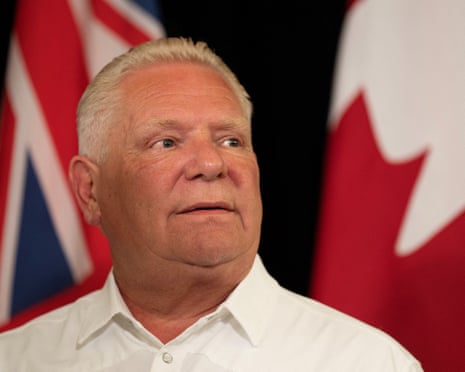
In Canada, Prime Minister Mark Carney informed reporters that "everything is on the table" regarding a potential response. The Canadian government emphasized its role as a global leader in supply chain transparency and indicated it would take all necessary steps to protect its workers and businesses. Ontario Premier Doug Ford offered a more blunt assessment, describing the difficulty of negotiating with a White House that "changes its mind every single day." Ford’s comments highlighted the growing frustration among North American allies over the volatility of U.S. trade policy.
In Mexico, President Claudia Sheinbaum took a more measured approach, choosing not to mention the new tariffs publicly following a meeting with U.S. Trade Representative Jamieson Greer. Instead, her office focused on the ongoing review of the United States-Mexico-Canada Agreement (USMCA). However, the underlying tension remains high, as Mexico remains one of the largest exporters to the U.S. and would be significantly impacted by a sustained tariff regime.
Broader Geopolitical Tensions: The Iran War and Saudi Nuclear Deal
The tariff announcement comes amid a backdrop of significant geopolitical instability, particularly regarding the ongoing conflict with Iran, referred to by the Pentagon as Operation Epic Fury. The administration’s trade moves are occurring simultaneously with a domestic debate over war powers. The U.S. House of Representatives recently passed a war powers resolution to curb military action in Iran, though a similar measure failed in the Senate.
The administration’s focus on "moral suasion" in trade also stands in stark contrast to its recent diplomatic maneuvers. Just one day before the tariffs were announced, the U.S. signed a landmark nuclear cooperation agreement with Saudi Arabia. Human rights organizations have long criticized the kingdom for its own record on labor rights and migrant worker abuses. White House Press Secretary Karoline Leavitt clarified on Thursday that the nuclear deal is "contingent" on Saudi Arabia joining the Abraham Accords, adding another layer of complexity to the administration’s Middle East strategy.
Domestic critics have seized on these contradictions, arguing that the administration is using "human rights" as a weapon against trade partners while ignoring similar issues in nations where it seeks strategic military or energy partnerships. This perceived hypocrisy has fueled the argument that the 85-country tariff list is a tool of political leverage rather than a genuine effort to reform global labor standards.
Legislative Deadlock and the NDAA
The domestic political landscape is further complicated by the $1.15 trillion National Defense Authorization Act (NDAA), which recently passed the House in a near-party-line vote. The bill has become a lightning rod for controversy because it includes the "Save America Act," a piece of legislation backed by the president that would impose strict new voter ID requirements and ban mail-in ballots.
Democrats have slammed the inclusion of voter ID measures in a defense bill, with House Minority Leader Chuck Schumer calling the legislation "dead on arrival" in the Senate. The intersection of defense spending, election law, and trade policy has created a legislative logjam. While the administration seeks supplemental funding for the war in Iran, it is simultaneously fighting a trade war on 85 fronts and a domestic political battle over the integrity of the upcoming elections.
Economic Impact and the "National Sales Tax"
For the American public, the most immediate concern remains the potential for rising costs. Representative Brendan Boyle, a Democrat from Pennsylvania, characterized the new tariffs as a "nationwide sales tax" that will disproportionately affect working-class families. Economists warn that broad-based tariffs on 85 countries will inevitably lead to higher prices for consumer goods, electronics, and raw materials, potentially fueling inflation just as the economy seeks stability.
The administration, however, remains committed to its course. Jamieson Greer argued that the U.S. has had a forced labor import ban for nearly a century and that it is "well past time" for trading partners to adhere to similar standards. He maintained that the action would ultimately improve the welfare of workers everywhere by correcting "distortive trade practices."
As the Friday deadline for the implementation of the new tariffs approaches, the international community and the U.S. Congress remain on high alert. With retaliatory measures already being drafted in world capitals and legal challenges expected in U.S. courts, the battle over the administration’s trade authority is far from over. The coming weeks will determine whether this "end-run" around the traditional levers of power will succeed or if it will be dismantled by the same judicial and legislative forces the White House is seeking to bypass.