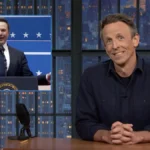
Desi Lydic, serving as the host of Comedy Central’s The Daily Show, utilized a significant portion of her recent broadcast to scrutinize comments made by former President Donald Trump during a high-profile campaign appearance in Georgia. The segment focused on Trump’s reaction to media inquiries regarding his immediate economic strategy, specifically his response to being asked how he would mitigate the rising cost of living from the moment he resumes office. Lydic’s commentary highlighted a perceived disconnect between the former president’s campaign promises and his apparent reluctance to commit to the immediate labor of governance.
The catalyst for the late-night critique was a rally held in Georgia, a key battleground state where economic concerns remain at the forefront of the electorate’s priorities. During the event, Trump recounted an interaction with members of the press who questioned his "Day One" agenda regarding inflation and consumer costs. According to the footage aired by The Daily Show, Trump expressed exasperation at the line of questioning, telling the crowd he told the reporters, "I just got here! Give me a break!" This dismissive stance toward the urgency of economic relief became the central target of Lydic’s satirical deconstruction.
Desi Lydic Roasts Trump for Moaning About Being Asked to Tackle High Prices on His First Day as President
Lydic’s rebuttal to the former president’s "give me a break" sentiment was swift and pointed, framing the comments as an admission of a lack of preparation for the rigors of the executive office. She noted that the defense of having "just got here" is typically reserved for those entering a new field or a first-time position, rather than an individual who has already served a four-year term in the White House. Lydic suggested that the transition for a returning president should theoretically be seamless, given their previous experience with the machinery of the federal government.
"What do you mean you just got here?" Lydic asked during the segment, addressing the clip of the former president. "You already had the job for four years. You probably still had old pens in the desk." The comedian further likened Trump’s attitude to that of a new employee expecting a lengthy orientation or "onboarding" process, rather than a seasoned leader ready to address a national crisis. The satire extended to the idea of President Joe Biden having to "shadow" Trump to show him the ropes of a job he had previously held from 2017 to 2021.
Beyond the humor, the segment touched upon the broader legal and political motivations behind the 2026 campaign cycle. Lydic suggested that the urgency of the campaign might be more closely tied to the former president’s ongoing legal battles than to a desire for policy implementation. "Give me a break, I didn’t expect to jump into work right away, I just ran to stay out of prison!" Lydic joked, referencing the various indictments and court cases that have trailed the former president throughout his post-presidency and subsequent campaign efforts.
The Political Context of High Prices and Presidential Accountability
The focus on "high prices" in Lydic’s roast reflects the dominant theme of current American political discourse. Inflation and the cost of essential goods have consistently ranked as the top concerns for voters across the ideological spectrum. For any presidential candidate, the ability to articulate a clear, immediate plan for economic stabilization is considered a prerequisite for viability. Trump’s apparent frustration with being asked for such a plan on "Day One" provides a stark contrast to the traditional "First 100 Days" metric by which modern presidencies are judged.
Historically, the concept of the "First 100 Days" began with Franklin D. Roosevelt, who passed a record amount of legislation to combat the Great Depression immediately upon taking office. Since then, the American public and the press have used the first day and the first few months of a presidency as a barometer for a leader’s effectiveness and commitment. When the Daily Show’s Desi Lydic roasts Trump for moaning about being asked to tackle high prices on his first day as president, she is tapping into a long-standing expectation that the Chief Executive must be prepared to act without delay.
The Georgia rally served as a backdrop for these remarks, highlighting the regional importance of the economic message. In states where the margin of victory is thin, the perception of a candidate’s readiness to govern can influence undecided voters. Critics argue that a "give me a break" attitude toward the nation’s most pressing financial issues could be interpreted as a lack of empathy for the struggles of middle- and lower-income families who are most affected by the fluctuating costs of groceries, fuel, and housing.
Satire as a Tool for Policy Critique on The Daily Show
The Daily Show has long maintained a role as a primary source of political news and critique for a younger demographic, often using satire to point out contradictions in political rhetoric. By highlighting the Georgia rally footage, Lydic positioned the former president’s comments as a departure from the "can-do" persona he typically projects. The contrast between the image of a decisive deal-maker and someone asking for a "break" on their first day of work provided the comedic friction necessary for the roast.

Lydic also used the segment to highlight the specific priorities that might take precedence over economic policy in a second Trump term. She sarcastically suggested that instead of focusing on inflation, the first day might be reserved for "settling in" and "pardoning January 6thers." This reference to the events of the Capitol riot and the subsequent legal fallout for participants remains a highly polarizing topic. By linking the "moaning" about economic questions to the potential for executive pardons, Lydic framed the former president’s priorities as self-serving rather than public-oriented.
The effectiveness of this type of political commentary lies in its ability to condense complex policy debates into relatable metaphors. Comparing the presidency to a standard corporate "onboarding" or a job where one "just got here" allows the audience to evaluate the former president’s remarks through the lens of their own professional expectations. In most American workplaces, an employee returning to a role they previously held would be expected to perform at full capacity immediately, a standard Lydic applied to the highest office in the land.
Public Perception and the Impact of Late-Night Commentary
The viral nature of clips from The Daily Show ensures that these critiques reach far beyond the initial television audience. Social media platforms often amplify these segments, sparking wider conversations about the fitness and readiness of political candidates. When Desi Lydic roasts Trump for moaning about being asked to tackle high prices on his first day as president, the clip serves as a focal point for critics to discuss the seriousness of the candidate’s economic platform.
Furthermore, the press corps’ insistence on "Day One" plans is a standard practice in political journalism. Reporters often press candidates for specific executive orders or legislative proposals they intend to sign immediately upon inauguration. Trump’s characterization of these standard inquiries as "nagging" suggests a tension between the media’s role in vetting policy and the candidate’s desire to control the narrative through rally rhetoric.
Economic analysts have noted that while a president has limited direct control over global inflation, their administration’s signals to the markets and initial policy shifts can have significant psychological and practical effects. The refusal to engage with the specifics of these shifts, even in a rally setting, provides ammunition for political opponents who argue that the former president’s platform is more focused on grievance than on governance.
Consequences for the 2026 Campaign Trail
As the 2026 election cycle continues to unfold, the exchange between the press, the candidates, and the satirical commentators who cover them will likely intensify. The "give me a break" comment may become a recurring theme in opposition advertisements, used to paint a picture of a candidate who is unprepared for the immediate demands of the office. Meanwhile, the former president’s supporters often view such comments as a relatable expression of frustration with a perceived hostile media environment.
The role of late-night hosts like Desi Lydic remains pivotal in shaping the "meta-narrative" of the campaign. By focusing on the specific phrasing of Trump’s complaint, Lydic highlights the linguistic shifts in how candidates discuss the responsibilities of the presidency. The expectation of a "honeymoon period" or a "break" upon taking office is a concept that has largely disappeared in the era of 24-hour news cycles and instant economic feedback.
Ultimately, the roast on The Daily Show serves as a reminder of the high stakes involved in presidential transitions. Whether the issue is high prices, international relations, or domestic policy, the American public generally expects a president-elect to have their "Day One" strategy finalized long before they reach the inaugural podium. As Lydic’s segment concluded, the humor was rooted in the irony of a veteran politician requesting the leniency typically afforded to a novice.
The discourse surrounding this rally and the subsequent comedic fallout underscores a fundamental tension in American politics: the gap between the theater of the campaign trail and the reality of executive administration. As voters continue to navigate an era of economic uncertainty, the demand for concrete plans over rhetorical flourishes is likely to remain a central feature of the political landscape. Lydic’s critique, while humorous, points to a serious question of readiness that will continue to follow all candidates as they vie for the White House.