President Donald Trump on Friday dismissed growing anxieties within the Republican Party that the escalating conflict with Iran could jeopardize GOP control of Congress in the upcoming midterm elections. Speaking to a pool of reporters at the White House, the president signaled a stoic approach to the geopolitical crisis, which has now reached its 13th consecutive day of military strikes. Trump maintained that his administration’s focus remains on strategic outcomes rather than political optics, stating that he is not rushing a resolution to the hostilities for the sake of the ballot box.
“Despite what everybody says about the election, I’m not in a hurry,” Trump said from the Oval Office. “We have to do it right. Elections take care of themselves.” The remarks come as the United States remains engaged in a high-stakes exchange of fire with Tehran, a situation that has rattled global markets and prompted concerns from both sides of the aisle regarding the potential for a full-scale regional war.
The Military Standoff and Midterm Pressures
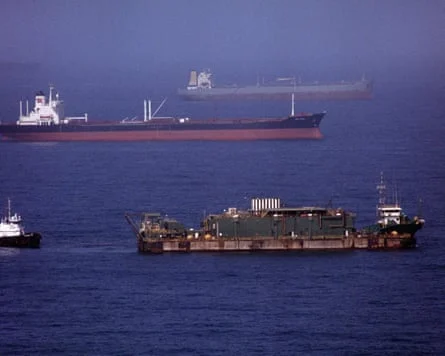
The ongoing Iran war has seen nearly two weeks of persistent kinetic activity, with U.S. forces conducting strikes against Iranian infrastructure and proxy positions. The administration has framed these actions as a necessary response to Iranian aggression, though critics argue the lack of a clear exit strategy could lead to a protracted conflict. For Republicans facing a difficult reelection cycle, the optics of a new Middle Eastern war have become a primary concern, with internal polling suggesting that swing voters are increasingly wary of further military entanglement.
Trump, however, emphasized that the U.S. military is “locked and loaded” and prepared to escalate if Tehran does not move toward a serious diplomatic concession. He noted that while the White House continues to maintain open lines of communication with Iranian officials, the administration is prepared to take the conflict to a “much higher level” if deemed necessary. When questioned by reporters regarding whether the targeting of civilian infrastructure, such as bridges, would constitute a violation of international law, the president declined to comment.
Intelligence Contradictions and Nuclear Claims
Central to the president’s justification for the current military posture is the claim that his administration successfully prevented a nuclear catastrophe. During Friday’s briefing, Trump repeated his assertion that Israel would have been destroyed by an Iranian nuclear strike had he not won the 2024 election against Kamala Harris. He argued that his 2025 order to bomb Iranian nuclear sites was the sole factor preventing the annihilation of the Jewish state, echoing long-standing rhetoric from Israeli Prime Minister Benjamin Netanyahu.
“If that didn’t happen, they would have a nuclear weapon and there would be no Israel,” Trump claimed. “If they had a nuclear weapon, they would have used that. There might not be a Middle East as we know it today.” These statements, however, stand in direct opposition to the 2025 U.S. intelligence assessment. Tulsi Gabbard, the Director of National Intelligence, recently presented a report to Congress representing the collective view of 18 intelligence agencies. The assessment concluded that Iran had not resumed the nuclear weapons program it suspended in 2003 and that Supreme Leader Ali Khamenei had not authorized the construction of a device.

Furthermore, regional analysts have noted that the doctrine of mutually assured destruction remains a potent deterrent. Israel is widely understood to possess its own nuclear arsenal, and the geographical proximity of Jewish and Palestinian populations makes a nuclear strike on the territory a logistical impossibility without killing millions of Muslims and destroying Islamic holy sites, such as the al-Aqsa Mosque. Despite these contradictions, the president’s narrative remains closely aligned with Netanyahu, who is scheduled to meet with Trump at the White House this coming Tuesday.
Trade Wars and the New Global Tariff Wave
While the war in the Middle East dominates the headlines, the administration has simultaneously opened a massive front in global trade. Late Thursday, the White House issued a fresh wave of tariffs targeting more than 80 countries, with rates ranging from 10% to 12.5%. The administration justified the move by claiming these nations have failed to enforce bans on goods produced through forced labor. This new round of duties serves as a replacement for the 10% blanket tariff Trump imposed in February, which was subsequently struck down by the Supreme Court as an illegal overreach of executive power.
The announcement sent shockwaves through international markets. In Asia, the Nikkei 225 fell 3.1%, and Hong Kong’s Hang Seng index plummeted 11.4%. The European markets showed a more volatile reaction; Germany’s Dax initially dropped 8% before recovering some ground. European Union foreign policy chief Kallas blasted the "forced labor" rationale, pointing out that EU labor laws are significantly more robust than those in the United States, including mandated paid vacations and strict worker protections.
The domestic fallout has been equally swift. Two U.S. small businesses—Burlap and Barrel, a New York spice importer, and Collective Horology, a California watchmaker—have already filed a lawsuit in the U.S. Court of International Trade. Represented by the Liberty Justice Center, the plaintiffs argue that the administration’s use of Section 301 of the 1974 Trade Act is “arbitrary and capricious.” They contend that the president is attempting to bypass Congress and the Supreme Court by rebranding previously rejected trade policies under the guise of human rights enforcement.
Retaliation Against the European Union
The tension with Europe escalated further on Friday following the EU’s decision to fine Google €890 million ($1 billion) for competition breaches related to its search and app store services. Trump responded on Truth Social, threatening "substantial" retaliatory tariffs and declaring that the United States is not a “PIGGYBANK” for Europe. He announced an immediate investigation into what he termed the “ROBBING” of American companies by foreign regulators.
This aggressive trade posture has created a rift even among Trump’s allies. Some Republican strategists expressed concern to Politico that raising the cost of imported goods during an election year could alienate voters struggling with inflation. One source close to the White House noted that any policy not focused on affordability is a "negative" for the party’s midterm prospects, regardless of the president’s personal confidence.
FEMA and the Battle Over Disaster Aid
The administration is also facing a major legal challenge from 25 states over the alleged politicization of the Federal Emergency Management Agency (FEMA). A coalition of Democratic attorneys general, led by California’s Rob Bonta, filed a lawsuit in Rhode Island alleging that the Department of Homeland Security has placed "unlawful" conditions on $740 million in disaster preparedness grants.

According to the filing, the administration is withholding funds unless states agree to implement specific voting and immigration policies, such as using federal systems to verify voter citizenship and conducting post-election audits. The attorneys general have characterized this as a “campaign of coercion,” arguing that disaster aid should be distributed based on need and safety rather than political compliance. This legal battle adds another layer of complexity to the administration’s relationship with state governments as the hurricane and wildfire seasons approach.
Domestic Events and Political Shifts
In Washington, security has been significantly tightened for the rescheduled White House Correspondents’ Association dinner. The event, originally set for April, was interrupted when a suspect named Cole Allen attempted to force his way into the venue and discharged a shotgun. Allen has since pleaded not guilty to attempted assassination. The dinner, moved to the Waldorf Astoria, will feature a significantly reduced guest list and enhanced Secret Service protocols.
Meanwhile, in Maine, the race for a critical U.S. Senate seat has seen a dramatic shift. Following the collapse of Graham Platner’s campaign due to sexual assault allegations and a lack of proper vetting, Troy Jackson is poised to secure the Democratic nomination. Platner, a marine veteran and oysterman, had been championed as an insurgent candidate until a series of controversies involving past social media posts and allegations of "troubling behavior" were brought to light by major news outlets.
Cultural Commentary and the NBA
In a lighter moment during the Oval Office press pool, Trump was asked to weigh in on the perennial debate over whether LeBron James or Michael Jordan is the greatest basketball player of all time. Characteristically, the president reframed the question around his personal relationships. He praised Jordan as a "friend" and a "good guy" he plays golf with, while suggesting that LeBron James’s public criticism of his administration might be rooted in "racism."
"I only like people that like me," Trump said, "so I would say Michael Jordan all the way." The comments refer back to a 2017 incident where James called the president a "bum" after Trump rescinded a White House invitation to the Golden State Warriors.
As the nation moves toward the fall, the convergence of an active war, a global trade conflict, and multiple high-level lawsuits creates a volatile backdrop for the upcoming elections. While the president maintains he is in no hurry to change course, the cumulative impact of these domestic and foreign crises will likely be the deciding factor for voters heading to the polls. For now, the administration remains "locked and loaded" on multiple fronts, awaiting the next move from its adversaries abroad and its critics at home.