The competitive landscape for the domestic robotics industry has shifted dramatically as of July 2026, forcing a reevaluation of whether a Shark vs. Roomba purchase remains a viable investment for the modern consumer. For over a decade, these two names dominated the American household, but a series of financial upheavals and technological stagnations have allowed international competitors to seize significant market share. While both companies released new hardware in the summer of 2026, the question of their continued relevance persists as brands like Roborock and Dreame redefine the premium tier of the robot vacuum brand market.

The most significant development in the sector occurred on July 7, 2026, when iRobot launched five new models under its new ownership structure. This release followed a period of intense uncertainty for the company, which filed for bankruptcy in December 2025. Now managed by its manufacturer, Picea, iRobot is attempting to shed its reputation for being "overpriced and underwhelming" by integrating features that were previously exclusive to its high-end competitors.
Despite these efforts, industry analysts suggest that the duel between Shark and Roomba has evolved into a struggle for survival in the mid-range market. Shark, a subsidiary of SharkNinja, has historically positioned itself as the value-driven alternative to iRobot’s premium offerings. However, as the technical gap between entry-level and flagship models narrows, both brands are finding it increasingly difficult to justify their price points to a more tech-savvy public.

The 2025 bankruptcy of iRobot serves as a cautionary tale for the industry. The company’s downfall was accelerated by a failed acquisition attempt by Amazon and a perceived lack of innovation compared to agile competitors from overseas. Under Picea’s leadership, the 2026 Roombas have finally adopted LiDAR (Light Detection and Ranging) towers across their lineup, a technology iRobot resisted for years in favor of camera-based navigation. This shift marks a pivotal moment in the Roomba evolution, signaling a move toward more reliable spatial awareness and faster mapping.
In the current Shark vs. Roomba comparison, navigation and obstacle avoidance remain the primary battlegrounds. iRobot has taken a lead in the lower price brackets by offering small obstacle avoidance technology in models like the Roomba Plus 415 Combo, which retails for approximately $599.99. This feature utilizes front-facing cameras and artificial intelligence to identify and maneuver around common household hazards such as power cords, pet waste, and shoes. Historically, this level of sophistication was reserved for thousand-dollar flagships, but the 2026 market demands these features at more accessible price points.

Shark, conversely, has focused its recent innovation on cleaning efficacy rather than pure navigation. The March 2026 release of the Shark PowerDetect UV Reveal 2-in-1 introduced a proprietary UV light system designed to detect invisible biological stains on hard floors. In real-world testing environments, this technology has proven capable of identifying dried spills that standard LED lights or AI cameras often overlook. This specialized focus on sanitation has helped Shark maintain a loyal following among pet owners and families with young children.
However, Shark’s broader lineup continues to struggle with technical transparency. Unlike almost every other major robot vacuum brand, Shark refuses to list its suction power in Pascals (Pa), instead using internal metrics that compare new models to older versions within its own catalog. This lack of standardized data makes it difficult for consumers to compare a Shark vacuum against a Roomba or a Roborock on a purely technical basis. Furthermore, Shark has been slow to move away from the traditional D-shaped mopping pad, a design that many experts believe is inferior to the dual spinning mops or roller mops now found in the iRobot Max 705 Combo.

The mopping capabilities of these devices have become a critical differentiator in 2026. iRobot’s recent transition to dual spinning mopping pads reflects a broader industry trend toward active scrubbing rather than passive wiping. The Roomba Plus 505 Combo, which often appears on sale for under $500, now features self-washing and self-drying docks, addressing a major pain point for users who previously had to manually clean dirty pads. Shark has countered with its "Matrix" cleaning mode, which forces the robot to clean in a grid pattern, approaching stains from multiple angles, but the hardware itself remains more traditional in its execution.
Consumer sentiment toward the robot vacuum brand market has also been influenced by the rise of the "anti-mop" demographic. On platforms like Reddit, a vocal segment of users has expressed frustration with the industry’s move toward mandatory hybrid models. In response, iRobot released the Roomba Max 715 Vac, a vacuum-only version of its flagship hardware. This move acknowledges that many consumers do not want to manage water tanks or damp pads, particularly in homes with significant carpet coverage. Shark has yet to offer a comparable high-end, vacuum-only alternative, leaving a gap in its 2026 strategy.

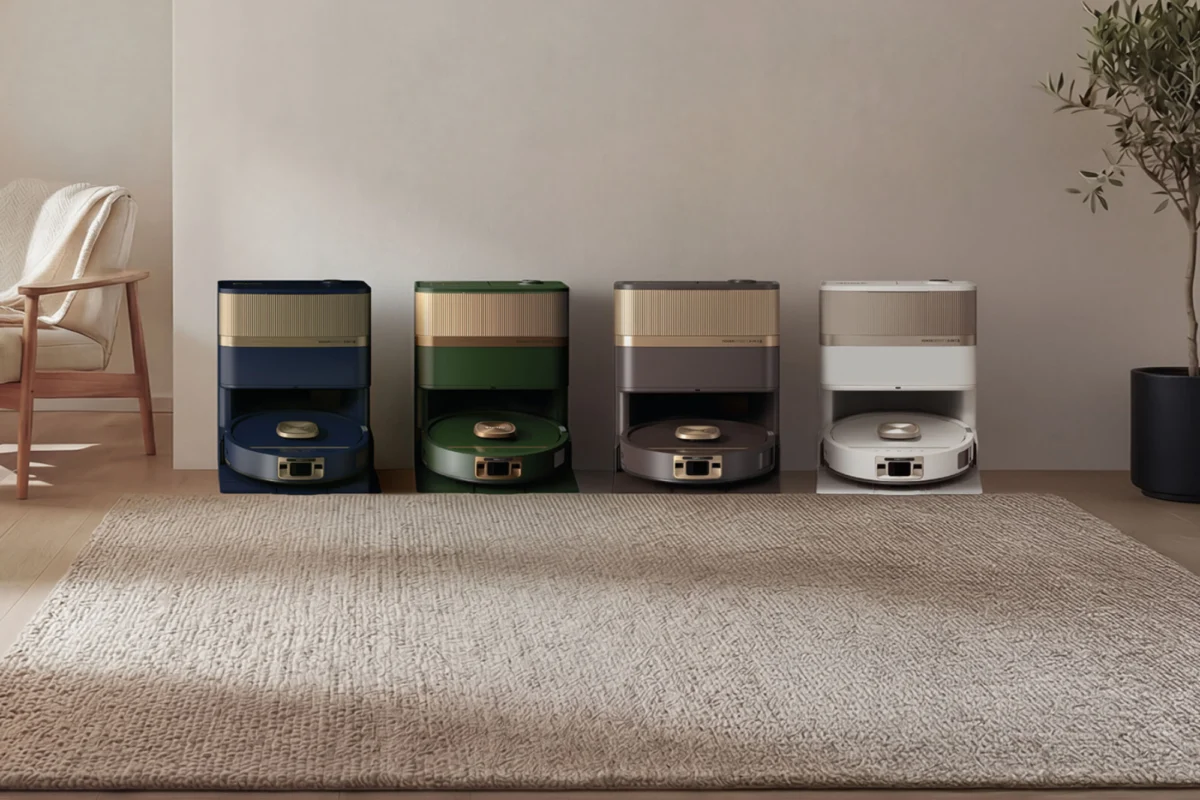
The aesthetic evolution of these devices is another area where Shark is attempting to gain an edge. The June 2026 launch of the "Luxe" collection introduced four earth-toned color options—espresso, evergreen, deep harbor, and ivory—aimed at blending the cleaning hardware with modern home decor. This move toward "lifestyle" branding suggests that Shark recognizes that technical specs alone may no longer be enough to win over consumers who view these robots as permanent fixtures in their living spaces.
From a software perspective, both companies are currently underperforming relative to the broader market. The Shark Clean and iRobot Home apps are frequently criticized for having dated interfaces and less intuitive mapping tools than the color-coded, highly customizable apps provided by Eufy or Roborock. Tasks that should be simple, such as adding a specific room to an active cleaning queue or setting precise "no-go" zones, remain clunky in the legacy apps, contributing to a sense that both brands are struggling to keep pace with modern UI/UX standards.

The financial stability of iRobot remains a point of concern for potential buyers. While the July 2026 product release suggests a return to normalcy, the memory of the December 2025 bankruptcy filing is fresh. Consumers are increasingly wary of investing in smart home ecosystems that require long-term cloud support and parts availability if the parent company’s future is not guaranteed. Shark, backed by the robust financial performance of SharkNinja, appears to be on more solid ground, which may give it the edge for risk-averse shoppers.
As the industry moves toward the final quarters of 2026, the Shark vs. Roomba debate is no longer a simple binary choice. The emergence of "all-in-one" stations that handle dust emptying, water refilling, and pad sterilization has set a new baseline for what constitutes a "premium" experience. While Shark’s UV Reveal and iRobot’s new LiDAR-equipped Roombas are steps in the right direction, they are competing in a market where brands like Roborock are already iterating on their third or fourth generation of these advanced features.

For the average consumer, the decision of whether a Shark or Roomba is "worth it" now depends largely on the specific needs of their home. Those prioritizing stain detection and a simplified user experience may find Shark’s 2026 offerings compelling, particularly when found at a discount. Conversely, those seeking advanced obstacle avoidance and a wider variety of hardware configurations may lean toward the rejuvenated Roomba lineup.
Ultimately, the 2026 market reflects a broader shift in consumer electronics where brand loyalty is being replaced by a demand for tangible innovation. While Shark and Roomba remain the most searched names in the category, they can no longer rely on name recognition alone. The coming months will determine if iRobot’s post-bankruptcy "glow-up" and Shark’s niche technological bets are enough to prevent them from becoming footnotes in the history of the smart home. For now, the competition remains fierce, but the "best" robot vacuum brand may very well be one that wasn’t even on the average American’s radar five years ago.