United States Senator Mitch McConnell remains unable to return to his congressional responsibilities more than six weeks after a fall at his home led to a prolonged hospitalization and rehabilitation process, his office confirmed Monday. The 84-year-old Kentucky Republican, who previously served as the Senate Majority Leader, is currently undergoing what aides described as "intense physical therapy" as he seeks to recover from a concussion and a subsequent bout of pneumonia. The announcement, accompanied by the first public photograph of the senator since mid-June, underscores the significant challenges facing the long-serving lawmaker as he nears the end of a historic career in the upper chamber.
In a written statement released through his press office on Monday, McConnell expressed a desire to return to his legislative duties but emphasized that his recovery is dictated by a strict medical regimen. The senator noted that he is working daily with specialists to regain his strength and mobility, following the orders of his physicians at a dedicated rehabilitation facility. The update provided the most detailed look at McConnell’s health since he was admitted to the hospital on June 14 after suffering a fall that left him briefly unconscious.
Medical Status and the Road to Recovery
The Office of the Attending Physician (OAP) for the U.S. Congress also released a technical update regarding the senator’s condition, providing clarity on why Mitch McConnell is still not cleared to resume Senate duties. According to the OAP, physicians have been visiting with the senator daily to monitor his progress and adjust his rehabilitation protocols. The medical team noted that McConnell is engaged in a "strenuous course" of physical therapy, often participating in multiple sessions per day. These exercises are specifically designed to rebuild core strength and improve balance to mitigate the risk of future falls.
A significant complicating factor in the senator’s recovery is his history with childhood polio. McConnell has often spoken about his battle with the disease as a young boy, which left him with lasting mobility issues in one of his legs. The OAP statement confirmed that the late-term effects of polio continue to be a "significant factor" in his current rehabilitation. The combination of a concussion, the respiratory strain of a mild case of pneumonia, and the pre-existing mobility challenges has necessitated a longer stay in a clinical setting than originally anticipated by some political observers.
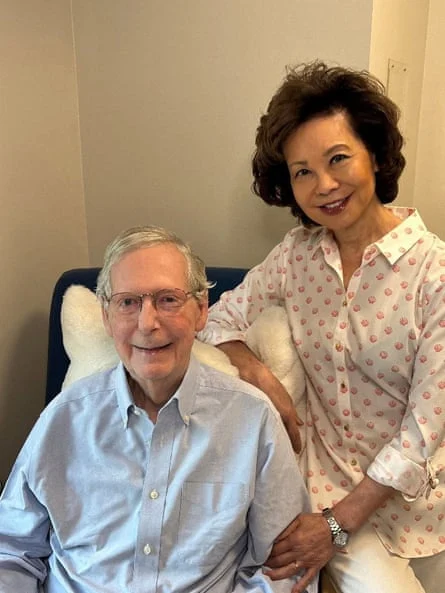
The photograph released alongside the statement shows McConnell seated with his wife, former Transportation and Labor Secretary Elaine Chao. The image, reportedly taken on July 26, was intended to reassure constituents and colleagues of his continued engagement, even as he remains physically absent from the Capitol. Despite the visual update, the lack of a specific date for his return has fueled ongoing discussions regarding the Republican leadership structure in the Senate.
Missed Milestones and the Fancy Farm Picnic
One of the most immediate consequences of the senator’s health status is his confirmed absence from the upcoming Fancy Farm picnic in Kentucky. The annual event, held on the first Saturday in August in the small community of St. Jerome, is a cornerstone of Kentucky politics, known for its high-spirited stump speeches and traditional barbecue. For decades, McConnell has been a fixture at the picnic, using the platform to energize his base and confront political rivals.
"There’s no place I’d rather be on the first Saturday in August than with the good people of western Kentucky, feasting on pork and mutton," McConnell said in his Monday statement. He expressed regret over missing the event, which often serves as the unofficial kickoff to the fall campaign season in the Bluegrass State. His absence this year is viewed as a symbolic marker of his current physical limitations, as the event requires significant stamina to navigate the crowds and the summer heat of western Kentucky.
Local organizers and political analysts in Kentucky noted that McConnell’s absence will be deeply felt, as he is the state’s most influential political figure. The senator’s team indicated that while he cannot attend in person, he remains focused on Kentucky’s interests from his rehabilitation center, receiving regular briefings on state and national issues.
Impact on Senate Operations and Legislative Votes
As Mitch McConnell is still not cleared to resume Senate duties, his absence has begun to impact the daily mechanics of the chamber. Since his hospitalization in June, McConnell has missed a total of 38 Senate votes. While the current Democratic majority maintains control over the floor agenda, the absence of the top Republican leader complicates bipartisan negotiations and the internal coordination of the GOP caucus.
In McConnell’s absence, the "Three Johns"—Senators John Thune of South Dakota, John Cornyn of Texas, and John Barrasso of Wyoming—have stepped up to manage the day-to-day operations of the Republican membership. While these deputies are experienced, the lack of McConnell’s strategic direction is felt during high-stakes debates over appropriations and judicial confirmations. The senator has built a reputation over decades as a master of Senate procedure, and his tactical absence leaves a void in the Republican Party’s ability to counter the Biden administration’s legislative priorities.

The timing of his recovery is particularly sensitive as the Senate moves toward the end of the fiscal year. Critical debates regarding the National Defense Authorization Act and various spending bills require a unified Republican front, which is traditionally marshaled by McConnell. His office has maintained that he is "keeping up" with his duties remotely, but the physical reality of the Senate often requires the presence of leaders for face-to-face negotiations in the "S-230" leadership suite.
The Context of Retirement and Age in Leadership
The health struggles of the Kentucky Republican come at a time of transition for his career. Last year, McConnell announced that he would not seek re-election and intended to retire from the Senate at the completion of his current term in January. This decision was seen as a move to ensure a smooth transition of power within the Republican caucus, yet his current medical leave has accelerated conversations about the future of the party’s leadership.
McConnell’s statement on Monday touched on the personal nature of his recovery, offering a rare glimpse into the mindset of a lawmaker known for his stoicism. He noted that "folks of my generation often hesitate to share the vulnerability that comes with growing older." This admission highlights a broader conversation currently taking place in Washington regarding the age of its most powerful leaders. With several key figures in both the executive and legislative branches well into their 80s, questions regarding physical fitness and the ability to maintain grueling schedules have become a recurring theme in national discourse.
Despite these questions, McConnell’s allies have remained steadfast in their support. Many have pointed to his previous returns from injury—including a shoulder fracture in 2019—as evidence of his resilience. However, the six-week duration of his current absence, coupled with the involvement of the Office of the Attending Physician, suggests that the current recovery process is more complex than his previous health episodes.
Political Implications for the Republican Caucus
The fact that Mitch McConnell is still not cleared to resume Senate duties creates a period of prolonged uncertainty for the Republican Party. As the primary season for the next election cycle begins to take shape, the lack of a definitive timeline for McConnell’s return complicates the party’s fundraising and recruitment efforts. McConnell has long been the primary architect of the Senate Republicans’ campaign arm, and his personal involvement is often cited as a key factor in the party’s electoral successes.
Furthermore, the vacuum at the top has led to increased speculation about a potential leadership race. While Senators Thune, Cornyn, and Barrasso have maintained a unified front, the reality of a Senate without McConnell is becoming more tangible to members of the caucus. Some younger, more populist members of the party have occasionally challenged McConnell’s leadership style, and his absence provides an opening for different factions to assert their influence over the party’s direction.
For now, the Republican caucus appears content to wait for their leader’s return. Most members have issued statements wishing him a speedy recovery, emphasizing the importance of his experience and steady hand. Yet, as the weeks turn into months, the pressure for a more concrete transition plan may grow if the senator is unable to return to the floor by the end of the summer recess.
Future Outlook for the Kentucky Senator
The path forward for Mitch McConnell remains centered on the rehabilitation facility where he continues his daily sessions. The medical team’s focus on "reducing the risk of future falls" suggests a long-term approach to his health that prioritizes stability over a rushed return to the Capitol. While the senator has expressed a firm intention to finish his term, the medical clearance required to leave a rehab facility and return to the high-stress environment of the Senate is a high bar to clear.
The American public and the people of Kentucky continue to watch the situation closely. McConnell’s career has spanned the administrations of seven presidents, and his influence on the federal judiciary and the national debt remains a central part of his legacy. As he works to overcome the physical setbacks of his fall and pneumonia, the Senate remains in a state of partial suspension, waiting for the return of its longest-serving leader.
The update from his office serves as a reminder of the physical toll of a life in public service and the unpredictable nature of health in one’s ninth decade. While the photograph of the senator with Elaine Chao offers a glimpse of his continued resolve, the official word remains unchanged: the veteran lawmaker is still not medically cleared to resume his duties, leaving a significant chapter of American political history currently on hold.