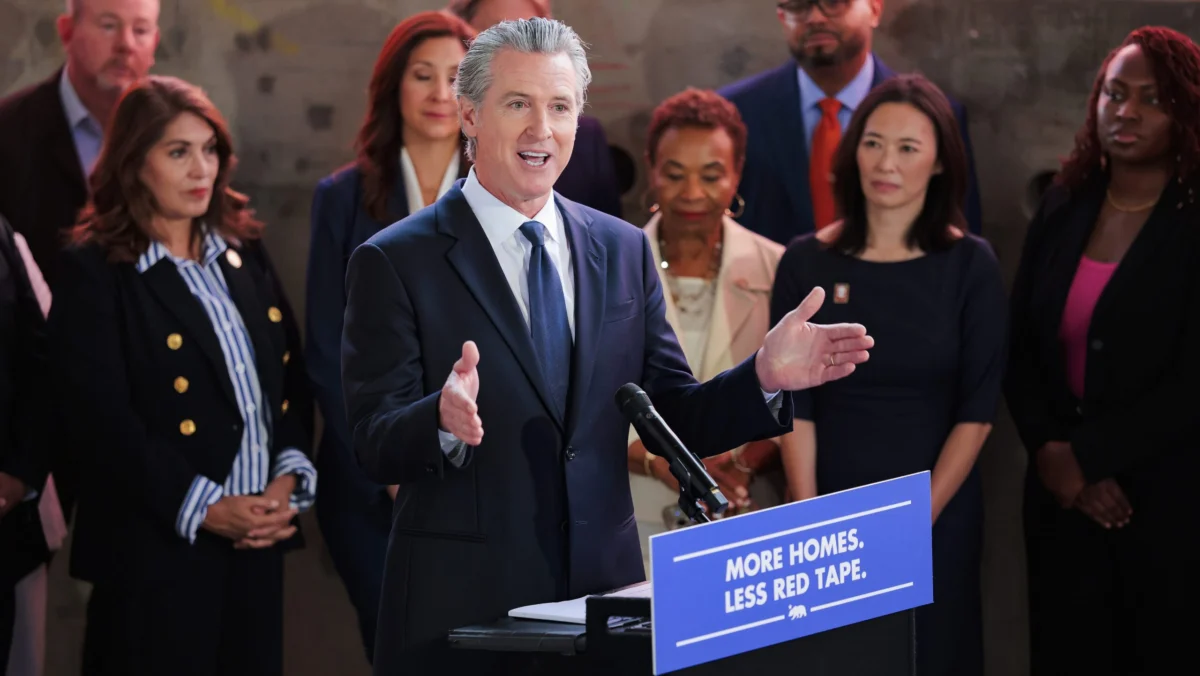
California Governor Gavin Newsom has reportedly voiced significant apprehension regarding the multi-state antitrust lawsuit, spearheaded by California, aimed at blocking Paramount Global’s proposed $111 billion acquisition of Warner Bros. Discovery. The Governor’s concerns, first reported by The Wall Street Journal, center on the potential for substantial job losses within California’s vital entertainment industry should the massive media consolidation be prevented by legal action. This intervention signals a complex political and economic dynamic at play, pitting the state’s economic interests against its regulatory efforts to maintain market competition.
Governor Newsom’s Intervention and Economic Concerns
Governor Newsom’s reported unease highlights the delicate balance between fostering a competitive marketplace and safeguarding the economic prosperity of the state’s dominant industries. Sources familiar with the matter indicate that Newsom believes a blocked merger could have detrimental effects on employment figures across California, a state where the entertainment sector is a cornerstone of its economy, directly and indirectly supporting hundreds of thousands of jobs. The film, television, and digital content production industries generate billions in revenue and taxes annually, making any threat to their stability a significant gubernatorial concern.
The Governor’s office has reportedly engaged with California Attorney General Rob Bonta’s office, encouraging a resolution to the antitrust suit outside of court proceedings. This overture underscores the perceived urgency and gravity of the situation from the state executive’s perspective. While the Attorney General’s office operates with independent authority in filing such lawsuits, a gubernatorial request for an out-of-court settlement suggests high-level political pressure to mitigate potential economic fallout.
The Nexus of Politics and Legal Authority
The interaction between the Governor’s office and the Attorney General’s office is a critical aspect of this developing narrative. In California, the Attorney General holds autonomous power to initiate legal actions, including antitrust enforcement, without direct gubernatorial approval. This institutional independence is designed to ensure that legal and regulatory decisions are based on the merits of the law rather than political expediency. However, the Governor, as the chief executive, is responsible for the state’s overall economic health and employment. Newsom’s reported intervention illustrates the inherent tension that can arise when these two spheres of authority confront a major issue with significant economic implications. The call for an out-of-court resolution points towards a desire to find a pragmatic solution that might address antitrust concerns without triggering severe economic consequences for the state.
The Multi-State Antitrust Challenge
The antitrust lawsuit itself was filed on July 13 by a coalition of 12 state attorneys general, led by California, against the proposed merger. The complaint alleges that the consolidation of Paramount Global and Warner Bros. Discovery would merge two of Hollywood’s five largest studios, leading to an unacceptable reduction in market competition. According to the states’ legal filing, such a merger would inevitably result in higher prices for consumers, a diminished output of new movies and television shows, and a decrease in the overall variety and quality of available content.
California Attorney General Rob Bonta, speaking at a press conference announcing the suit, emphasized the gravity of the allegations. "There is no debate here: This merger will snuff out competition, drive up prices, diminish content quality, and produce fewer movies and shows each year," Bonta stated, articulating the core concerns driving the multi-state action. The coalition argues that allowing such a substantial consolidation would stifle innovation and creativity by reducing the number of major players vying for talent, intellectual property, and audience attention. The states involved alongside California include Arizona, Colorado, Connecticut, Massachusetts, Minnesota, Nevada, New Jersey, New Mexico, New York, Oregon, and Washington, indicating a broad, bipartisan concern across the nation regarding the proposed deal’s implications.
A Deep Dive into the Proposed Merger
The proposed transaction involves Paramount Global, a media conglomerate with a vast portfolio including Paramount Pictures, CBS, MTV, Comedy Central, and the Paramount+ streaming service, and Warner Bros. Discovery (WBD), itself a product of a recent major merger between WarnerMedia and Discovery, Inc., encompassing Warner Bros. film and television studios, HBO, CNN, and the Max streaming platform. The deal, reportedly valued at approximately $111 billion, represents a massive consolidation effort in an increasingly competitive and fragmented media landscape.
The strategic motivations behind such a large-scale merger are typically driven by a desire to achieve economies of scale, expand content libraries to better compete in the global streaming wars, and gain greater leverage in negotiations with distributors and advertisers. For both Paramount and WBD, which have faced significant challenges in profitability and subscriber growth amidst intense competition from tech giants and other established media players, a merger could be seen as a path to greater financial stability and market dominance. However, it is precisely this pursuit of dominance that raises red flags for antitrust regulators, who are tasked with ensuring that such consolidations do not harm consumers or broader market competition.
Judicial Action and Procedural Delays
The filing of the antitrust suit immediately triggered significant legal proceedings and operational adjustments for the companies involved. On July 20, U.S. District Judge Araceli Martínez-Olguín issued a temporary restraining order, effectively pausing the merger. This initial judicial intervention underscored the court’s recognition of the immediate need to prevent the companies from moving forward with the acquisition before a thorough review of the antitrust allegations could take place.
The temporary restraining order was subsequently extended on July 23, signaling continued judicial scrutiny. Following these legal maneuvers, Paramount Global announced on July 24 its agreement to voluntarily hold off on consummating the acquisition. In a court document, Paramount committed not to finalize the deal until June 2027 or five days after the court issues a definitive ruling on the antitrust case, whichever comes earlier. This agreement provides a defined timeline for the legal battle to unfold, ensuring that the merger will not proceed while its legality under antitrust statutes remains in question. This pause allows for a full trial and appeals process, giving the states ample opportunity to present their case regarding the potential harms of the merger.
Broader Industry and Economic Implications
The outcome of the Paramount-Warner Bros. Merger Antitrust Suit carries profound implications, extending far beyond the boardrooms of the involved companies. For California, the economic stakes are particularly high. The entertainment industry is a complex ecosystem, supporting not only actors and directors but also a vast network of technical crews, production companies, visual effects artists, marketing professionals, and ancillary service providers. A significant reduction in content production, as predicted by the Attorney General, could lead to widespread job displacement and a contraction in related economic activities, directly impacting the state’s tax base and overall economic health.
Nationally, the proposed merger reflects a broader trend of consolidation across the media and entertainment sectors. In an era dominated by streaming services and the relentless demand for original content, companies are constantly seeking to expand their intellectual property portfolios and subscriber bases. However, antitrust regulators and consumer advocates frequently argue that such consolidation reduces consumer choice, limits diverse storytelling, and creates fewer opportunities for independent creators. The Paramount-Warner Bros. Merger Antitrust Suit serves as a critical test case for the Biden administration’s stated commitment to robust antitrust enforcement, particularly in industries with significant public impact.
Precedents in Media Mergers
The history of media mergers is replete with examples of both approved consolidations and those blocked or significantly modified by antitrust intervention. Notable past cases include the AT&T/Time Warner merger, which faced a protracted legal battle before ultimately being approved, and the Comcast/Time Warner Cable deal, which was abandoned due to regulatory concerns. These precedents highlight the complexities of applying antitrust law to dynamic industries like media, where technological advancements constantly reshape market structures. Regulators often grapple with defining relevant markets, assessing potential consumer harm, and predicting the long-term impact on innovation and competition. The current suit will draw heavily on these historical cases while also charting new territory in an age of integrated streaming and content ecosystems.
Divergent Voices and Industry Reactions
The Paramount-Warner Bros. Merger Antitrust Suit has ignited a passionate debate across the entertainment industry and among various advocacy groups. On one side, organizations like Cinema United have publicly expressed support for the lawsuit, arguing that the merger would further concentrate power in Hollywood, potentially leading to fewer diverse films in theaters and greater control over exhibition channels. Internationally, prominent actors such as Benedict Cumberbatch, Alan Cumming, and Benedict Wong have even called on the U.K. to block the Paramount-Warner Bros. merger, underscoring global concerns about media consolidation and its impact on creative diversity and labor.
Conversely, powerful figures within the industry have publicly defended the proposed acquisition. Ari Emanuel, the executive chairman and CEO of Endeavor (TKO Group Holdings), a major talent and media company, penned an op-ed for The Wall Street Journal in support of the merger. Emanuel argued that government officials risk manipulating markets when they intervene in such deals, suggesting that antitrust enforcement should protect competition rather than threaten it. He urged attorneys general to drop the case, asserting that the industry thrives on intense competition among creatives in various platforms, from box office to streaming. Emanuel’s perspective represents a segment of the industry that believes larger, more robust entities are necessary to compete effectively in the global market and that innovation flourishes even with fewer, but larger, players.
The Debate Over Market Manipulation vs. Competition
At its heart, the debate surrounding the Paramount-Warner Bros. Merger Antitrust Suit encapsulates a fundamental philosophical disagreement over the role of government in regulating large corporate transactions. Proponents of the lawsuit contend that unchecked consolidation leads to monopolies or oligopolies that can dictate terms, stifle innovation, and ultimately harm consumers and smaller businesses. They argue that antitrust laws are essential safeguards to prevent market failures and ensure a level playing field.
Opponents, however, often argue that robust competition among a few large players can be more dynamic than a fragmented market. They suggest that blocking mergers prevents companies from achieving the scale necessary to compete globally, innovate effectively, and create efficiencies that could ultimately benefit consumers. This side also often warns against "government manipulation" of markets, asserting that regulators should allow market forces to determine optimal business structures unless clear and undeniable anti-competitive harm is demonstrated. The Paramount-Warner Bros. case therefore becomes a battleground for these differing economic philosophies, with significant implications for future regulatory actions in a rapidly evolving technological and media landscape.
The Path Forward: Legal Battles and Political Pressures
As the legal proceedings unfold, the Paramount-Warner Bros. Merger Antitrust Suit is poised to become one of the most closely watched antitrust cases in recent memory. The next steps will involve extensive discovery, expert testimony, and potentially a full trial where both sides will present detailed arguments regarding the merger’s likely impact on competition, consumer prices, and content quality. The court’s ultimate decision will not only determine the fate of this specific $111 billion deal but could also set significant precedents for future media consolidations and the interpretation of antitrust laws in the digital age.
Meanwhile, the political pressures highlighted by Governor Newsom’s reported concerns are likely to persist. The tension between the state’s economic development goals and its regulatory responsibilities will remain a prominent backdrop to the legal battle. Whether an out-of-court settlement can be achieved, as reportedly encouraged by Newsom’s office, remains uncertain, contingent on the willingness of both the state attorneys general and the merging companies to compromise. The future of a major segment of Hollywood’s landscape, and potentially thousands of jobs in California, hinges on the outcome of this complex interplay between legal enforcement, economic policy, and corporate strategy.