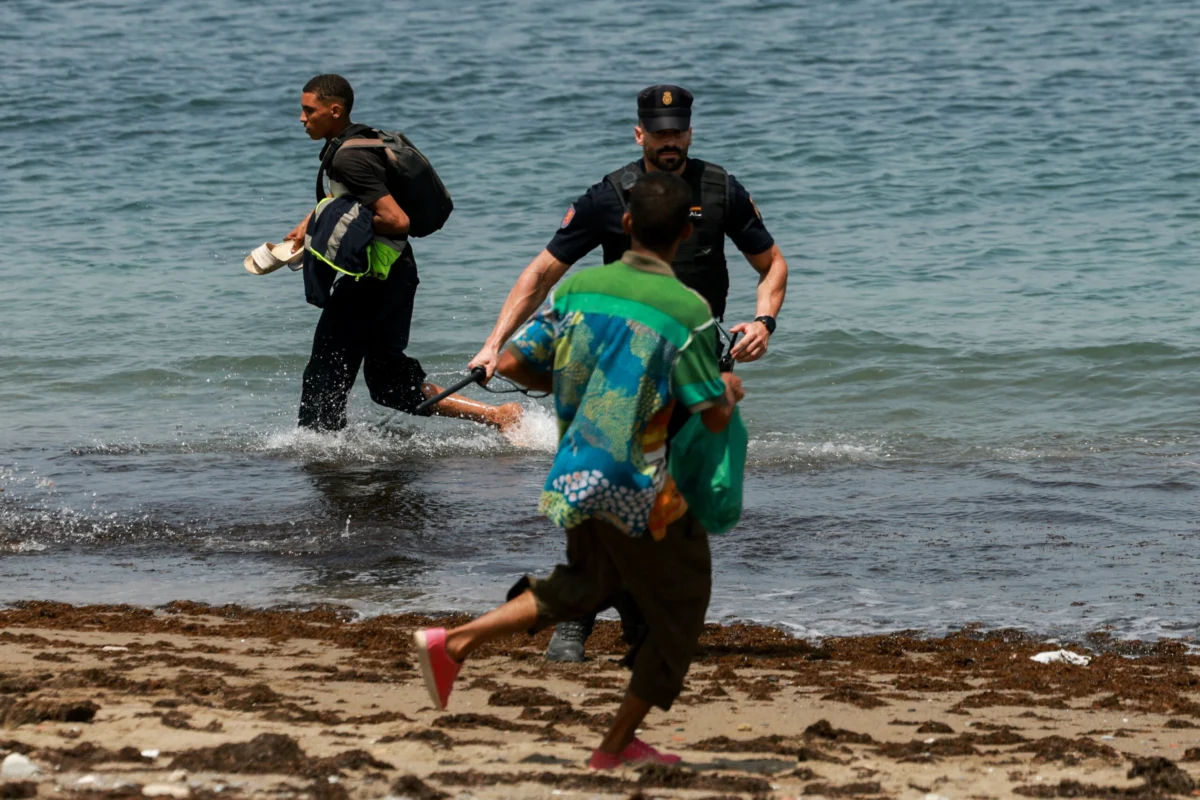
The death toll among migrants attempting to reach Spain’s North African enclave of Ceuta has climbed to at least 72, following an overwhelming surge of approximately 60,000 individuals who crossed the border from Morocco in recent days. The grim discovery of five more bodies along Ceuta’s coastline on Sunday underscores the perilous journey undertaken by those seeking to enter Europe. Spanish health services have treated over 1,000 people since the influx began on Thursday, highlighting the scale of the humanitarian crisis.
Ceuta’s Coastline Becomes a Graveyard for Migrants
The escalating death toll in Ceuta paints a stark picture of the desperation driving thousands to risk their lives. The bodies recovered were found along the rocky coastline, many having drowned in the treacherous waters separating Morocco from the Spanish enclave. Others were reportedly crushed or injured while attempting to scale the breakwater and border fence, barriers erected to control the flow of people. The sheer number of arrivals overwhelmed local resources, transforming the Mediterranean waters and Ceuta’s shores into a scene of tragedy.
The Spanish Civil Guard is actively engaged in the identification process for the 72 deceased migrants. Forensic teams are collecting fingerprints and DNA samples, a painstaking effort expected to conclude by the end of next week. This meticulous work is crucial for potential identification and reunification with families, should that be possible. The morgue in Ceuta has reportedly received 88 corpses, a figure that includes some individuals who perished in earlier, smaller attempts to reach the territory over the past two weeks.
The Unprecedented Influx: A Deluge of Migrants
The surge that began on Thursday was described as unprecedented, with an estimated 60,000 migrants attempting to enter Ceuta from Morocco. This massive influx represents a significant challenge for Spanish and European border management. While the majority of those who entered, over 48,000, were reportedly returned to Morocco within 48 hours, the sheer volume of the initial crossing has had far-reaching consequences.
The rapid and overwhelming nature of the border breach has prompted a significant international response. Twenty-two European Union member states have called for coordinated border actions, signaling a recognition of the shared challenge posed by irregular migration. Italy, a key frontline state in the Mediterranean, has taken the step of suspending passport-free Schengen travel with Spain, a measure aimed at bolstering border security.
Spanish Response: Barriers and Repatriation Efforts
In response to the crisis, Spanish authorities have implemented immediate measures to regain control of the border and manage the situation. A floating barrier, approximately 500 meters (1,600 feet) in length, was installed off Ceuta’s coast on Saturday. This physical deterrent aims to prevent further attempts to swim or wade into Spanish territory.
The Spanish government representative in Ceuta, Miguel Angel Perez, acknowledged that while the situation had markedly improved by Sunday, efforts to re-establish normality were ongoing. The government’s primary objective has been the repatriation of those who entered irregularly. Spain’s Minister of Foreign Affairs, Jose Manuel Albares, confirmed via X (formerly Twitter) late Friday that virtually all those who had entered Ceuta had now returned to Morocco.
Voices from the Ground: Desperation and Despair
The human cost of this migration crisis is vividly illustrated by the testimonies of those affected. Karima Abenaz, a French national with family ties in Morocco, expressed her deep sorrow over the deaths of young people at sea. "It pains me deeply that young people are dying at sea," she stated in Ceuta. "It’s not right that, in the year 2026, women with children as young as two months old should be crossing the sea only to die."
Abenaz also spoke to the underlying reasons for migration, highlighting the lack of opportunity in Morocco. "In Morocco, there’s food, there’s everything we need," she said. "If we don’t have a decent job, we should go on strike and demand our rights from the government. We shouldn’t be dying at sea, it’s not right." Her words encapsulate the complex interplay of economic hardship and the desperate search for a better life that drives migration.
Ceuta and Melilla: Europe’s Only African Land Borders
Ceuta, along with Melilla, another autonomous Spanish city located in North Africa, represents the European Union’s sole land border with the African continent. These enclaves have historically been focal points for attempted crossings by individuals seeking to reach Europe. The geographical proximity to Morocco, separated by relatively short sea routes or land borders, makes them primary entry points.

Migrants often undertake a perilous journey to reach Ceuta, swimming approximately 5 kilometers (3 miles) from the Moroccan town of Fnideq. Shorter, though still dangerous, routes exist from the nearby town of Belyounech. The constant pressure on these borders has led to recurring surges in attempted crossings, necessitating ongoing security measures and humanitarian responses.
Spain’s Migration Policy: An Open Stance Amidst Crisis
Spain has historically adopted a more open stance on migration compared to many other EU nations. The country has implemented programs to grant residency to a significant number of undocumented individuals, demonstrating a commitment to integrating some segments of the migrant population. This policy has been seen by some as potentially encouraging migration flows.
However, Spanish authorities have rejected suggestions that their open policy directly contributed to the recent rush into Ceuta. They emphasize that individuals entering Ceuta irregularly are not permitted to travel onward to mainland Spain or other Schengen zone countries. This distinction highlights the complex legal and logistical challenges in managing asylum claims and irregular migration.
Broader Implications: European Solidarity and Border Control
The events in Ceuta have amplified the ongoing debate within the European Union regarding migration management and border security. The call for coordinated action from 22 member states underscores the recognition that migration is a shared European challenge, requiring a unified approach. The suspension of Schengen travel by Italy, though temporary, signals the potential for unilateral actions when individual nations feel their borders are under undue pressure.
The incident also raises questions about the effectiveness of current border control measures and the humanitarian implications of attempts to deter irregular migration. While physical barriers and increased patrols are implemented, the fundamental drivers of migration—conflict, poverty, and lack of opportunity—remain unaddressed in the countries of origin.
The Human Element: Identification and Long-Term Solutions
The identification of the deceased migrants is a critical but emotionally taxing process. The Civil Guard’s forensic efforts aim to bring some measure of closure to families who may be desperately searching for news of loved ones. However, the sheer scale of the tragedy suggests that many of these individuals may remain unidentified, their stories lost at sea.
Beyond the immediate crisis management, the situation in Ceuta underscores the urgent need for long-term solutions to address the root causes of irregular migration. This includes enhanced cooperation with countries of origin and transit, efforts to promote economic development, and the establishment of safe and legal pathways for migration and asylum. The recurring nature of these surges demands a comprehensive strategy that goes beyond reactive border control measures.
Morocco’s Role and Regional Dynamics
Moroccan authorities are also reportedly involved in recovering bodies from the sea, though official information on their efforts remains limited. The geographical position of Morocco makes it a crucial partner in managing migration flows towards Europe. The relationship between Spain and Morocco, particularly concerning border security and migration, is a delicate one, often influenced by broader political and economic considerations.
The dynamics between the two nations play a significant role in shaping migration patterns and the effectiveness of border control efforts. Any sustainable solution to the challenges faced in Ceuta will likely require continued and strengthened cooperation between Spain and Morocco.
The Unfolding Crisis: A Continued Challenge
As Ceuta grapples with the aftermath of this unprecedented influx, the long-term implications for migration policy in Spain and across the European Union are likely to be significant. The event serves as a stark reminder of the human cost of irregular migration and the complex challenges of managing Europe’s external borders. The recovery and identification efforts are ongoing, and the humanitarian and political ramifications of this tragedy will continue to unfold in the coming weeks and months. The persistent desire for a better life, even in the face of extreme danger, ensures that the pressures on Europe’s borders will continue to be a defining issue.