Iran’s top security official revealed that Tehran has formally communicated its conditions for ending the protracted conflict to the United States, utilizing Qatari mediators to convey the message. This diplomatic maneuver comes in the wake of Saudi Arabian forces successfully intercepting a Houthi drone attack targeting the capital city of Riyadh, underscoring the volatile security situation in the region.
Iran’s Peace Overture Amidst Regional Tensions
The disclosure of Iran’s peace terms, delivered through a trusted intermediary, signals a potential shift in Tehran’s stance on the ongoing regional conflicts, particularly the devastating war in Yemen. The revelation was made by Ali Shamkhani, Secretary of Iran’s Supreme National Security Council, during a press conference that also addressed the thwarted Houthi assault on Saudi Arabia. Shamkhani’s remarks suggest a strategic move by Iran to influence the diplomatic landscape and potentially de-escalate tensions that have simmered for years.
The transmission of these conditions to Washington, a key player in regional security dynamics and a staunch ally of Saudi Arabia, indicates a deliberate attempt by Iran to engage directly with global powers on the cessation of hostilities. The choice of Qatar as the conduit for this sensitive communication is significant, given Doha’s established role as a mediator in various Middle Eastern disputes.
Houthi Attack Foiled Over Riyadh
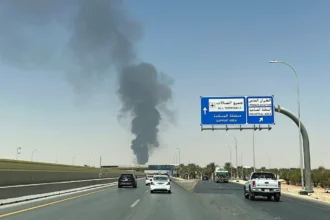
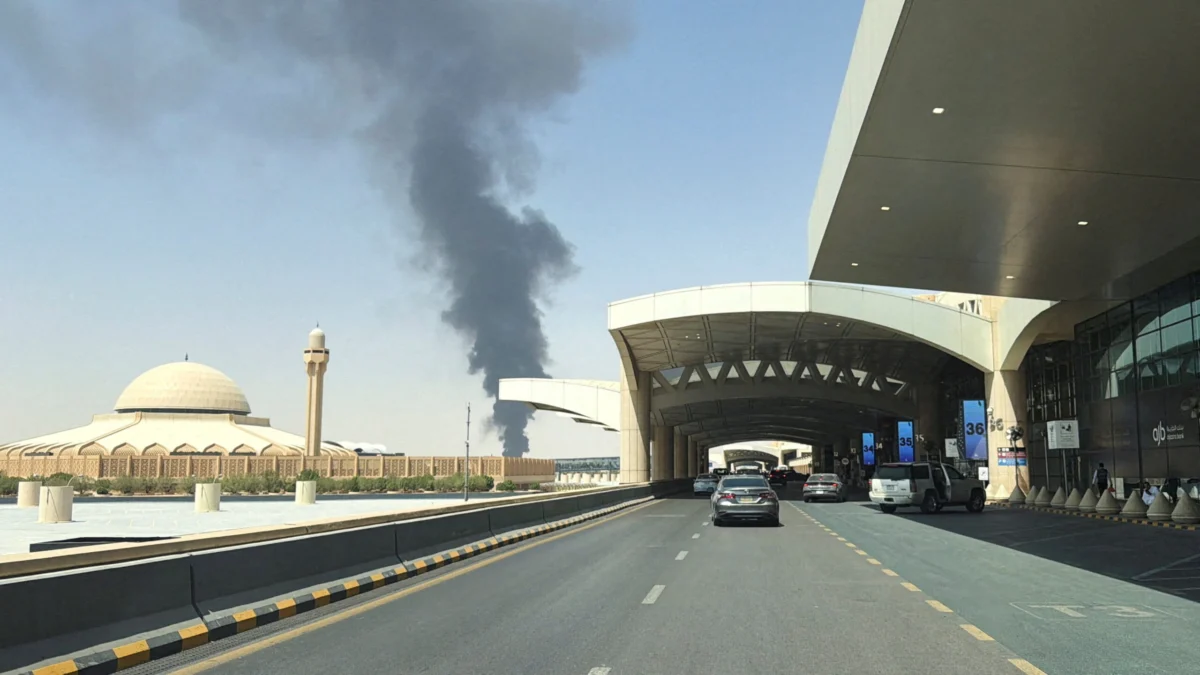
In parallel to Iran’s diplomatic outreach, Saudi Arabian air defenses successfully intercepted and neutralized an unmanned aerial vehicle launched by the Houthi movement towards Riyadh. The attack, which occurred on September 19, 2026, targeted the vicinity of King Khalid International Airport, a critical infrastructure hub for the Saudi capital.
A substantial plume of black smoke was observed rising from the fuel storage area at the airport following the interception, though initial reports indicated no significant casualties or major damage to the airport’s operational capacity. This incident highlights the persistent threat posed by the Houthi rebels, who have repeatedly launched drone and missile attacks deep inside Saudi territory, often targeting airports, oil facilities, and urban centers.
The Saudi-led coalition, which has been engaged in a military intervention in Yemen since 2015, condemned the attack as a violation of international law and a deliberate attempt to destabilize the region. The coalition reaffirmed its commitment to defending Saudi Arabia’s territorial integrity and to countering such hostile actions.
Background of the Yemen Conflict and Regional Rivalries
The Yemen conflict is widely seen as a proxy war between Saudi Arabia and Iran, with both regional powers backing opposing sides. The Houthi movement, a Zaydi Shia group, controls significant parts of northern Yemen, including the capital Sanaa, and has received support from Iran. The internationally recognized government of Yemen, backed by the Saudi-led coalition, has been struggling to regain control of the country.
This conflict has plunged Yemen into one of the world’s worst humanitarian crises, with millions facing starvation and disease. International efforts to broker a lasting peace agreement have repeatedly faltered, hampered by the deep-seated mistrust and competing interests of the key regional actors.
Iran’s alleged support for the Houthis, which it denies, has been a major point of contention between Tehran and Riyadh, as well as with their respective international allies. The Houthi attacks on Saudi soil have further exacerbated these tensions, leading to a cycle of escalation and retaliation.
Diplomatic Channels and Mediation Efforts
The involvement of Qatar in conveying Iran’s peace terms is noteworthy. Doha has cultivated a reputation as a skilled mediator in the Middle East, often engaging with a wide range of actors, including those with whom other Gulf states have strained relations. This approach has allowed Qatar to maintain channels of communication and exert influence in complex diplomatic situations.
The United States, as a primary recipient of Iran’s conditions, is a crucial player in any potential resolution. Washington has consistently called for de-escalation and a political solution to the Yemen conflict, while also maintaining a strong security partnership with Saudi Arabia. The nature of Iran’s proposed terms will likely be closely scrutinized by U.S. policymakers and international bodies.
Previous mediation efforts have focused on establishing ceasefires, facilitating humanitarian aid, and initiating political dialogues. However, achieving a comprehensive and sustainable peace has proven elusive, with parties often disagreeing on core issues such as the future governance of Yemen and the role of regional powers.
Implications of Iran’s Peace Overture
The timing of Iran’s peace initiative, coinciding with a Houthi attack on Saudi Arabia, raises questions about the strategic calculus behind Tehran’s move. Some analysts suggest that Iran may be seeking to reposition itself on the international stage, potentially in response to evolving geopolitical dynamics or domestic pressures.
The conditions laid out by Iran could address a range of issues, from the withdrawal of foreign forces from Yemen to guarantees for regional security. The specific details of these terms will be critical in determining their potential for success and the willingness of other parties to engage.
The successful interception of the Houthi drone attack by Saudi forces demonstrates the Kingdom’s robust defense capabilities and its determination to protect its territory. However, such attacks also underscore the ongoing risks and the need for a comprehensive de-escalation strategy.
Broader Regional Security Landscape
The interaction between Iran’s diplomatic overture and the Houthi attack highlights the intricate web of security challenges in the Middle East. The rivalry between Iran and Saudi Arabia has fueled multiple conflicts and instability across the region, impacting countries like Yemen, Syria, and Lebanon.
Any progress towards peace in Yemen could have a ripple effect on other regional disputes. A de-escalation between Iran and Saudi Arabia could open avenues for dialogue and cooperation on a wider range of issues, potentially leading to a more stable and secure Middle East.
Conversely, a failure to address the underlying causes of the conflict and the competing interests of regional powers could prolong the current state of tension and increase the risk of further escalation. The international community, including the United States and European nations, will be closely watching developments and may play a role in facilitating dialogue and supporting peace initiatives.
Public Impact and Humanitarian Concerns
The ongoing conflict in Yemen has had a catastrophic impact on the civilian population. Millions have been displaced, and the country faces widespread famine and disease. The prospect of peace, however distant, offers a glimmer of hope for the Yemeni people, who have endured immense suffering.
For Saudi Arabia, the Houthi attacks pose a direct threat to its citizens and infrastructure. The successful defense against the Riyadh attack is a testament to the country’s security measures, but the persistent threat underscores the human and economic costs of the conflict.
The international community has a moral and strategic imperative to support efforts aimed at achieving a peaceful resolution. The humanitarian crisis in Yemen requires urgent attention, and any steps towards de-escalation could help alleviate the suffering of millions.
Future Prospects and Next Steps
The coming weeks and months will be crucial in determining the trajectory of regional diplomacy. The U.S. response to Iran’s conveyed conditions will be closely watched, as will the reactions of Saudi Arabia and other key stakeholders.
The effectiveness of Qatari mediation will also be put to the test, as it navigates the complex interests of multiple parties. The success of any peace initiative will ultimately depend on the willingness of Iran, Saudi Arabia, and the warring factions in Yemen to engage in genuine dialogue and make difficult compromises.
The world remains hopeful that Iran’s peace terms will pave the way for meaningful negotiations and a cessation of hostilities. However, the shadow of ongoing military actions, such as the recent Houthi attack on Riyadh, serves as a stark reminder of the fragility of peace in the region and the challenges that lie ahead.