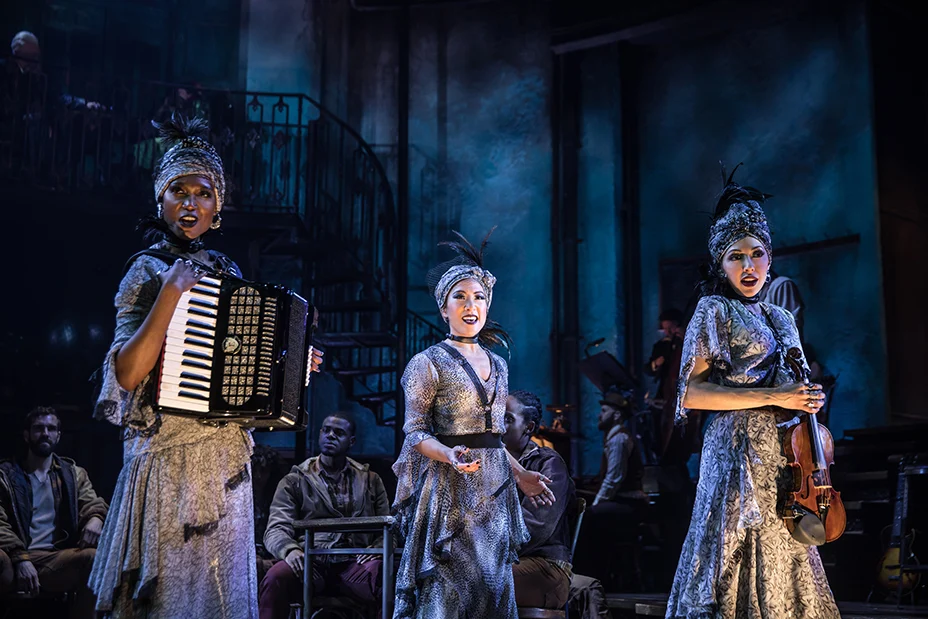
Broadway’s acclaimed musical Hadestown has announced that actor Geno Segers will no longer join its cast, a decision that follows intense online outrage stemming from his past social media postings. The unexpected departure, confirmed by the production, comes just weeks after Segers was initially revealed as the new actor set to portray Hades, the god of the underworld, in the Tony Award-winning show. The controversy has ignited broader discussions within the theater community regarding performer conduct, social media scrutiny, and the evolving expectations of audiences.
A Sudden Departure from the Underworld
On August 14, producers for Hadestown released a terse statement indicating a mutual agreement for Segers to step down. “The producers of Hadestown and Geno Segers have mutually agreed that Mr. Segers will no longer join the Broadway production. Additional casting will be announced shortly,” the statement read, offering no specific reason for the abrupt change. This minimalist announcement nonetheless confirmed the outcome of a rapidly escalating public backlash that began almost immediately after his casting was made public. Segers himself has not publicly commented on the decision.
The Initial Casting Announcement and Anticipation
The initial announcement of Geno Segers joining Hadestown on July 29 had generated considerable excitement among theater enthusiasts. Segers was slated to lead a fresh ensemble of principal actors, with his debut performance scheduled for September 1. He was to star opposite Amber Iman as Persephone, Jasmin Savoy Brown as Eurydice, Kayko as Orpheus, and Norbert Leo Butz as Hermes, a lineup that promised a vibrant new chapter for the long-running production. Segers brought a diverse theatrical background to the role, having notably played Mufasa in Disney’s Australian production of The Lion King and appearing in the New York City Center Encores! production of On the Town. His television credits included roles such as Mason Makoola on Pair of Kings and Chayton Littleton on Banshee, showcasing his range across different performance mediums.
Hadestown, a critically acclaimed musical conceived by Anaïs Mitchell, reinterprets the ancient Greek myth of Orpheus and Eurydice, alongside the intertwined love story of Hades and Persephone, within a vibrant, jazz-infused New Orleans-style setting. The production won eight Tony Awards in 2019, including Best Musical, and has been praised for its innovative storytelling, compelling score, and powerful themes of love, hope, and resilience. The role of Hades, the commanding and complex ruler of the underworld, is central to the narrative, demanding an actor with significant vocal prowess and stage presence. The casting of such a pivotal character naturally draws considerable attention and scrutiny.
The Genesis of Online Outrage
Within days of Segers’ casting announcement, theater fans began circulating videos and screenshots from his past social media activity. These unearthed posts, primarily from his Instagram and YouTube channels, allegedly featured Segers making remarks that were perceived as critical of transgender individuals. Specific allegations centered on comments regarding transgender athletes competing in sports, topics that have become flashpoints in broader cultural and political debates. The content quickly sparked a torrent of criticism across various online platforms, with many expressing deep disappointment and anger.
The online backlash gained rapid momentum, with calls for the production to reconsider Segers’ casting. Many fans voiced concerns that his alleged views were incongruous with the inclusive and progressive values often championed by the Broadway community and embodied by productions like Hadestown. The show, which explores themes of marginalization and power dynamics, holds particular resonance for diverse audiences, making any perceived misalignment with its performers’ public stances a sensitive issue. As the controversy intensified, Segers made his Instagram account private and reportedly removed certain videos from his YouTube channel, actions that were widely interpreted as a response to the mounting pressure.
The Role of Social Media in Modern Broadway Casting
This incident underscores the increasingly significant role of social media in the entertainment industry, particularly in Broadway casting. In an era where performers are expected to have a public digital presence, their past and present online activities are subject to intense scrutiny from fans, critics, and employers alike. What might have once been considered private opinions or obscure online content can now swiftly be unearthed and amplified, potentially impacting careers and the public image of entire productions. The permanence of a digital footprint means that comments made years ago can resurface with immediate and significant consequences.
For theater productions, navigating this landscape presents a complex challenge. While artists are often encouraged to express themselves authentically, producers must also consider how a performer’s public persona aligns with the values of the show and its audience. The Broadway community has historically prided itself on being a welcoming and progressive space, celebrating diversity and inclusion. When an actor’s alleged off-stage comments are perceived to contradict these core values, it can create a public relations crisis, alienate segments of the audience, and even risk boycotts. The Hadestown situation highlights the delicate balance between artistic freedom and professional accountability in the digital age.
Broader Implications for the Theater Industry
The swift removal of Geno Segers from Hadestown sends a clear message about the Broadway industry’s intolerance for perceived discriminatory views, particularly concerning LGBTQ+ issues. The incident follows a pattern seen across various entertainment sectors where public figures face consequences for past comments deemed offensive or harmful. It reinforces the notion that artists are not only judged by their performance on stage but also by their conduct and expressed beliefs off stage, especially when those beliefs conflict with the perceived ethos of their artistic platform.
This event is likely to prompt further introspection within the theater industry regarding vetting processes for new hires. While auditions typically focus on talent and suitability for a role, the Hadestown controversy suggests that a more thorough examination of a performer’s public digital footprint may become standard practice for high-profile castings. Producers and casting directors may increasingly consider a candidate’s social media history as part of their due diligence, aiming to prevent future public relations crises and ensure alignment with the values of the productions they represent.
Looking Ahead for Hadestown
With Segers’ departure, Hadestown producers face the immediate challenge of recasting the pivotal role of Hades. The timeline is tight, as the new principal cast, originally scheduled to begin performances with Segers on September 1, will now need a new leading man. This sudden change can disrupt rehearsals and marketing plans, placing additional pressure on the production team to find a suitable and available replacement quickly. The search will undoubtedly be conducted with heightened awareness of the public’s scrutiny, emphasizing not only vocal and acting talent but also a performer’s public image and alignment with the show’s inclusive values.
The incident surrounding Geno Segers and Hadestown serves as a stark reminder of the evolving landscape of public accountability in the entertainment world. It underscores the power of engaged fan communities, the pervasive influence of social media, and the increasing demand for consistency between a performer’s artistic expression and their public conduct. As Hadestown moves forward to announce its new Hades, the theater community will be watching closely, reflecting on the delicate interplay between art, artists, and audience expectations in contemporary society.