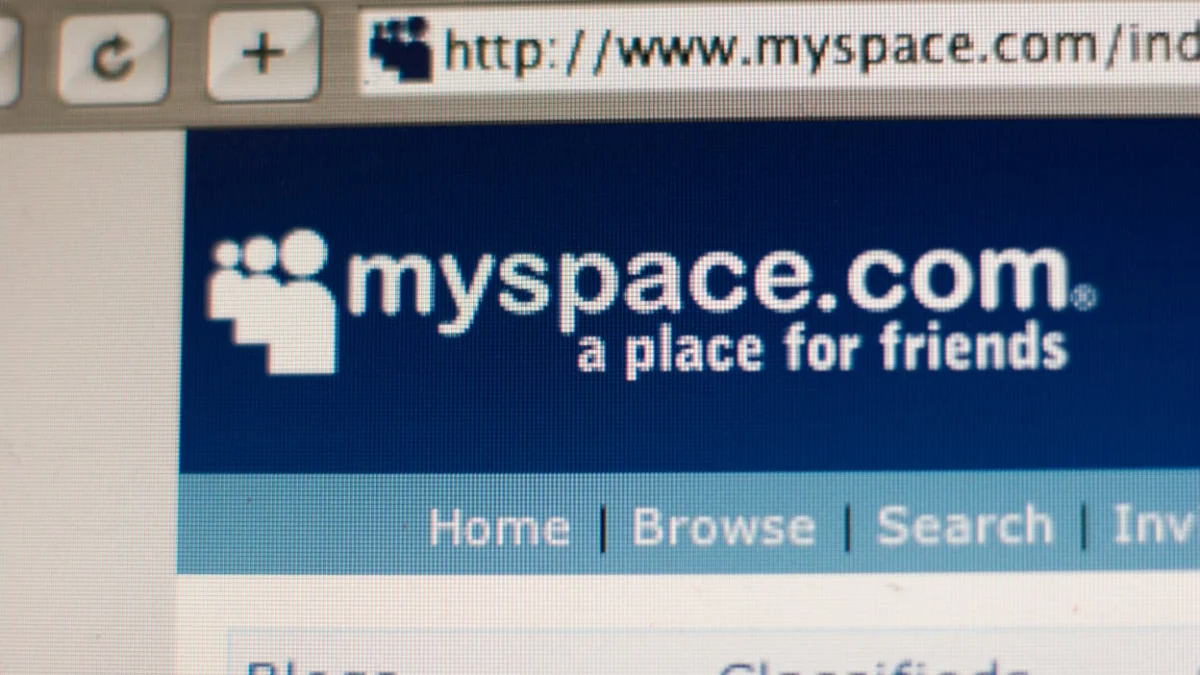
Chris and Tim Vanderhook, the primary owners of the pioneering social networking site Myspace, have officially confirmed their intention to relaunch the platform, marking a potential return for the site that once defined the early internet era. The announcement was made during their appearance in the documentary Myspace, directed by Tommy Avallone, where the brothers stated they are currently monitoring market conditions to determine the optimal window for a formal re-entry. While a specific launch date has not been set, the confirmation has sparked widespread debate over whether a legacy platform can successfully challenge the current dominance of algorithmic-driven feeds.
The Vanderhook brothers, whose company acquired Myspace in 2011, clarified that the project remains a priority despite previous unsuccessful attempts to modernize the site. Tim Vanderhook noted in the documentary that the company still retains full ownership of the brand and its underlying assets, suggesting that the "right time" for a relaunch is approaching. The announcement comes at a period of significant transition in the digital landscape, as users increasingly express dissatisfaction with the current state of major social media networks.
The Vanderhook Vision for a Myspace Relaunch
The confirmation of a Myspace relaunch represents a long-term commitment from the Vanderhook brothers, who have held the property for over a decade. Since their initial acquisition, the platform has undergone several iterations, most notably a 2013 redesign that pivoted toward music discovery and featured heavy involvement from pop star Justin Timberlake. That effort, however, failed to regain the massive user base the platform enjoyed during its mid-2000s peak.
According to the owners, the upcoming relaunch is being designed with the lessons of the past in mind. They acknowledged that previous attempts failed to capture the original essence of the platform, with Tim Vanderhook admitting that the 2013 version felt like a "different company." The brothers estimated that they have invested and subsequently lost approximately $150 million in their efforts to revitalize the brand. Despite these financial setbacks and the cancellation of various advertising contracts following the 2011 acquisition, the owners maintain that the brand equity of Myspace remains a valuable asset in the modern tech economy.
A History of Digital Dominance and Decline
To understand the weight of a potential Myspace relaunch, industry analysts point to the platform’s unprecedented rise in the early 21st century. Founded in 2003 by Tom Anderson and Chris DeWolfe, Myspace quickly evolved into the central hub of the social web. By July 2006, it had surpassed Google as the most-visited website in the United States, a feat that cemented its place in digital history. During this era, the platform was synonymous with the concept of a "social network," providing a space for millions of users to create personalized digital identities.
The platform’s cultural footprint was largely defined by its flexibility. Unlike the standardized profiles of modern platforms, Myspace allowed users to utilize basic HTML and CSS to customize their pages. This led to a chaotic but highly personal user experience, characterized by custom backgrounds, blinking graphics, and the "Top 8" friend ranking system, which became a staple of teenage social dynamics. Music was also a foundational element; the site served as the primary launchpad for artists like Adele, Arctic Monkeys, and Calvin Harris, who used the platform to distribute tracks before the era of streaming giants.

The decline of the original Myspace began shortly after its 2005 acquisition by News Corp for $580 million. The transition to a corporate-heavy environment, combined with the rapid ascent of Facebook, led to a steady migration of users. Facebook’s cleaner interface and focus on real-world identities eventually marginalized Myspace’s more anonymous and cluttered aesthetic. By the time Specific Media and Justin Timberlake purchased the site for $35 million in 2011, the platform had lost its status as a market leader.
The 2026 Social Media Landscape and the Demand for Change
The news of a Myspace relaunch arrives as recent data suggests a growing rift between social media users and current platform architectures. A 2026 study conducted by the Institute for Public Policy Research (IPPR) highlighted a significant shift in how content is consumed. The study, which surveyed 1,000 active social media users, found that only 18 percent of the posts appearing in a typical user’s feed originated from friends or family. The remaining content was dominated by influencers, public figures, and advertisements, with nearly 30 percent of feeds consisting of sponsored posts.
Researchers noted that platforms have increasingly prioritized "sticky" features—specifically short-form video and algorithmic recommendations—over direct social connections. This has led to a phenomenon often described as "feed fatigue," where users feel disconnected from their actual social circles despite spending hours on these apps. A separate 2026 survey by Deloitte found that 70 percent of consumers in certain markets believe they spend too much time on their devices, with nearly 25 percent reporting that they have deleted at least one social media app in the past year to regain personal time.
This environment has created a potential opening for a platform that emphasizes user control and chronological, friend-based updates. Proponents of a Myspace relaunch argue that the platform’s original model—centered on personal expression and curated networks—could serve as an antidote to the "discovery-first" algorithms used by TikTok and Instagram.
Nostalgia vs. Modern Functionality
Public reaction to the confirmed Myspace relaunch has been divided between nostalgic excitement and skepticism regarding technical execution. On forums such as Reddit and Threads, former users have reminisced about the creative freedom the platform once offered. The ability to "code" a profile was, for many, an entry point into digital literacy. However, critics are quick to point out that the same features led to significant usability issues, including slow load times and intrusive "profile songs" that played automatically at high volumes.
The challenge for the Vanderhooks lies in balancing these nostalgic elements with modern technical standards. A successful relaunch would likely require a complete overhaul of the platform’s infrastructure to support contemporary security protocols, mobile responsiveness, and data privacy regulations. Furthermore, the "Top 8" feature, while iconic, may need to be reimagined for an era where social circles are managed differently across multiple platforms.
The owners have not yet specified which classic features will return. They have, however, noted that the core of the relaunch will focus on providing a "right time" experience that distinguishes itself from the current "infinite scroll" model. The goal is to move away from being a content-delivery system and return to being a social utility.

The "Myspace Tom" Factor and Market Competition
Adding to the complexity of the relaunch is the separate activity of Myspace co-founder Tom Anderson. Known globally as "Myspace Tom"—the default first friend for every new user—Anderson has remained a beloved figure in digital culture. In early 2026, Anderson teased a potential return to the platform on the social media app Threads, stating he would consider a revival if he reached a certain follower milestone. While his posts generated significant engagement, Anderson has not been affiliated with the company since 2005 and is not involved in the Vanderhooks’ current relaunch plans.
The Vanderhooks face a crowded market as they prepare for a Myspace relaunch. In addition to established giants like Meta (Facebook and Instagram) and ByteDance (TikTok), they must compete with newer "alt-tech" and decentralized platforms such as Bluesky, Mastodon, and X (formerly Twitter). Each of these platforms is vying for the same "disenchanted" user base that Myspace hopes to capture.
Economic and Industry Implications
The financial stakes of a Myspace relaunch are considerable. Having already absorbed over $150 million in losses, the Vanderhook brothers are taking a significant risk by attempting another comeback. However, industry analysts suggest that if the platform can successfully monetize nostalgia while providing a functional alternative to current algorithms, it could carve out a profitable niche.
The relaunch could also impact the music industry once again. If Myspace returns to its roots as a hub for independent artists, it could provide a secondary revenue stream and promotional tool for musicians who feel sidelined by the dominant streaming algorithms. The original Myspace was a democratic space for music discovery; recreating that environment in 2026 would require integration with modern distribution tools while maintaining the direct artist-to-fan connection that made the original site famous.
For now, the project remains in the development phase. The owners have emphasized that they are "waiting for the right time," suggesting that the relaunch will not be rushed. Until a functional product is released, the prospect of a Myspace comeback remains a promise of a return to a more personalized, less algorithmic version of the internet. The digital community continues to monitor the situation, waiting to see if the platform that started it all can find its place in a vastly different social landscape.