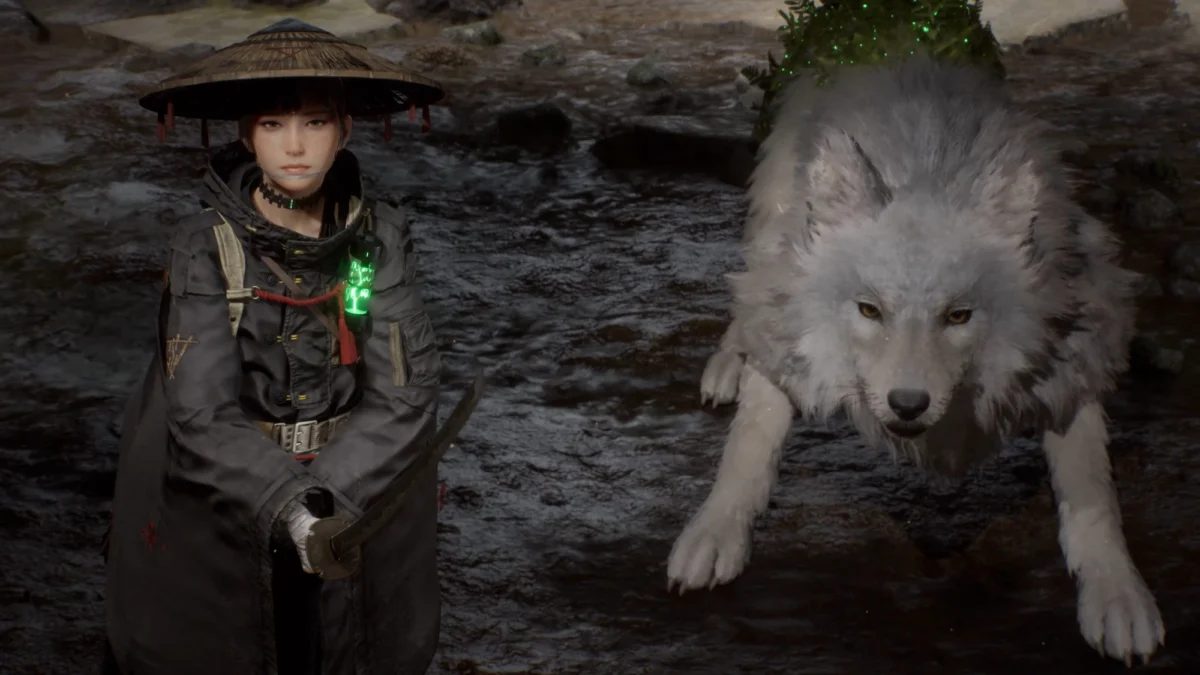
Game Freak, the long-standing developer primarily known for the global phenomenon Pokémon, has officially launched its most ambitious non-monster-collecting project to date, an action-adventure title titled Beast of Reincarnation. Released on August 3, 2026, the game represents a significant departure for the Tokyo-based studio, moving away from turn-based creature battles toward a high-fidelity, real-time combat experience set in a desolate version of Japan. While the title showcases a sophisticated evolution in the studio’s technical capabilities and artistic direction, early critical assessments suggest that it struggles to establish a cultural footprint as deep or as cohesive as the franchise that has defined Game Freak for three decades.
The release of Beast of Reincarnation comes at a pivotal moment for Game Freak, which has operated under the massive shadow of Nintendo’s flagship property since the mid-1990s. Although the studio has previously experimented with smaller-scale projects such as Giga Wrecker Alt, Little Town Hero, and Tembo the Badass Elephant, these titles were often viewed as secondary creative outlets for the staff. Beast of Reincarnation, however, is positioned as a major AAA contender, featuring a $60 price point and a presence on high-performance platforms including the PlayStation 5, Xbox Series X, and PC.

The Evolution of Game Freak’s Creative Strategy
For years, industry analysts have watched Game Freak’s "Gear Project" initiative, an internal program designed to encourage developers to create original intellectual properties outside of the Pokémon universe. The objective was to prevent creative stagnation and allow the team to acquire experience with modern game engines and gameplay mechanics that do not necessarily fit the family-friendly mold of Pikachu and his peers. Beast of Reincarnation is the ultimate fruition of this strategy, utilizing a realistic art style and a somber narrative tone that contrasts sharply with the vibrant, approachable aesthetic of the Galar or Paldea regions.
Set in a post-apocalyptic Japan reclaimed by nature, the game follows Emma, a young protagonist who possesses a unique immunity to a lethal environmental corruption known as the Blight. Accompanied by her canine companion, Koo, Emma must navigate a landscape littered with the remnants of human civilization to prevent a legendary entity from triggering a final, world-ending rebirth. This premise moves Game Freak into the realm of "prestige" action-gaming, a genre currently dominated by titles that emphasize philosophical storytelling and demanding mechanical precision.
Narrative Ambitions and the Shadow of Nier: Automata
In its attempt to craft a mature, thought-provoking story, Beast of Reincarnation draws heavy inspiration from modern classics like Nier: Automata and Stellar Blade. The narrative explores complex themes including artificial intelligence, the nature of sentience, and the ethics of human survival in the face of extinction. However, critics have pointed out that while the game aspires to the existential depth of Yoko Taro’s work, it often falters in its execution.

The primary criticism directed at the narrative involves the development of Emma and her supporting cast. For much of the 25-to-30-hour campaign, Emma remains an emotionally detached figure, a trait attributed to her history as an outcast suffering from a chronic illness. While this stoicism is narratively justified, it reportedly makes it difficult for players to form an emotional connection with the protagonist. The story’s pacing has also been described as uneven, with a significant portion of the world-building and character motivation relegated to a massive "exposition dump" in the final acts.
Furthermore, the English localization and voice acting have faced scrutiny for a perceived lack of energy. Observations from early players suggest that the voice cast often sounds detached from the high-stakes events occurring on screen, further hindering the immersion. Accessibility issues have also surfaced, specifically regarding the game’s user interface; the subtitles are notably small, and at launch, the game lacks options to adjust text size, making it difficult for those using the original Japanese voice track to follow the dialogue.
Mechanics of the Apocalypse: Combat and Exploration
Where Beast of Reincarnation arguably surpasses expectations is in its mechanical depth. Shifting away from the menu-driven combat of Pokémon, Game Freak has implemented a sophisticated parry-based system that draws comparisons to Sekiro: Shadows Die Twice. The gameplay loop centers on "Entanglement," a mechanic where Emma uses her plant-infused hair to manifest weapons and perform devastating counters.

Success in battle requires precise timing. Each successful parry fills an Entanglement meter, which, once maximized, allows Emma to execute flashy finishers and area-of-effect attacks. The game also features a variety of katanas, each possessing unique elemental properties and passive buffs. For instance, certain late-game blades can trigger lightning strikes or poison clouds upon a successful parry, adding a layer of strategic customization to the fast-paced encounters.
Exploration is another highlight, emphasizing verticality across 12 distinct zones. These environments range from rustic, overgrown forests to flooded urban ruins and massive craters. Using her supernatural abilities, Emma can scale towering structures and create temporary ledges to bypass obstacles or set up aerial ambushes on enemies. This vertical freedom is complemented by Koo, the canine companion, who assists the player by sniffing out hidden collectibles and "Dragon Shrines." These shrines serve as a vital progression mechanic, as accumulating them increases the number of healing items Emma can carry into battle.
Technical Execution and Visual Direction
Visually, Beast of Reincarnation is a testament to Game Freak’s ability to handle modern hardware. The art direction leans into a "beautiful apocalypse" aesthetic, reminiscent of Studio Ghibli films or The Last of Us, where the decay of man-made structures is softened by the lush encroachment of flora. The world is populated by hostile golems and "malefacts"—biological creatures like bears and deer that have been mutated by the Blight.

Despite the visual splendor of the world, the variety of enemy designs has been identified as a weakness. The game’s primary bosses, known as Nushi, frequently reuse the same four-legged skeletal structures and attack patterns. This repetition in high-stakes encounters has been cited as a missed opportunity to showcase the same level of creativity found in the game’s environmental design.
On a technical level, the game runs on the latest consoles and PC hardware, offering a level of graphical fidelity that far exceeds the studio’s work on the Nintendo Switch. This jump in performance is seen as a necessary move for Game Freak to remain competitive in a global market that increasingly demands high-resolution textures and stable frame rates in the action genre.
Market Positioning and Industry Impact
Beast of Reincarnation enters a crowded market for action-RPGs, but its inclusion on Xbox Game Pass via the Ultimate tier may give it an advantage in reaching a broader audience. By offering the game on a subscription service at launch, Game Freak and its publishing partners are lowering the barrier to entry for players who might be skeptical of the studio’s ability to deliver a non-Pokémon experience.

The game’s $60 price point for a 30-hour experience is consistent with industry standards, though it places the title in direct competition with established action franchises. The success or failure of Beast of Reincarnation will likely influence how Game Freak balances its resources in the future. If the game finds a dedicated following, it could signal a new era where the studio is recognized as a multi-genre powerhouse rather than a single-franchise developer.
Industry experts suggest that while Beast of Reincarnation may not achieve the "cultural phenomenon" status of Pokémon, it serves as a crucial proof of concept. It demonstrates that Game Freak can build complex, real-time systems and navigate mature themes, even if the narrative execution requires further refinement.
Future Prospects and Final Outlook
As players begin to navigate the Blight-infested ruins of Japan, the conversation surrounding Beast of Reincarnation remains focused on its identity. It is a game that succeeds in its moment-to-moment gameplay but struggles to leave a lasting impression through its characters and story. For fans of the action-adventure genre, the title offers a polished and challenging experience that rewards mastery of its parry mechanics.

For Game Freak, the release is a bold step toward creative independence. While the "Pokémon" label will always be associated with the studio, Beast of Reincarnation proves that there is a desire within the company to push boundaries and explore the darker, more intricate corners of game design. Whether this title will eventually spawn a franchise of its own remains to be seen, but for now, it stands as a significant, if imperfect, milestone in the history of one of Japan’s most famous development houses.