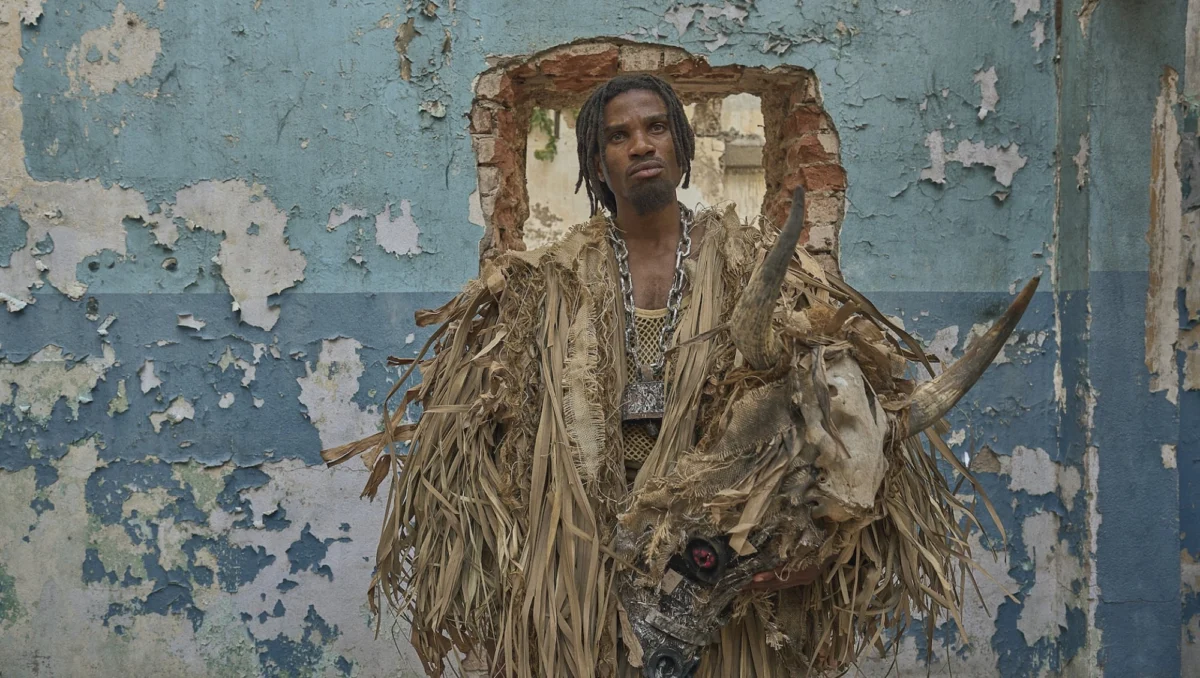
The debut of the television series Possession marks a significant entry into the landscape of prestige horror, blending supernatural elements with a stark, uncompromising look at the enduring legacy of British colonialism. Directed by Storm Saulter and created by Karla Crome, the five-part series utilizes the haunting atmosphere of a Jamaican plantation to explore the intersection of historical trauma and modern-day legal disputes. Starring Gugu Mbatha-Raw and Sheldon Shepherd, the production serves as both a psychological thriller and a sociopolitical commentary on the unresolved grievances of the transatlantic slave trade.
In this Possession review, the series is identified as a standout example of the "social horror" subgenre, following in the footsteps of works that use the macabre to dissect systemic injustice. The narrative centers on Claudia McKenzie (Mbatha-Raw), a high-achieving attorney based in Bristol, England. McKenzie is dispatched to Kingston, Jamaica, to represent a prestigious firm in an inheritance case that threatens to upend the wealth of the Connaught family, white British nationals whose fortune was built on the labor of enslaved people.

The Legal and Historical Framework of ‘Possession’
The catalyst for the series is the death of Alfred Connaught, a patriarch who leaves his sprawling Jamaican estate, Hope Hill, to a mysterious beneficiary named Cudjoe East (Sheldon Shepherd). This decision shocks Alfred’s son, Oliver (Jonny Lee Miller), who enlists McKenzie’s firm to discredit East’s claim. The firm chooses McKenzie specifically for "political expediency," citing her mixed-race heritage as a way to navigate the "optics" of a white British family reclaiming land in a post-colonial Caribbean nation.
This setup allows the show to delve into the complexities of identity and corporate performativity. McKenzie, who has largely distanced herself from her Jamaican roots, finds herself caught between her professional obligations and a burgeoning realization of her own history. The series effectively uses the legal procedural format to introduce audiences to the Slave Compensation Act of 1837, a historical reality where the British government paid 20 million pounds to slave owners for the "loss of their property" while providing nothing to the emancipated people.
Cinematic Horror and Intergenerational Trauma
As the narrative progresses, this Possession review notes that the show pivots from a legal drama into a visceral ghost story. Upon arriving at Hope Hill, McKenzie begins experiencing vivid, terrifying dreams that seem to bridge the gap between the present and the 18th century. The estate itself is portrayed as a character—a site where the veil between eras is thin. Director Storm Saulter utilizes the lush, often suffocating beauty of the Jamaican landscape to contrast the grim history of the plantation house.

The horror elements are not merely for jump scares; they serve as metaphors for the "return of the repressed." The supernatural occurrences at Hope Hill are inextricably linked to the atrocities committed there centuries ago. Through seamless editing, the show transports viewers back to the era of British rule, introducing Matthew (also played by Shepherd), an enslaved man whose life is dictated by the whims of the Connaught ancestors. The dual casting of Shepherd emphasizes the theme of ancestral memory, suggesting that the struggles of the past are physically and spiritually imprinted on the descendants of the present.
Performance and Character Analysis
Gugu Mbatha-Raw delivers a nuanced performance as a woman undergoing a radical internal shift. At the start of the series, McKenzie is a master of "code-switching," navigating the white-dominated spaces of Bristol law firms with calculated precision. As she spends more time in Kingston, her composure fractures, replaced by a raw, ancestral connection to the land that she initially tried to ignore.
Sheldon Shepherd provides a formidable counterpoint in his dual roles. As Cudjoe East, he represents the modern demand for reparations and the refusal to let history be erased. As Matthew in the 18th-century timeline, he portrays the agonizing psychological toll of enslavement, particularly when dealing with the betrayal of family members. The series explores the "house-divided" dynamic through Matthew’s relationship with Charlotte Connaught (Bel Powley), his white half-sister who views him with a mixture of pathological hatred and existential jealousy.

Bel Powley’s portrayal of Charlotte is particularly chilling. She represents the complicity of white women within the colonial structure—individuals who were themselves socially restricted by gender but who wielded absolute power over enslaved people to assert their own status. Powley’s performance highlights the paranoia and obsession with control that fueled the plantation system, providing a terrifying look at the roots of white supremacy.
Exploring Obeah and Jamaican Cultural Traditions
A critical component of the series is its authentic representation of Jamaican spiritual practices. This Possession review highlights the inclusion of Obeah, a Caribbean spiritual system with West African origins. Historically, Obeah was criminalized by British authorities who feared its power to unify enslaved people and incite rebellion. By centering Obeah in the plot, Crome and Saulter reclaim the practice as a legitimate and potent cultural force.
The character of Mercy Stevens (Nadean Rawlins), an Obeah priestess and McKenzie’s estranged aunt, provides the series with its spiritual anchor. Rawlins offers a performance filled with gravitas and occasional levity, acting as a guide for both McKenzie and the audience through the supernatural landscape of Kingston. The show also features a "Nine Night" wake, a traditional Jamaican funeral rite, which serves as a pivotal moment for the story’s supernatural escalation. These cultural markers provide the series with a sense of place and authenticity that distinguishes it from generic horror productions.

The Global Context of Reparations and Justice
The release of Possession coincides with an intensifying global conversation regarding reparations for the transatlantic slave trade. Caribbean nations have increasingly pressured European powers to move beyond apologies and toward financial and structural restitution. The series directly engages with these themes, positioning the inheritance battle over Hope Hill as a microcosm of the larger fight for historical justice.
The character of Oliver Connaught serves as a surrogate for modern "inherited guilt." Unlike his father, Oliver is aware of the moral rot at the foundation of his family’s wealth, yet he is hesitant to relinquish the privileges that wealth affords him. His conflict reflects the broader European struggle to reconcile with a colonial past that remains the source of current economic disparities. By framing this through the lens of horror, Possession suggests that the past cannot be "settled" through paperwork alone; it requires a profound and often painful spiritual accounting.
Visual Mastery and Directorial Vision
Storm Saulter’s direction is instrumental in balancing the show’s disparate elements. Saulter, known for his work on Better Mus’ Come, brings a cinematic eye to the streets of Kingston and the rural interiors of the island. The cinematography by Pedro Cardillo captures the "vibrant unease" of the city—the golden light of a marketplace can shift instantly into the deep, ominous shadows of a jungle or a dilapidated great house.

The production design meticulously differentiates between the sterile, cold environments of corporate Bristol and the humid, high-energy atmosphere of Jamaica. This visual contrast underscores the central theme of the series: the attempt to apply "civilized" British law to a history defined by the most uncivilized of human behaviors. The Junkanoo carnival scenes are particularly noteworthy, featuring elaborate costumes and percussive soundscapes that heighten the show’s sensory impact.
Broader Implications for the Horror Genre
Possession joins a growing list of "prestige horror" series that use the genre to tackle complex social issues. Much like HBO’s Lovecraft Country or Amazon’s Them, the series understands that for many marginalized communities, the true horror is not a fictional monster, but the reality of historical and systemic violence. However, Possession distinguishes itself by focusing specifically on the Jamaican experience and the unique scars left by British, rather than American, colonial history.
The series avoids the pitfalls of "trauma porn" by ensuring that its Black characters are afforded agency and complexity. The story is as much about resilience and the reclamation of power as it is about suffering. By the final episode, the "possession" of the title takes on multiple meanings—referring not just to supernatural inhabitation or property ownership, but to the act of taking possession of one’s own history and future.

Conclusion and Public Impact
The impact of Possession is expected to resonate far beyond its initial broadcast on Sky. By merging high-stakes legal drama with authentic cultural exploration and supernatural horror, the series provides a platform for discussing the long-term consequences of the British Empire. It challenges viewers to consider how wealth is inherited, how history is written, and what is truly owed to the descendants of those who built the modern world through forced labor.
As this Possession review concludes, the series stands as a masterful achievement in storytelling. It is a chilling reminder that while the era of formal colonization may have ended, the ghosts of that period remain active, demanding to be heard and seeking a justice that has been delayed for centuries. With its formidable cast and visionary direction, Possession is a vital, haunting addition to the contemporary television canon.