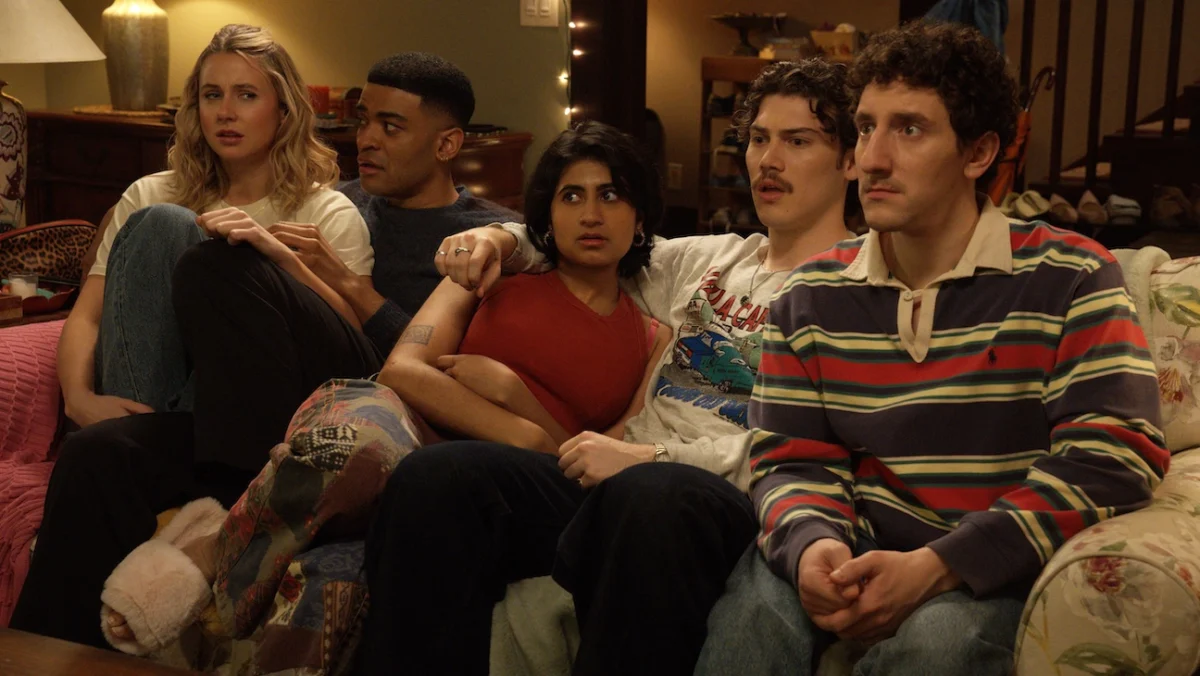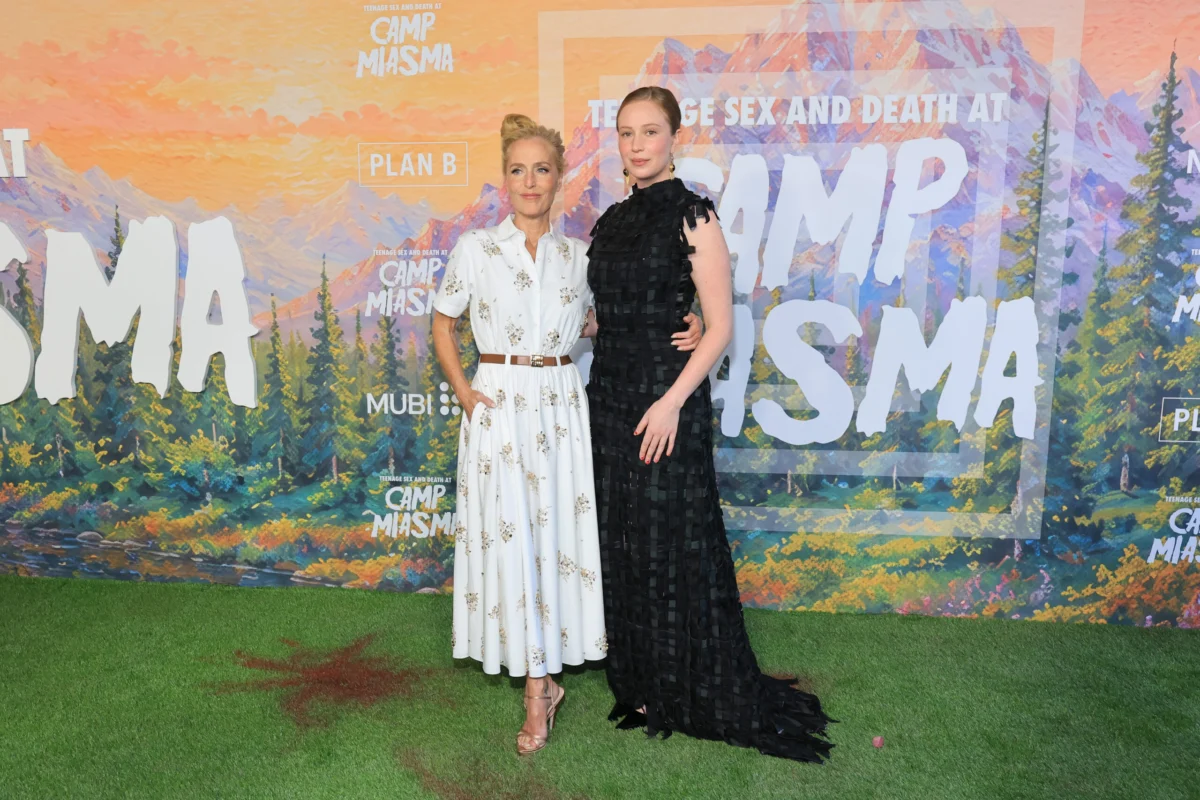
Actress Hannah Einbinder is set to star in "Teenage Sex and Death at Camp Miasma," a new film that places her character in a complex cross-generational dynamic, mirroring a recurring theme in her recent prominent projects. Following her acclaimed five-season run on HBO’s "Hacks," where she navigated an intricate professional and personal bond with co-star Jean Smart, Einbinder now finds herself exploring similar territory with veteran actress Gillian Anderson in director Jane Schoenbrun’s latest feature. The film, an indie horror-thriller, is slated for release on August 7.
Einbinder’s role in "Camp Miasma" casts her as a queer director tasked with helming a sequel to a classic slasher franchise. Her character becomes fixated on casting the original film’s "final girl," portrayed by Anderson, in her new project. This professional pursuit quickly spirals into a realm of profound psychological and sexual tension, drawing both women into a chaotic and transformative relationship. The narrative explores power dynamics, obsession, and identity through a distinctly queer lens, building on themes that have defined Schoenbrun’s previous work.
Einbinder’s Evolving Career and Thematic Tendencies
Hannah Einbinder rose to prominence with her Emmy-nominated performance as Ava Daniels in "Hacks," a sharp-witted young comedy writer who forms an unlikely, often contentious, but ultimately deeply affectionate partnership with legendary comedian Deborah Vance, played by Jean Smart. The series meticulously charted the evolution of their relationship, from professional collaboration to a profound personal bond marked by mentorship, rivalry, and mutual growth. This dynamic, characterized by significant age and experience differences, became a hallmark of Einbinder’s early career success.
Einbinder has openly acknowledged the pattern emerging in her roles, jokingly referencing a Sabrina Carpenter lyric: "I swear they choose me, I’m not choosing them." Despite the perceived typecasting in navigating these complex, often intense, relationships with older women, Einbinder expressed enthusiasm for the trend, stating, "I love it, I’m all for it." This indicates a deliberate artistic engagement with roles that allow her to delve into nuanced explorations of human connection and power dynamics across different generations. Her background as a stand-up comedian has often informed her acting, bringing a grounded realism and quick wit to her characters, even in dramatic contexts.
The Genesis of ‘Camp Miasma’ and Schoenbrun’s Vision
"Teenage Sex and Death at Camp Miasma" marks the third feature film from writer-director Jane Schoenbrun, known for their distinct and often unsettling explorations of identity, internet culture, and the human psyche. Schoenbrun’s previous works, "We’re All Going to the World’s Fair" (2021) and "I Saw the TV Glow" (2024), garnered critical acclaim for their unique blend of horror, psychological drama, and examinations of trans identity and online alienation. These films established Schoenbrun as a significant voice in contemporary independent cinema, particularly within the queer and genre film communities.
The concept for "Camp Miasma" originated from its evocative title, which Schoenbrun reportedly conceived independently before building the entire narrative around it. The film is deeply personal, reflecting Schoenbrun’s own experiences post-gender transition. "I think I knew I wanted to make a movie about coming into my own sexually and in my body after transition, that’s kind of what I was going through in my life at the time," Schoenbrun explained. They aimed for a raw and truthful portrayal of this experience, likening it to a "second puberty" despite being 35 at the time. This artistic approach aligns with their previous films, which also drew heavily from personal lived experiences to create authentic, albeit surreal, cinematic narratives.
Gillian Anderson’s Immersion into the ‘Final Girl’ Trope
Gillian Anderson, an actress celebrated for her versatile and impactful performances across television and film, from her iconic role as Dana Scully in "The X-Files" to Margaret Thatcher in "The Crown" and Jean Milburn in "Sex Education," undertakes a significant departure with her role in "Camp Miasma." Anderson revealed an initial aversion to the horror genre, stemming from a childhood experience. This meant she was largely unfamiliar with the "final girl" trope, a cornerstone of slasher horror films that designates the last surviving female character who confronts and often defeats the killer.
Her education in the cultural significance of the "final girl" came directly from conversations with Schoenbrun. Anderson described these discussions as mind-blowing, leading her to appreciate the multifaceted representations and power dynamics inherent in the trope. She expressed regret for having "closed her mind off so much to that genre" and now holds an interest in revisiting horror with a new perspective, albeit with a lingering sense of terror. Anderson’s engagement with this role, particularly her journey of understanding and embodying a reinterpreted "final girl," adds another layer of intrigue to "Camp Miasma." It highlights how the film intends to explore and potentially subvert established genre conventions through a contemporary and queer lens.
Influences from the Psychosexual Canon
Einbinder cited a specific "psychosexual canon" as inspiration for developing the complex relationship between her character and Anderson’s. This canon includes films such as "Secretary" (2002), "The Duke of Burgundy" (2014), and David Cronenberg’s "Crash" (1996). These films are renowned for their daring explorations of power, desire, obsession, and the intertwining of psychological and sexual intimacy, often pushing boundaries of conventional storytelling.
"Secretary," starring Maggie Gyllenhaal and James Spader, delves into a sadomasochistic relationship that evolves between a secretary and her demanding lawyer boss, examining themes of submission and control. "The Duke of Burgundy," directed by Peter Strickland, is a visually rich and atmospheric film about a lesbian couple engaged in an elaborate, ritualistic BDSM relationship, focusing on the complexities of desire, consent, and the performance of power. Cronenberg’s "Crash," based on J.G. Ballard’s novel, provocatively explores the fetishization of car crashes and the erotic potential of physical trauma and metal. By referencing these works, Einbinder signals that "Camp Miasma" aims for a similarly intense, nuanced, and perhaps unsettling portrayal of its central relationship, transcending simplistic romantic or antagonistic frameworks to delve into deeper psychological and sexual territories.
Broader Implications for Queer Cinema and Independent Horror
"Teenage Sex and Death at Camp Miasma" stands at the intersection of several significant trends in contemporary cinema. It reinforces the growing visibility and artistic merit of queer narratives in independent film, particularly when helmed by LGBTQ+ filmmakers telling their own stories. Schoenbrun’s films consistently offer authentic, unfiltered perspectives on trans experiences, moving beyond tokenism to provide complex character studies and genre explorations.
The film also contributes to the ongoing evolution of the horror genre, where independent productions frequently push thematic and stylistic boundaries. Modern horror has increasingly become a vehicle for social commentary and psychological introspection, moving beyond jump scares to explore deeper anxieties, identities, and societal issues. "Camp Miasma," with its focus on psychosexual dynamics, the reinterpretation of the "final girl" trope, and its queer authorship, exemplifies this trend. It promises to challenge audience expectations, offering a nuanced and potentially disquieting experience that utilizes the conventions of horror to illuminate profoundly personal and universal themes.
The casting of established talents like Einbinder and Anderson in a project with such a distinct indie sensibility further highlights the increasing prestige of independent genre cinema. It underscores a willingness among acclaimed actors to engage with challenging, boundary-pushing material from visionary directors, signaling a vibrant and evolving landscape for artistic expression within the film industry. The title itself, "Camp Miasma," while referring to a literal setting, also subtly evokes the "camp" aesthetic, a sensibility long embraced by queer culture for its theatricality, irony, and celebration of the artificial, hinting at layers of meaning within the film’s presentation.
Anticipation and Release
As "Teenage Sex and Death at Camp Miasma" prepares for its theatrical debut on August 7, anticipation is building for a film that promises to be both provocative and profoundly personal. Its blend of established and emerging talent, coupled with a director known for their singular vision, positions it as a noteworthy entry in this year’s cinematic offerings. The film is expected to generate significant discussion among critics and audiences alike, particularly those interested in the future of queer storytelling and the ever-expanding possibilities of the horror genre. The film’s release will offer a critical look at how these complex, cross-generational relationships are explored on screen, reinforcing Einbinder’s evolving artistic trajectory and Schoenbrun’s unique voice in contemporary cinema.