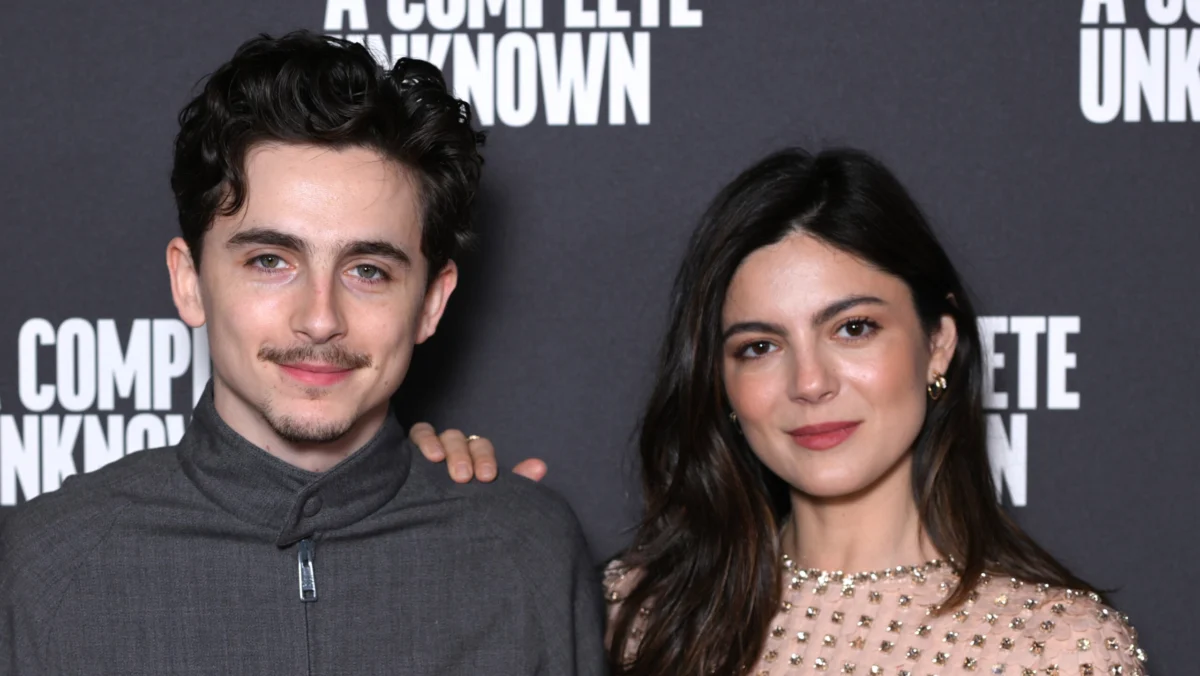
Actress Monica Barbaro recently offered intriguing details about Luca Guadagnino’s highly anticipated film, Artificial, which delves into the world of OpenAI CEO Sam Altman, while also providing a thoughtful response to her A Complete Unknown co-star Timothée Chalamet’s controversial remarks regarding ballet and opera. During an extensive interview on Josh Horowitz’s Happy Sad Confused podcast, Barbaro provided a rare glimpse into the complex nature of the upcoming tech drama and shared her nuanced perspective on the challenges facing traditional performing arts.
Unpacking Luca Guadagnino’s "Artificial" Vision
Monica Barbaro, currently promoting her new film One Night Only, described Artificial as a multifaceted narrative that defies easy categorization. The film, which stars Andrew Garfield as Sam Altman, has been a subject of significant industry buzz due to its high-profile subject matter and the involvement of acclaimed director Luca Guadagnino. Barbaro recounted Guadagnino’s shifting descriptions of the film’s tone during production, highlighting his dynamic artistic process.
A Genre-Bending Narrative on Sam Altman
Barbaro revealed that Guadagnino frequently altered his characterization of Artificial, oscillating between vastly different genres. "One day, we would show up, and Luca would be like, ‘This is a — what was the word he used? A zany comedy?’ No. ‘Madcap,’" Barbaro explained, recalling the director’s initial playful descriptions. However, the tone would often shift dramatically, with Guadagnino stating, "Then the next day, he’d be like, ‘It’s a horror story.’"
Having seen the completed project, Barbaro confirmed that the film successfully integrates these disparate elements. She emphasized that the tonal ambiguity does not detract from the film’s coherence. "Having seen it, I’m like, ‘Yeah, it’s all of it,’" she stated. "But, to be clear, I don’t think it suffers at all from a lack of tone or confusion of tone. I think, in reality, it kind of is all of that." This suggests a film that mirrors the unpredictable and often unsettling nature of the artificial intelligence landscape it seeks to portray. Guadagnino, known for his ability to craft visually rich and emotionally intense narratives across various genres, from the romantic Call Me By Your Name to the psychological horror of Suspiria, appears to be bringing his distinctive stylistic flair to this contemporary tech drama.
The Real-World Stakes of a Tech Biopic
The script for Artificial, penned by Simon Rich, is notably inspired by real events, presenting unique challenges for both the cast and crew. Barbaro highlighted the sensitive nature of working with material that directly references living individuals and ongoing developments within the tech industry. "We were dealing with really challenging material in terms of what we’re saying about people who are alive," she noted.
This approach contrasts with some of Guadagnino’s previous works, which often draw from fictional narratives or historical events less directly tied to contemporary figures. Barbaro observed that Artificial had a distinct "flavor" compared to his other films, largely due to its basis in real-world events. She suggested that the production required a heavily research-based task, a departure from what might be Guadagnino’s usual improvisational or more character-driven methods. The rapid evolution of artificial intelligence, coupled with the high-profile and often controversial public image of figures like Sam Altman, makes the film a particularly timely and potentially provocative exploration of ambition, innovation, and ethical dilemmas in the digital age.
The Shifting Sands of Film Distribution: Amazon to Neon
The journey of Artificial to the screen has been as dynamic as its described tonal shifts, particularly concerning its distribution. The film initially found a home with Amazon MGM Studios, a major player in the streaming and film industry. However, a significant development in the tech world led to a change of plans.
Amazon’s Initial Involvement and Subsequent Departure
In June, Amazon MGM Studios announced its decision to drop the feature film, a move that sent ripples through Hollywood. This decision came just months after Amazon made a substantial $50 billion investment in OpenAI, the very company whose CEO, Sam Altman, is the subject of Artificial. The conflict of interest became immediately apparent; Amazon, having invested heavily in OpenAI, would likely face an awkward position releasing a film that could potentially offer a critical or unflattering portrayal of its new business partner’s leader. This strategic withdrawal underscored the intricate web of relationships between major corporations, technology, and entertainment, demonstrating how financial alliances can directly influence artistic output.
Neon’s Acquisition and Industry Significance
Following Amazon’s departure, the independent film distributor Neon stepped in to acquire Artificial, a move widely seen as a significant win for the project. Neon has carved out a reputation for championing bold, often unconventional, and critically acclaimed cinema, including Oscar-winning titles like Parasite and Titane. This aligns well with Barbaro’s description of Artificial as a film that defies easy genre classification and tackles complex, real-world issues.
Andrew Garfield, who portrays Altman in the film, expressed his gratitude for the new partnership. "I’m really grateful to Amazon for making the film with us, and I’m also really grateful to Amazon for helping it find a new home," Garfield told The Hollywood Reporter last month. He added, "I think Neon’s a really, really exciting home for it. I think it’s a really good fit and I’m really excited to release it with them." Garfield’s comments reflect a common sentiment in the independent film community: that certain stories thrive best with distributors known for their artistic integrity and willingness to challenge mainstream sensibilities. Neon’s track record suggests that Artificial will receive the thoughtful and provocative release its subject matter demands, appealing to an audience eager for cinema that engages with contemporary issues on a deeper level.
Monica Barbaro Weighs In on Timothée Chalamet’s Ballet Remarks
Beyond discussing Artificial, Barbaro also addressed comments made earlier in the year by her A Complete Unknown co-star, Timothée Chalamet, which stirred considerable debate within the arts community. Chalamet’s remarks, concerning the perceived relevance of traditional performing arts, provided a platform for Barbaro to share her own insights, colored by her extensive background in dance.
The Initial Controversy: "No One Cares About This Anymore"
Chalamet’s original comments arose during a discussion about audience interest in slower-paced movies, where he expressed a desire to avoid being involved in an art form that "no one cares about." He specifically cited ballet and opera as examples of artistic disciplines that he felt were struggling to maintain audience engagement. "I don’t want to be working in ballet or opera where it’s like, ‘Hey! Keep this thing alive, even though no one cares about this anymore,’" Chalamet had stated, quickly adding, "All respect to the ballet and opera people out there." Despite his disclaimer, the remarks ignited a conversation about the perceived elitism of certain art forms and the ongoing challenges they face in attracting contemporary audiences. The comments tapped into a broader industry anxiety about audience fragmentation and the commercial viability of diverse artistic expressions in an entertainment landscape dominated by blockbusters and easily digestible content.
Barbaro’s Interpretation and Personal Connection
Monica Barbaro, who comes from a rigorous ballet training background before transitioning to acting, offered a thoughtful and empathetic interpretation of Chalamet’s statements. She noted that Horowitz was the first to ask her about the controversy. "I can’t possibly know exactly where he was coming from when he said that," Barbaro began, "but one of the conversations we had on set was about his sister being a dancer, and he was actually saying it from a very hats-off, respect, kind of place."
Barbaro clarified that she understood Chalamet’s comments not as a dismissal of the artistic merit of ballet or opera, but rather as an observation about their dwindling audience numbers. "I feel like that was something where he was expressing something in a way that made it sound like it was about respect for the art form, when really I think it is about audiences for that art form," she explained. "And I do think audiences are dwindling for those kinds of art forms." Her personal experience as a dancer gives her a unique vantage point, allowing her to empathize with both the artistic discipline and the practical realities of audience engagement. She concluded by stating her desire to approach such sensitive topics without immediate offense, reflecting her "Gemini" trait of seeing all sides, and acknowledging a degree of truth in Chalamet’s underlying point about audience decline.
Broader Implications for Art and Audiences
The discussions sparked by both Artificial and Chalamet’s comments underscore significant trends and challenges within the broader cultural landscape, touching upon the relevance of art forms and the evolving nature of audience engagement.
The Future of Performing Arts in a Digital Age
Chalamet and Barbaro’s dialogue around ballet and opera highlights a persistent concern within the performing arts sector. For decades, these art forms have grappled with the perception of being inaccessible, expensive, or outdated, struggling to attract younger and more diverse audiences. While many ballet and opera companies are actively working to modernize their productions, incorporate new technologies, and expand their outreach efforts, the economic realities and changing consumption habits of contemporary audiences remain formidable obstacles. The proliferation of digital entertainment, coupled with shifts in cultural priorities, has created an environment where traditional live performances must actively compete for attention in an increasingly crowded marketplace. The discussion serves as a poignant reminder of the ongoing need for innovation and adaptation to ensure the vitality of these cherished artistic traditions.
The Evolving Landscape of Cinematic Storytelling
The tonal complexity of Artificial and the challenges it faced in distribution also speak to the evolving nature of cinematic storytelling and its relationship with corporate interests. As artificial intelligence continues to integrate into various facets of daily life, films that critically examine its pioneers and implications become increasingly crucial. However, when these narratives intersect with the commercial interests of powerful tech giants, as seen with Amazon’s initial involvement, the potential for creative friction becomes apparent. Neon’s acquisition of Artificial signals a continued commitment within the independent film sphere to support bold, investigative, and thought-provoking cinema, even when it delves into controversial contemporary subjects. Both conversations—about the future of classic arts and the distribution of modern narratives—underscore a dynamic period for the arts, one characterized by both existential challenges and opportunities for profound cultural commentary.
Monica Barbaro’s candid and insightful interview has provided valuable perspectives on two distinct yet interconnected facets of the entertainment and cultural world. Her teasing of Luca Guadagnino’s Artificial promises a film that is as complex and genre-defying as the technological revolution it depicts, while her thoughtful address of Timothée Chalamet’s ballet comments contributes to a vital ongoing dialogue about the relevance and future of all art forms in an ever-changing global society. As audiences anticipate the release of Artificial, these discussions reinforce the critical role artists play in both creating and interpreting the cultural narratives of our time.