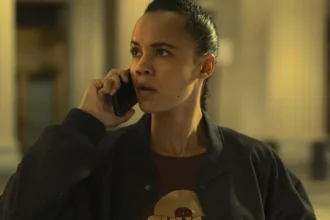
The highly anticipated romantic comedy One Night Only, starring Callum Turner and Monica Barbaro, has sparked an unprecedented deluge of online queries from audiences captivated and perplexed by its central premise: a dystopian future where premarital sex is outlawed except for a single, government-sanctioned 12-hour period each year. Following the release of its official trailer, which rapidly amassed nearly 40 million views across platforms, internet commentators have flooded social media and forums with questions regarding the logistics and societal implications of such a drastic mandate. The film’s creative team, including writer Travis Braun and producer Jacqueline Monetta, alongside director Will Gluck, acknowledge the public’s intense curiosity and offer insights into their world-building philosophy, confirming that while some answers lie within the movie, others are intentionally left to the audience’s imagination.
The Viral Sensation and Its Provocative Premise
The initial glimpse of One Night Only immediately ignited a firestorm of discussion across digital landscapes. Viewers were quick to dissect the trailer, which showcased a world grappling with an extreme legislative overhaul impacting personal relationships and societal norms. The core conceit—a singular annual window for intimacy—presented a comedic yet thought-provoking scenario that resonated deeply, driving millions to speculate on the intricacies of this alternate reality. Questions ranged from the mundane to the profound: How is this law enforced? Are citizens actively breaking the law, and what are the consequences? What exactly constitutes "sex" under this new mandate? How did such legislation even pass, and what impact has it had on institutions like marriage and divorce, or the prevalence of extramarital affairs? This collective intellectual engagement transformed the film’s premise into a cultural talking point long before its theatrical debut.
Crafting a World: Balancing Lore with Love Story
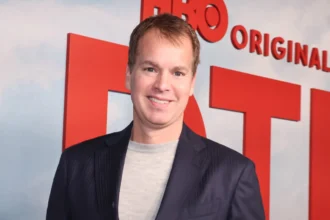
Travis Braun, the screenwriter behind One Night Only, whose script earned a coveted spot on the 2024 Black List, has been at the forefront of addressing these inquiries. Speaking at the film’s New York premiere, Braun revealed that his initial vision was to satirize the complexities of modern dating, conceptualizing a narrative that unfolds over a single, extraordinary night. He confirmed that a comprehensive mythology underpins the film’s unique setting, a world three years post-enactment of the "no-sex" law. However, Braun emphasized a deliberate decision to prioritize the romantic core of the story over an exhaustive political or sociological exposition of the world itself.
"I set out to write a movie about the circus that is modern dating, and I thought how fun if we could set that all in one night," Braun told The Hollywood Reporter. He elaborated on the extensive backstory he developed, which was subsequently streamlined during the production process. "As you develop a movie, you start to pare down and you go: What does an audience really care about, and what are they showing up to see? For me, the answer is always a love story, romance." This approach aimed to present enough contextual information for the world to make sense, without allowing the intricate politics of the mandate to overshadow the emotional journey of the two protagonists.
The Deliberate Ambiguity of ‘One Night Only’
Producer Jacqueline Monetta, instrumental in bringing Braun’s script to director Will Gluck, echoed Braun’s sentiments regarding the film’s narrative strategy. Monetta admitted to having her own "million questions" upon first reading the "big idea, high-concept" premise. However, she underscored the creative team’s conscious choice to leave certain aspects of the world undefined within the film itself. This deliberate ambiguity, she explained, is a key component of the film’s design, intended to foster continued discussion and engagement long after the credits roll.
"We don’t answer every question in the movie, purposefully, because we want those questions to be had on the car ride home," Monetta stated. "We want people to keep talking about it and really think about what would this mean for our world, what does it mean for our world now. But I think Will and I were really specific on what questions we wanted to answer." This strategy transforms the unanswered questions from potential plot holes into catalysts for audience interaction, encouraging viewers to ponder the deeper implications of such a society.

Director’s Vision: World-Building in the Background
Director Will Gluck, known for his work on romantic comedies, further elaborated on this nuanced approach during a recent Reddit AMA. Gluck detailed the extensive internal discussions held by the creative team regarding the "rules of the world." He explained that rather than dedicating overt exposition scenes to these details, they are subtly woven into the fabric of the film’s environment. Audiences paying close attention will find answers embedded in background elements: fleeting images on televisions, subtle signage, and casual, "thrown-away lines" of dialogue.
"We spent a lot of time talking about the rules of the world, and if you’ve seen the movie, or when you see the movie, you’ll see that the rules of the world and the world building are all in the background," Gluck shared. This meticulous yet understated world-building allows the romantic narrative to remain front and center, while rewarding attentive viewers with layers of detail upon repeat viewings. Gluck noted that many of the questions he receives post-screening are, in fact, answered within the movie, a testament to this deliberate design. "It was a tricky tightrope to have them there, but not for the movie to be about it," he concluded.
Star’s Perspective: A Comedy of Escape
Lead actor Callum Turner, who stars alongside Monica Barbaro, enthusiastically supported the filmmakers’ advice to curious prospective moviegoers: "Go see the film!" Turner emphasized the film’s primary identity as a comedy, designed to offer an entertaining escape rather than a profound political statement.
"You’ll realize pretty quickly what the realm is that you’re working within and it’s a comedy," Turner affirmed. He suggested that audiences looking for deep political commentary might be missing the point. "There are no great political undertones, I don’t think. This is just a place where you can escape for an hour and a half, two hours and enjoy and laugh your head off." His comments reinforce the film’s core intention: to deliver a lighthearted, engaging romantic comedy set against a high-concept backdrop, rather than a detailed speculative fiction piece.
Broader Implications and Audience Engagement
The strategy employed by the creators of One Night Only offers an interesting case study in modern audience engagement. In an era dominated by shared universes and intricate lore, deliberately withholding certain narrative details can be a risky move. However, for a romantic comedy, this approach seems to have successfully leveraged social media’s penchant for speculation, transforming unanswered questions into a unique form of viral marketing. The film taps into a universal curiosity about hypothetical societal structures while firmly rooting itself in the relatable chaos of finding love.
This method not only encourages repeat viewings, as Gluck suggested, but also fosters a dynamic, interactive experience for the audience. Viewers are invited to become active participants in interpreting the world, discussing its rules, and imagining its consequences, extending the film’s life beyond the theater. One Night Only thus becomes more than just a film; it’s a conversation starter, a cultural touchstone that encourages collective speculation on a fantastical premise that, at its heart, aims to illuminate the enduring complexities of human connection and desire.
The Lasting Appeal of ‘One Night Only’
As One Night Only continues its run in theaters, the ongoing dialogue surrounding its premise is likely to persist. The filmmakers have expertly walked a tightrope, providing enough intrigue to hook audiences while leaving sufficient room for their imaginations to run wild. This balance ensures that the film is both an enjoyable romantic comedy and a catalyst for broader discussions about freedom, relationships, and societal control, albeit in a comedic context. The questions audiences bring to the theater, and those they ponder on the way home, are an integral part of the One Night Only experience, solidifying its place as a unique entry in the romantic comedy genre that deliberately blurs the lines between entertainment and intellectual curiosity.