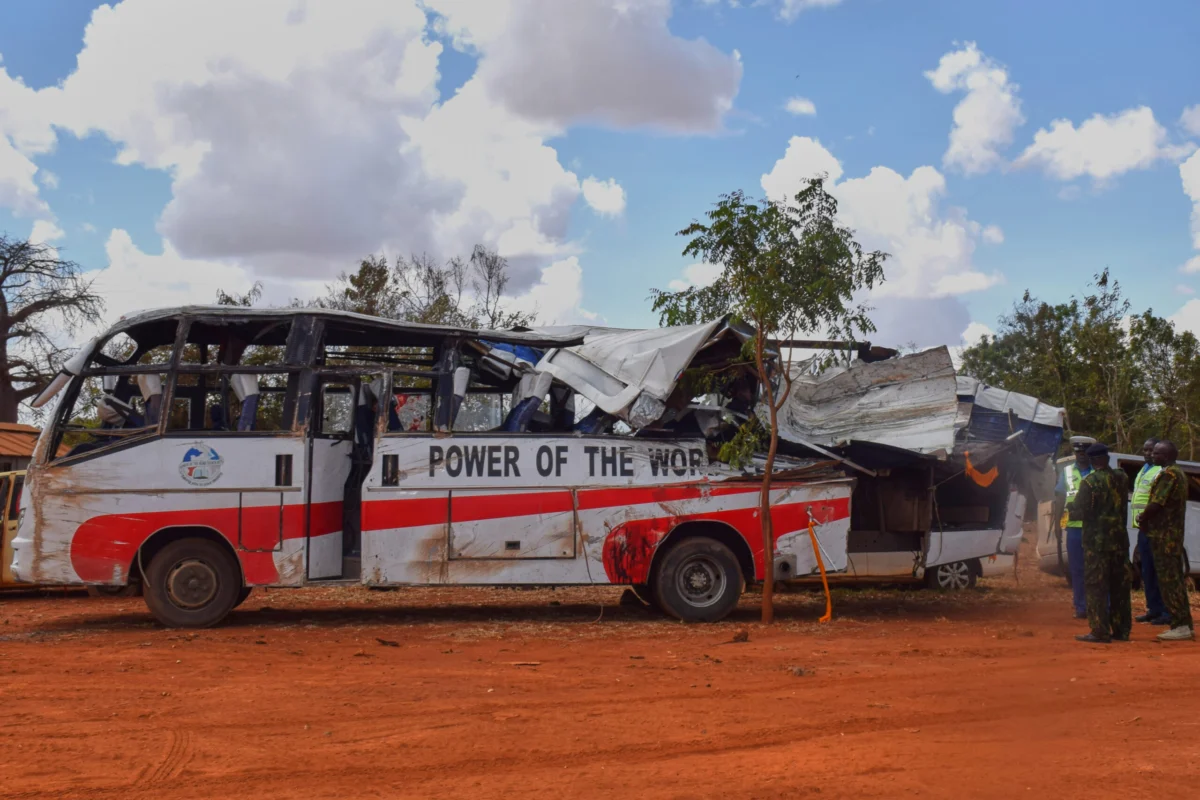
A devastating bus crash on Kenya’s busy Nairobi-Mombasa Highway has claimed the lives of at least 24 individuals, predominantly church mourners, sending shockwaves across the nation and prompting urgent government vows to implement a stringent road safety crackdown. The collision, which occurred Sunday morning, underscores a grim pattern of fatalities on one of the country’s most critical transportation arteries, raising critical questions about the efficacy of existing safety measures and the preparedness of public transportation systems.
The tragedy unfolded near the Kanga area, close to Mtito Andei, a location notoriously associated with traffic accidents. At approximately 7:45 a.m. local time on October 25, a bus, ferrying passengers returning from a funeral in western Kenya, collided violently with a truck. The impact was catastrophic, leaving many passengers trapped and severely injured.
A Devastating Journey’s End
The ill-fated bus belonged to the Power of the Word Church International in Mombasa. Its occupants were en route home after attending the funeral of their pastor, a somber journey that tragically transformed into an even greater tragedy. Survivors recounted moments of terror, with cries for help echoing in the aftermath of the collision.
Violet Mwandonyi, a survivor of the crash, shared her harrowing experience with the Associated Press. She described the desperate pleas of passengers for assistance from any passing motorists. In the chaos and destruction, Mwandonyi expressed profound distress, unable to ascertain the fate of her two young children who were also on board the bus.
The truck involved in the collision was reportedly transporting cement, adding another layer of gravity to the incident. The sheer force of the impact suggests a high-speed collision, the exact dynamics of which are still under intense investigation by Kenyan authorities.
A Pattern of Peril on the Highway
This latest disaster is not an isolated incident. It occurred just over three weeks after another horrific crash on the same Nairobi-Mombasa Highway claimed the lives of 17 people. That previous incident, which involved multiple vehicles, also highlighted the inherent dangers of this vital corridor, especially when it comes to aggressive driving maneuvers.
The October 3 crash near Salama saw 17 fatalities, with most of the victims being Catholic pilgrims en route to a prayer site. Investigations into that incident revealed that a truck driver’s attempt to overtake another truck was the primary cause, a stark parallel to the suspected circumstances of Sunday’s fatal collision. The National Transport and Safety Authority (NTSA), Kenya’s road safety watchdog, had previously identified this specific stretch of the highway as a high-risk zone with a history of frequent and severe accidents.
Investigating the Causes: Speed, Overtaking, and Oversight
Early reports from Makueni County Commissioner Abdullahi Khalif, the senior government administrator for the affected region, suggest that the bus driver may have been attempting to overtake several vehicles when the collision occurred. This dangerous maneuver led to a head-on confrontation with the oncoming truck.
The NTSA has also pointed to dangerous overtaking as a potential contributing factor. However, another survivor offered a different account, suggesting the truck may have struck the bus from behind, indicating a complex sequence of events that investigators are meticulously piecing together. The investigation will examine factors such as driver fatigue, vehicle maintenance, road conditions, and adherence to traffic laws.
The cause of the crash remains under active investigation, with authorities scrutinizing all possible contributing factors. The NTSA is expected to play a crucial role in analyzing accident data and recommending remedial actions.
Government Response: Promises of a Safety Overhaul
In the wake of the latest fatalities, President William Ruto has extended his condolences to the bereaved families and has issued a directive for immediate inspections of all public transport vehicles. This move signals a heightened sense of urgency from the highest levels of government.
Transport Minister Davis Chirchir has vowed a significant ramp-up in enforcement measures. These include intensified crackdowns on speeding and unsafe overtaking, improvements to hazardous sections of the highway, and more rigorous training and licensing procedures for commercial drivers. The government plans to collaborate closely with the police, local authorities, and lawmakers to ensure the swift and effective implementation of these measures.
"We cannot continue treating road safety as business as usual," Chirchir stated in a press release on Sunday, emphasizing the need for a paradigm shift in how road safety is managed in Kenya. The minister underscored the commitment to reducing the alarming rate of road deaths through stronger, more decisive action.
The Grim Statistics of Kenyan Roads
The tragic events of Sunday serve as a stark reminder of Kenya’s persistent road safety crisis. According to NTSA figures reported by Kenyan media, the nation recorded a staggering 5,009 deaths in road crashes in 2025. The first half of 2026 alone saw 2,150 fatalities, indicating a disturbing trend.
These numbers paint a grim picture of the daily dangers faced by Kenyans on their roads. The NTSA estimates that approximately 20,000 road crashes occur annually across the country, highlighting the scale of the problem and the immense burden it places on emergency services, healthcare systems, and grieving families.
Following Sunday’s collision, the NTSA has called for road crashes to be officially declared a national disaster, a plea that reflects the severity and widespread impact of the issue. Such a declaration could unlock additional resources and political will to tackle the crisis more comprehensively.
Broader Implications and the Path Forward
The frequent and deadly crashes on the Nairobi-Mombasa Highway have significant economic and social ramifications. The highway is a vital artery for trade and tourism, connecting the landlocked capital to the bustling port city of Mombasa. Disruptions and accidents on this route not only cause immediate human suffering but also impact supply chains and economic activity.
The recurring nature of these accidents raises questions about the long-term effectiveness of previous road safety initiatives. Critics have often pointed to issues such as inadequate infrastructure, corruption within licensing bodies, and a culture of impunity among some drivers. The government’s latest promises of a crackdown will be closely watched for their tangible impact on reducing fatalities.
The involvement of a church group on a mournful journey underscores the vulnerability of ordinary citizens to systemic safety failures. These are not just statistics; they are individuals, families, and communities devastated by preventable loss. The call for road crashes to be declared a national disaster reflects a growing public demand for a more robust and comprehensive response.
Next Steps: Enforcement, Education, and Infrastructure
The government’s proposed measures aim to address multiple facets of road safety. Strengthening enforcement against dangerous driving practices like speeding and illegal overtaking is a critical first step. Improving the physical condition of dangerous road sections, often identified through accident data, is also paramount.
Furthermore, enhancing the training and vetting of commercial drivers is essential to ensure that those entrusted with the lives of passengers and the safety of the public are adequately qualified and responsible. The NTSA’s role in data collection, analysis, and oversight will be crucial in guiding these efforts.
The success of this renewed crackdown will ultimately depend on sustained political will, effective implementation, and the active participation of all stakeholders, including drivers, transport operators, and the public. The tragic loss of life on Sunday serves as a potent reminder of the urgent need for a collective commitment to making Kenya’s roads safer for everyone. The nation now waits to see if these promises translate into a lasting reduction in the devastating toll of road accidents.