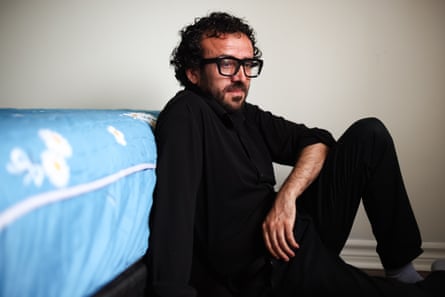
Gabar Choli, a 40-year-old Kurdish asylum seeker and activist, sat in a solitary confinement medical cell in South Texas during the summer of 2025, his body withered to a skeletal frame. As a prominent Kurdish film-maker recounts ‘inhumane’ ICE force-feeding, the details of his eight-month ordeal reveal a controversial practice used by U.S. Immigration and Customs Enforcement (ICE) to end hunger strikes within the federal detention system. Choli, who had refused food for over two months to protest detention conditions and the stagnation of his asylum case, describes a brutal routine of physical restraint and involuntary medical intervention that has drawn sharp criticism from human rights advocates and medical professionals alike.
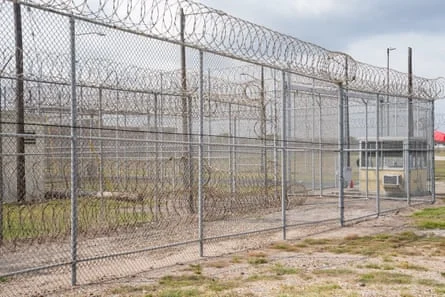
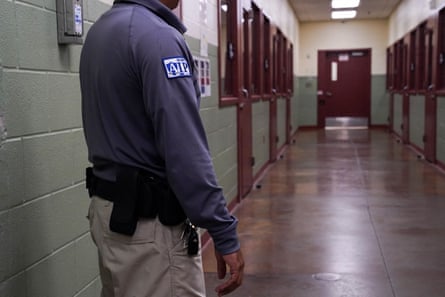
The Port Isabel Service Processing Center, where Choli was held, became the site of what he describes as a twice-daily struggle for physical and psychological survival. According to court records and exclusive interviews, the film-maker was subjected to nasogastric intubation—a process where a feeding tube is inserted through the nose and down into the stomach—against his will. This practice, carried out under the authority of federal court orders, was intended to maintain Choli’s nutritional levels as he sought to use his body as a final instrument of protest against the Trump administration’s intensified immigration crackdown.
The Systematic Nature of Inhumane ICE Force-Feeding
The process of involuntary feeding described by Choli involves significant physical force and the coordination of multiple security personnel. Choli recounts that at least five guards would enter his cell, wrestling him to the concrete floor before shackling his wrists and ankles. Once restrained, he was transported to the facility’s infirmary, where he was pinned to a bed. "Two guards would hold my feet; two hold my hands; one hold my head," Choli stated, describing the sensation of a 60cm tube being forced through his nasal cavity.

As the Kurdish film-maker recounts ‘inhumane’ ICE force-feeding, he highlights the physical trauma inherent in the procedure. On several occasions, the insertion of the tube caused significant internal damage. Choli reported that his nose and throat were perpetually swollen and that he frequently tasted blood from internal abrasions. In one specific declaration to a federal judge, Choli alleged that a nurse shoved the tube with such force that it tore the lining of his nose, causing it to bleed for several days. He described the agonizing experience of returning to his solitary cell, where he would choke on his own blood in the hours following the procedure.
The psychological impact of the treatment was equally severe. Choli, who considers himself a man of principle rather than a suicidal individual, viewed the hunger strike as his only remaining avenue for demanding humane treatment. The involuntary nature of the feeding, combined with the physical aggression used by private security contractors, left him feeling "mentally broken." The use of solitary confinement, which ICE refers to as "administrative segregation," further isolated Choli, who was kept in a cell where the lights remained illuminated 24 hours a day.
From Activism to the Port Isabel Detention Center
Choli’s journey to the South Texas detention facility began far from the U.S.-Mexico border. A Kurdish Muslim who fled what he describes as occupied territory in Iran, Choli settled in Canada in 2007. In Vancouver, he established himself as a film-maker and a vocal activist for the independence of Kurdistan. His life in Canada was marked by both professional ambition and legal challenges, including a 2012 drug-smuggling conviction involving opium received by mail.
Following death threats related to his political activism, Choli crossed into the United States in 2022, seeking asylum at the border in Washington state. Initially allowed to live in Los Angeles while his case proceeded, Choli complied with all mandatory check-ins and obtained a work permit. However, following the 2024 election and the subsequent return of Donald Trump to the White House, the policy landscape shifted toward mass deportations. During a routine check-in on February 25, 2025, Choli was arrested by ICE officials.
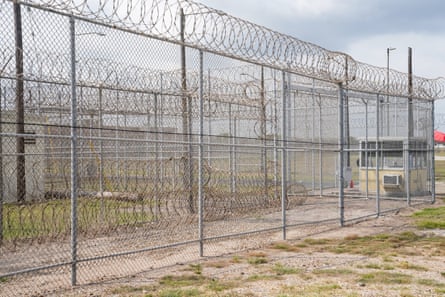
He was initially held at the Desert View Annex in California, a facility that has faced repeated allegations of substandard conditions. Choli alleges that officials pressured him to sign a voluntary deportation order to Iran, a country where he feared for his life. In response, he began a hunger strike on March 24, 2025. Seeking what they termed a "higher level of medical care," ICE transferred Choli to the Port Isabel facility, a privately operated center managed by Akima Global Services.
Legal Maneuvers and the Absence of Due Process
The use of involuntary medical procedures in immigration detention is governed by a complex legal framework that often bypasses the standard rights afforded to criminal defendants. As the Kurdish film-maker recounts ‘inhumane’ ICE force-feeding, the role of the federal judiciary comes into sharp focus. Records indicate that the U.S. Attorney’s Office for the Southern District of Texas filed multiple requests for court orders to authorize the force-feeding of Choli.
Federal Judge Rolando Olvera issued the orders, often without hearing directly from Choli or providing him with legal representation. Unlike criminal proceedings, where the Sixth Amendment guarantees the right to an attorney, immigration detention is classified as a civil matter. Choli, who could not afford a lawyer, was forced to represent himself, writing letters to the court that often went unacknowledged. When Choli requested a court-appointed attorney, Judge Olvera denied the motion, stating that counsel is not guaranteed in civil cases and that the feeding orders would remain in place regardless of legal advocacy.
The Department of Homeland Security (DHS) has defended these actions as necessary for the "security and good order" of its facilities. In statements, ICE spokespersons have argued that while they respect the right to refuse treatment, they must intervene when a detainee’s medical condition presents a "serious risk of death or permanent harm." However, critics argue that this justification serves as a pretext to suppress political protest within the detention system.
Medical Ethics and the Question of Torture
The medical community has expressed profound alarm over the reports emerging from Port Isabel. Dr. Chanelle Diaz, an assistant professor of medicine at Columbia University, reviewed Choli’s limited court records and suggested that the treatment likely meets the international definition of torture. "It’s difficult to capture the degree of risk that he was being put at, long-term," Diaz noted, emphasizing that nasogastric tubes are meant for clinical necessity in consenting patients, not as a tool for behavioral control.
The World Health Organization (WHO) and the World Medical Association have long held that force-feeding a mentally competent hunger striker is a violation of medical ethics. Dr. Parveen Parmar, an expert with Physicians for Human Rights, echoed these sentiments, stating that patient autonomy is a core tenet of medicine. Parmar pointed out that Choli had been evaluated by a social worker and found to be of "sound mind," yet his right to refuse treatment was disregarded in favor of facility operational interests.
The physical complications of long-term force-feeding are extensive. Beyond the immediate pain of insertion, the rapid administration of nutrients after a period of starvation can cause metabolic imbalances and severe gastrointestinal distress. Choli reported suffering from chronic diarrhea and episodes where he was left in a cell without a toilet, forced to defecate on himself—an experience he described as deeply dehumanizing.
The Aftermath of an Eight-Month Hunger Strike
Choli’s ordeal finally ended on January 6, 2026, when he was deported from the United States to Canada. Upon his return, he was reunited with family members in Ontario, but the physical and psychological scars of his detention remain. He describes a long recovery process, including having to "relearn" how to eat solid food. The film-maker reports ongoing pain in his jaw, kidneys, and bladder, which he attributes to the months of physical trauma and the forced nutritional regime.
The broader implications of Choli’s case suggest a significant increase in the use of force-feeding as a management tool within ICE facilities. Internal DHS data obtained by investigators indicates that between January 2025 and August 2026, at least 18 hunger strikers were subjected to court-ordered involuntary treatment. This represents a marked escalation in the government’s response to detainee protests.
Despite the severity of his experience, Choli remains resolute in his decision to strike. He views the "price" he paid—the damage to his health and his sense of self—as a necessary sacrifice for standing against what he perceives as a brutal and unjust immigration system. While the legal cases against him were dismissed once he was no longer in U.S. custody, the testimony he provides serves as a rare first-hand account of the hidden realities within American immigration jails.
As the international community continues to monitor the treatment of asylum seekers in the United States, the account provided by the Kurdish film-maker regarding ‘inhumane’ ICE force-feeding stands as a significant challenge to the government’s narrative of medical necessity. For Choli, the struggle for humane treatment is no longer a personal battle in a Texas cell, but a public call for accountability in the administration of civil detention.