Ukraine’s long-range drone offensive against Russian energy infrastructure reached a violent new peak on Monday, with a devastating strike on the Tatarstan region marking one of the deadliest cross-border operations since the full-scale invasion began in 2022. Russian authorities confirmed that a wave of Ukrainian unmanned aerial vehicles (UAVs) targeted the city of Nizhnekamsk, a vital petrochemical hub located more than 1,000 kilometers (620 miles) from the Ukrainian border, resulting in at least 12 deaths and 39 injuries.
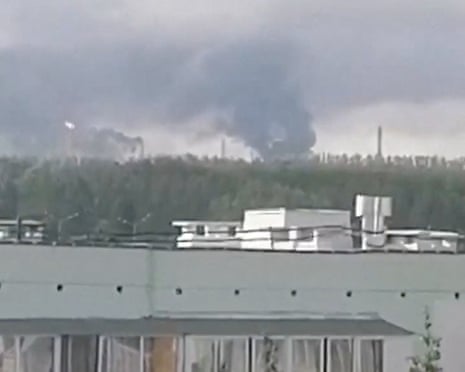
The primary target of the overnight mission was the Taneko oil refinery, one of Russia’s most technologically advanced and productive processing plants. Local officials reported that while several drones were intercepted by electronic warfare systems and anti-aircraft batteries, at least one craft struck a critical processing unit, sparking a massive blaze that sent plumes of black smoke over the industrial district. This attack represents a significant breach of Russian airspace and highlights the growing reach of Kyiv’s domestic drone program, which has increasingly focused on crippling the Kremlin’s economic engine.
Escalation of Deep-Strike Capabilities and Strategic Targets
The strike on Nizhnekamsk is part of a broader, more aggressive campaign by the Ukrainian military to bring the costs of the war home to the Russian public and the state treasury. By hitting facilities deep within the Russian interior, Ukraine is forcing Moscow to redeploy precious air defense assets away from the front lines to protect industrial assets in the rear. Tatarstan, home to a massive concentration of oil, gas, and chemical plants, had previously been considered a safe zone due to its distance from the theater of operations.
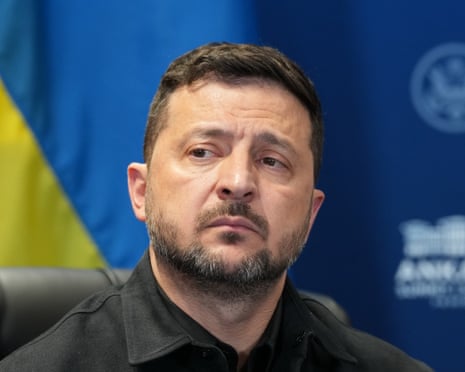
Ukrainian President Volodymyr Zelenskyy, in his regular nightly address on Sunday, framed the continuing strikes on oil refining facilities as a necessary component of a strategy to apply maximum pressure on the Russian government. Zelenskyy asserted that the economic degradation of Russia’s energy sector is the most direct path to forcing a diplomatic resolution. "The only reason this is still continuing is Russia’s unwillingness to end this war," Zelenskyy said, noting that every strike on a refinery reduces the "petrodollars" available to fund the Russian military machine.
The Taneko refinery had previously been targeted in June, but Monday’s operation was far more lethal and destructive. Russian investigators have already opened a criminal case, qualifying the event as a "terrorist attack." Officials in the Tatarstan region, led by Governor Rustam Minnikhanov, declared a period of official mourning for the victims, who reportedly included several refinery technicians and at least one child in a nearby residential area hit by falling debris.

Expanding the Drone Front to Siberia and Logistics Hubs
The offensive was not limited to Tatarstan. In a rare and highly significant development, Russian officials reported a drone strike on an industrial facility in the Tyumen region of Siberia. Governor Alexander Moor confirmed via his Telegram channel that several drones fell on a facility in the region, triggering a fire. While Tyumen is thousands of kilometers from Ukraine, the strike suggests that Kyiv has developed either ultra-long-range "suicide" drones or is utilizing sabotage groups operating from within Russian territory to launch short-range craft.
Simultaneously, the Russian Central Bank has been forced to intervene in the domestic economy following a systematic Ukrainian campaign against commercial logistics. According to a letter from the regulator published on Monday, the Central Bank has advised creditors to support businesses affected by UAV strikes on warehouses and logistics centers. This directive comes as Ukraine intensifies its focus on the "Wildberries" e-commerce network, Russia’s largest online retailer.
Since July 18, at least 20 Wildberries warehouses across western and central Russia have been targeted by drones. These attacks have caused hundreds of millions of dollars in property damage and disrupted the delivery of consumer goods to millions of Russian citizens. The Central Bank’s recommendation that banks restructure loans for these affected businesses underscores the tangible economic instability caused by Ukraine’s "war of the warehouses."
Russian Defense Claims and Internal Strain
The Russian Ministry of Defense claimed on Monday that its forces shot down a total of 456 Ukrainian drones over the preceding 24-hour period. However, the ministry did not specify how many of those drones successfully reached their targets or the extent of the damage caused by those that were not intercepted. The sheer volume of the drone wave suggests a saturation tactic intended to overwhelm Russian "Pantsir" and "S-400" defense systems.
The psychological impact of these strikes is becoming a significant factor in Russian domestic politics. Residents in cities like Nizhnekamsk and Ryazan have taken to social media to express frustration over the perceived lack of protection for critical infrastructure. In response, local mayors and regional governors have been forced to implement stricter emergency protocols, including the closure of airspace and the suspension of public events, further disrupting the sense of normalcy the Kremlin has sought to maintain.
Russian Retaliation and the Humanitarian Toll in Ukraine
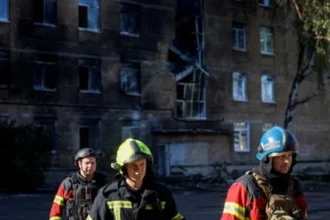
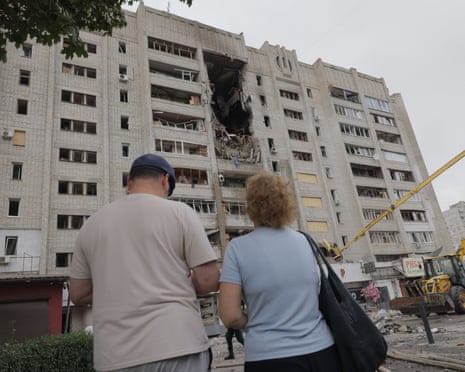
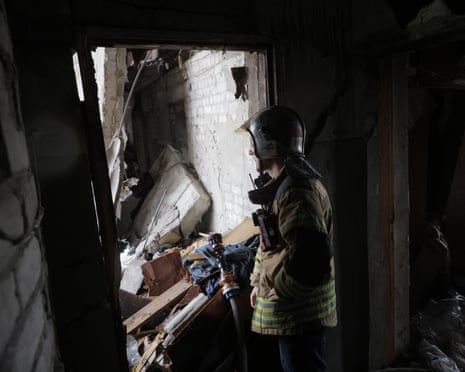
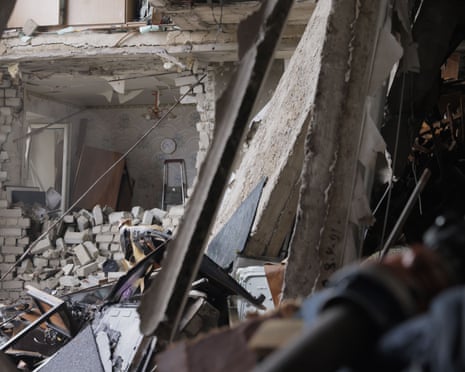
As Ukraine struck deep into the Russian rear, Moscow launched its own series of heavy strikes against Ukrainian civilian centers. In the Kharkiv region, a massive artillery and drone barrage hit the residential village of Bugaivka in the Chuguiv district. The regional prosecutor’s office reported that at least five people were killed and several homes were completely leveled. Rescue workers spent much of Monday morning digging through rubble to recover bodies and assist the wounded.
The humanitarian crisis was further exacerbated by a strike on a World Health Organization (WHO) warehouse in the city of Dnipro. WHO Director-General Tedros Adhanom Ghebreyesus condemned the attack, stating that the facility was stocked with life-saving medical supplies intended for frontline hospitals. "Attacks on health care must stop," Tedros said in a public statement. "Even wars have rules. One of those is that health must be protected."
The destruction of the Dnipro warehouse is expected to cause immediate shortages of trauma kits, insulin, and other essential medicines in eastern Ukraine. International observers noted that the targeting of logistics hubs—both in Russia and Ukraine—has become a defining feature of this phase of the conflict, as both sides seek to collapse the other’s ability to sustain the war effort.
The Deployment of North Korean Forces
Geopolitical tensions reached a new high following President Zelenskyy’s confirmation that the number of North Korean soldiers expected to join the Russian war effort has risen to 50,000. This is a sharp increase from the 30,000 troops estimated in July. Zelenskyy warned that Pyongyang is using the conflict as a testing ground for its military personnel to gain experience in modern, high-tech warfare, including drone operations and electronic jamming.
"It is absolutely clear that North Korea will continue to build its experience, receive licenses from Russia, and receive all kinds of military tools from them," Zelenskyy stated. He called on South Korea and other Pacific allies to bolster Ukraine’s air defense systems, arguing that the involvement of North Korean troops transforms the European conflict into a global security threat. The UN Security Council is scheduled to meet later today to discuss the status of Ukrainian prisoners of war and the implications of third-party military involvement.
Political Shifts and Migration Rows in Europe
While the war in the East intensifies, Western and Southern Europe are grappling with internal political friction linked to the broader consequences of the conflict. In a move that has sent shockwaves through the European Union, Danish Prime Minister Mette Frederiksen and Italian Prime Minister Giorgia Meloni issued an inflammatory joint statement vowing to protect Europe’s "Christian cultural heritage."
The two leaders, representing a unique cross-spectrum alliance between the center-left and the far-right, stated that they would no longer accept "uncontrolled migration" into the continent. The statement, released on social media, called for the establishment of "departure centers" in third countries outside of Europe. "We expect those who come to our countries… to respect European values and not impose upon us a way of life we do not desire," the statement read.
This political hardening comes as a diplomatic row between Spain and Italy intensifies. Madrid recently reintroduced border checks on visitors from Italy in response to a mass influx of migrants from Morocco into the Spanish enclave of Ceuta. Italy’s foreign minister called the move "completely unacceptable," leading to significant travel delays for tourists and further straining the Schengen Agreement’s principle of open borders.
Future Outlook for Regional Security
The escalation of drone warfare into the Russian heartland, combined with the entry of North Korean troops and the fracturing of European political unity, suggests a volatile and unpredictable summer for the international community. The strikes on Russian oil refining facilities have demonstrated that Ukraine is no longer content to fight a defensive war on its own soil. By targeting the economic pillars of the Russian state, Kyiv is betting that the resulting financial and social domestic pressure will eventually outweigh the Kremlin’s territorial ambitions.
However, the human cost continues to mount on both sides of the border. With critical infrastructure, medical warehouses, and residential blocks increasingly caught in the crossfire, the prospects for a ceasefire remain remote. As the UN Security Council prepares to convene, the world remains focused on whether the international community can find a way to de-escalate a conflict that is rapidly expanding in both geographic scope and geopolitical complexity.