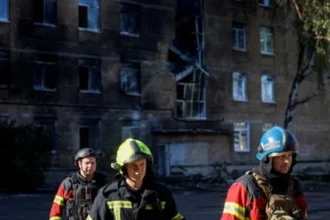
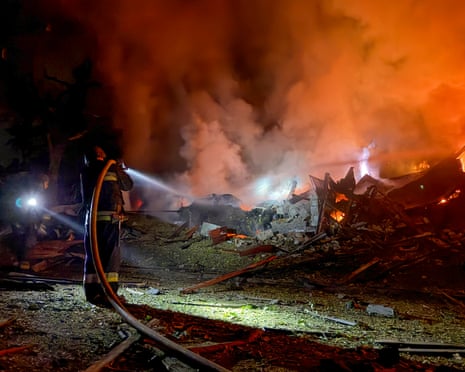
The barrage represents one of the most complex displays of coordinated fire since the conflict began, highlighting Russia’s deepening military ties with Pyongyang. In Zaporizhzhia, local officials reported that at least six people were killed and 20 others sustained injuries of varying severity. Simultaneous strikes in the Dnipropetrovsk and Donetsk regions claimed another six lives and left 16 people wounded. President Zelenskyy characterized the operation as a "vicious attack" specifically engineered to inflict maximum damage on non-military targets, including housing complexes and essential service networks.
Overnight Russian Strikes on Ukraine Used North Korean Missiles and Hypersonic Technology
The use of foreign-sourced weaponry has become a focal point for the Ukrainian administration as it petitions the international community for enhanced air defense capabilities. According to President Zelenskyy, the evidence gathered from crash sites indicates that Russia is no longer relying solely on its domestic stockpiles but is increasingly integrating North Korean equipment into its front-line operations. The Zircon missile, a sea-launched hypersonic weapon capable of reaching speeds of Mach 9, was also deployed, complicating interception efforts for Ukrainian air defense batteries.
"Every step Russia takes—increasing ballistic missile production, bringing in North Korean equipment, preparing for mobilization—all of this shows that Moscow is preparing not for peace, but for escalation," Zelenskyy stated in a morning address. He urged global leaders to provide an immediate response, warning that delays in diplomatic and military support only embolden the Kremlin to expand its reliance on pariah states for high-tech munitions.
The integration of North Korean ballistic missiles into the Russian arsenal has significant geopolitical implications. Military analysts suggest that these weapons, likely variants of the KN-23 or KN-24, provide Russia with a cost-effective way to sustain high-intensity bombardment while bypassing international sanctions. The presence of these missiles on European soil has raised alarms in Washington and Brussels, where officials are monitoring the burgeoning "axis of convenience" between Moscow and Pyongyang.
Escalation of Drone Warfare and Deep-State Retaliation
As the overnight Russian strikes on Ukraine used North Korean missiles to batter the interior, Ukrainian drone forces launched a series of sophisticated retaliatory strikes deep inside Russian territory. Ukrainian military officials confirmed hitting a strategic military base in the Voronezh region and an oil refinery in Orsk. These operations are part of Kyiv’s broader strategy to degrade Russian logistics and energy infrastructure, thereby hampering the Kremlin’s ability to sustain its offensive.

In the Voronezh region, falling debris from intercepted drones triggered significant fires at a logistics warehouse owned by Wildberries, Russia’s largest online retailer. Local reports indicated that one person died and two others were injured in the incident. While Wildberries later stated that the fire had been extinguished and goods were undamaged, the strike underscored the vulnerability of Russian commercial hubs to Ukrainian long-range capabilities.
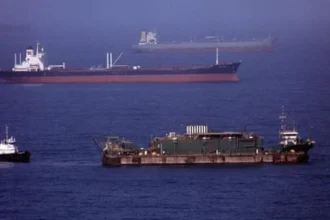
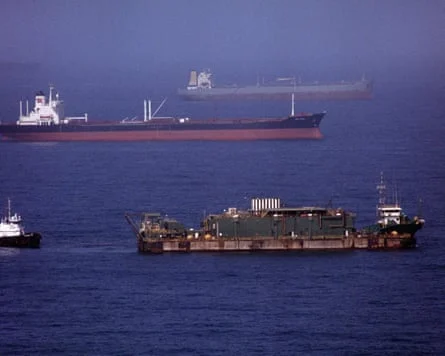
Ukraine’s drone forces also claimed successful hits on a cargo ship in the Black Sea and various energy facilities located within temporarily occupied territories. The statement from the Ukrainian army emphasized that these targets were selected based on their roles in supporting the Russian military machine. The increase in maritime and deep-territory drone strikes suggests a shift in Ukrainian tactics toward asymmetric warfare, aiming to bring the costs of the conflict home to the Russian populace and economy.
Conflicting Reports on Logistics and Industrial Targets
The Russian Defense Ministry offered a starkly different narrative regarding the night’s events, asserting that its precision strikes were limited to military-related transport and logistics hubs. Moscow claimed that its primary target in Kyiv was the Nova Poshta sorting complex, which it alleged was being used for the storage and distribution of "dual-use" goods. According to the Russian statement, the facility handled components for medium- and long-range drones, robotic systems, and electronic warfare equipment.
Furthermore, the Russian ministry reported a strike on the Kyiv-3 transport center, describing it as a massive warehouse complex housing attack drones and ground control stations. In Zaporizhzhia, Russia claimed to have targeted a major iron and steelworks plant, arguing that the facility was instrumental in the Ukrainian war effort. These justifications are frequently used by Moscow to deflect international criticism regarding civilian casualties, though independent monitors and Ukrainian officials maintain that residential neighborhoods bore the brunt of the impact.
The discrepancy between the two accounts highlights the ongoing information war. While Russia frames its actions as surgical strikes against military assets, the physical evidence of destroyed apartment buildings and civilian deaths in Zaporizhzhia paints a picture of indiscriminate bombardment. The involvement of North Korean technology adds a layer of complexity to these investigations, as international observers attempt to track the proliferation of Pyongyang’s hardware in the European theater.
Political Shifts in Hungary and the Post-Orbán Era
While the overnight Russian strikes on Ukraine used North Korean missiles, the political landscape of Central Europe is undergoing a significant transformation. The Hungarian parliament is set to choose a new president today, marking what many observers see as a definitive break from the era dominated by Viktor Orbán over the last two decades. András Baka, a former president of the Supreme Court and a judge on the European Court of Human Rights, is the frontrunner for the post.

Baka’s expected confirmation is viewed as a symbolic shift toward the restoration of judicial independence and democratic norms in Hungary. Although the presidency is largely a ceremonial role, the selection of a figure known for his past clashes with the Orbán administration signals a change in the national political climate. This transition comes at a time when Hungary’s relationship with the European Union has been strained by disputes over the rule of law and its stance on the war in Ukraine.
The move is being closely watched by EU officials in Brussels, who hope that a more moderate presidency in Budapest could facilitate better cooperation on regional security and aid for Kyiv. As Hungary navigates this internal pivot, its role in the European bloc remains critical, particularly regarding the unanimous consent required for major policy shifts and financial packages.
Diplomatic Resets and the UK-EU Relationship
In London and Dublin, a separate diplomatic effort is underway to stabilize Western European relations. Hamish Falconer, the United Kingdom’s newly appointed minister for European relations, is scheduled to hold a high-level phone conversation with Ireland’s Europe minister, Thomas Byrne, this afternoon. The dialogue is seen as a vital step in refreshing talks regarding Britain’s post-Brexit relationship with the European Union.
Ireland currently holds the rotating presidency of the EU, giving it a pivotal role in shaping the political agenda for the latter half of 2026. The Irish government has already identified the "reset" of UK-EU relations as a top priority for its presidency. Both London and Dublin are seeking to move past the friction of previous years, focusing instead on shared security concerns, trade facilitation, and a unified front against Russian aggression.
The timing of this diplomatic outreach is notable, occurring just as the conflict in Ukraine enters a more volatile phase. A cohesive relationship between the UK and the EU is considered essential for maintaining a robust sanctions regime and ensuring the continued flow of military assistance to the Ukrainian front lines.
Environmental Crisis and Infrastructure Strain in Romania
The regional instability is not limited to military and political spheres; environmental factors are now threatening critical infrastructure in Romania. Falling water levels on the Danube River have put the Cernavodă nuclear power plant at risk, with officials warning that a second reactor may have to be shut down within the next 48 hours. The plant’s first reactor was already taken offline in late July as a precautionary measure.
The Danube provides essential cooling water for the plant’s pumps, and the current drought has made it increasingly difficult to operate the facility safely. Last week, the Romanian navy conducted controlled explosions on the riverbed in an attempt to divert water flow toward the plant, but these measures have yet to yield a permanent solution. While the Romanian government has insisted that energy rationing will not be necessary, they have conceded that electricity imports will need to rise to meet domestic demand.
The situation at Cernavodă highlights the intersection of climate change and national security. As heatwaves continue to batter the continent, the reliability of traditional energy sources is being tested. The potential loss of a second nuclear reactor would significantly tighten the regional energy market, potentially driving up costs across Southeastern Europe during a period of already high economic tension.
Extreme Weather and the European Heatwave
The environmental strain is being felt across Western Europe as Spain and France prepare to enter their fifth major heatwave of the summer. Meteorologists have issued warnings that temperatures could soar to 38 degrees Celsius (over 100 degrees Fahrenheit) in the coming days. This persistent heat has already led to increased wildfire risks and has placed a massive burden on healthcare systems and electrical grids.
The recurring heatwaves are part of a broader trend of extreme weather patterns that have defined the summer of 2026. In Spain, agricultural output has been severely impacted, while in France, authorities have implemented water restrictions in several departments. The human toll of these climate events is rising, with elderly populations particularly at risk during the peak afternoon temperatures.
The convergence of military conflict, political transition, and environmental crisis creates a complex challenge for European leadership. As the overnight Russian strikes on Ukraine used North Korean missiles to escalate the violence in the east, the rest of the continent is grappling with the logistical and humanitarian consequences of a changing climate and a shifting geopolitical order.
International Response to North Korean Involvement
The revelation that the overnight Russian strikes on Ukraine used North Korean missiles is expected to trigger a new round of discussions at the United Nations Security Council. Western diplomats have long accused Pyongyang of providing material support to Moscow in exchange for food, fuel, and missile technology. The direct use of North Korean ballistic missiles in a high-casualty strike on a civilian center like Zaporizhzhia provides tangible evidence for these claims.

The global community now faces the task of tightening enforcement of existing sanctions on both Russia and North Korea. However, with Russia holding a permanent seat on the Security Council, the path to a formal UN resolution remains blocked. Instead, individual nations and the European Union are likely to pursue secondary sanctions targeting the shipping networks and financial intermediaries that facilitate the arms trade between the two nations.
As the day progresses, the focus remains on the survivors in Zaporizhzhia and the surrounding regions. Rescue operations are ongoing, and the death toll may rise as more areas are cleared. The use of advanced weaponry like the Zircon and North Korean ballistics signals a grim new chapter in the war, one where the boundaries of international law and regional security are being tested daily.