Retired FBI agent Maureen O’Connell has publicly scrutinized the initial handling of the Nancy Guthrie case by the Pima County Sheriff’s Department, alleging critical errors on the first day of the investigation into the disappearance of Savannah Guthrie’s 84-year-old mother. Six months after Nancy Guthrie vanished from her Tucson, Arizona, home, O’Connell highlighted significant discrepancies in the initial crime scene management, suggesting these missteps may have hindered the ongoing search for answers and a swift resolution to the high-profile missing persons case.
The Disappearance of Nancy Guthrie
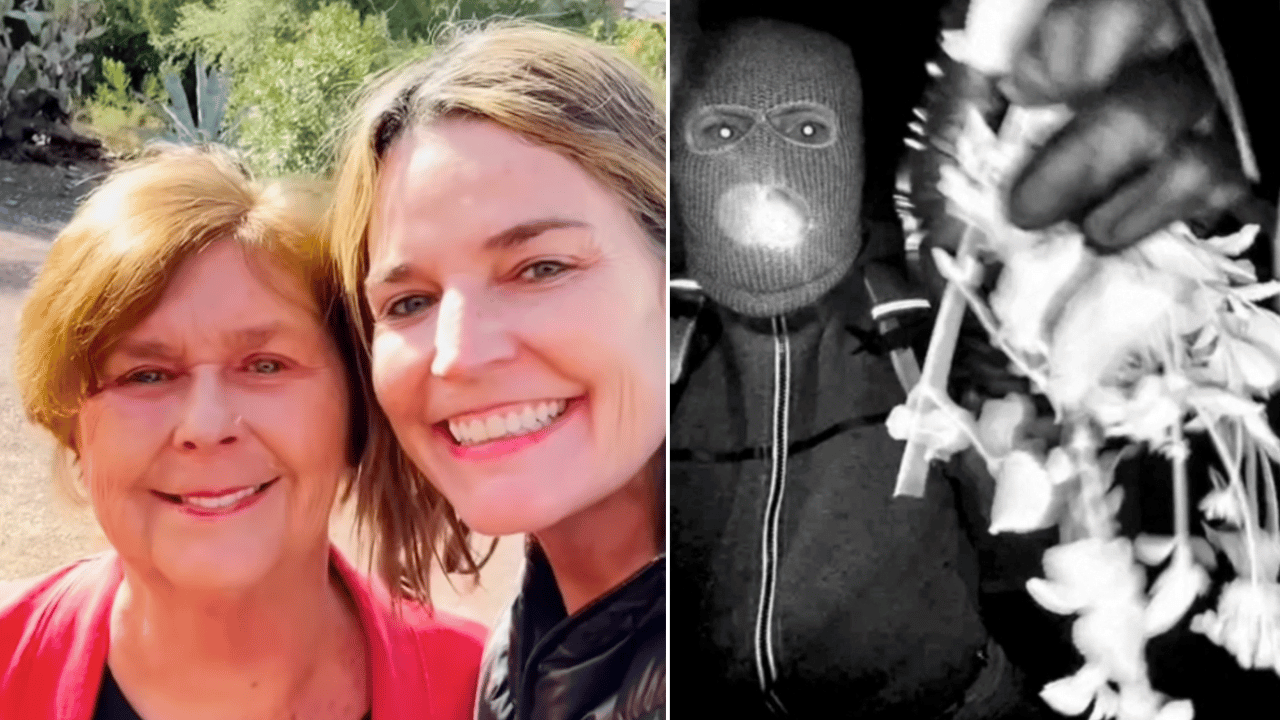
Nancy Guthrie, the mother of Today show co-host Savannah Guthrie, was last seen in the early hours of February 1. Her disappearance from her residence in Tucson immediately prompted a search by the Pima County Sheriff’s Department. Initial reports indicated that investigators were exploring various possibilities, including the theory that the 84-year-old may have been forcibly removed from her home.

The case quickly garnered national attention, not only due to Savannah Guthrie’s public profile but also because of the perplexing nature of an elderly woman disappearing without a trace. Missing persons cases, particularly involving seniors, often present unique challenges for law enforcement, as they can range from voluntary departures or medical incidents to more sinister circumstances like abduction.
Ex-FBI Agent’s Critical Assessment
Maureen O’Connell, a former special agent with extensive experience in federal investigations, offered a stark critique of the Pima County Sheriff’s Department’s initial response during an August 10 interview on Brian Entin Investigates. O’Connell’s primary concern centered on what she identified as fundamental errors in securing and processing the crime scene during the critical first hours and days following Nancy Guthrie’s disappearance.
According to O’Connell, if the case had been immediately classified as a potential abduction and handled by the FBI from the outset, the approach to the scene would have been markedly different. She specifically pointed to the failure to collect and preserve certain items at the residence, such as garden pots, door handles, and a welcome mat. These seemingly innocuous items, O’Connell argued, could have held crucial forensic evidence.

Compromised Crime Scene Integrity
The former FBI agent elaborated on the potential loss of vital evidence, emphasizing that in a suspected forcible removal, every detail at the scene becomes a potential clue. "Those pots would have been gone, the door handles would have probably been gone," O’Connell stated, referring to the meticulous collection process typical in federal investigations. "That mat, 100 percent, would have been gone." These items could harbor fingerprints, DNA, trace fibers, or other microscopic evidence that might link a perpetrator to the scene.
Beyond individual items, O’Connell criticized the overall perimeter established around Nancy Guthrie’s Tucson home. She asserted that the street should have been immediately blocked off with yellow crime scene tape, preventing access from non-investigators. This measure would have allowed for the undisturbed collection of tire impressions and shoe impressions, which are critical for identifying vehicles or individuals involved.
The Importance of Initial Forensic Protocols

O’Connell’s critique underscores a foundational principle of criminal investigation: the integrity of the crime scene. The initial hours following a disappearance are often the most crucial for gathering uncontaminated evidence. Any delay or oversight in securing the area can lead to the degradation or loss of perishable evidence, making it exponentially harder to piece together the events that transpired.
"The crime scene should’ve been 15 times bigger than it was," O’Connell remarked, highlighting the need for a wide perimeter to search for any subtle signs of forced entry, struggle, or escape. This includes meticulously examining the entire circumference of the residence for crushed grass, broken glass, or other disturbances. While initial deputies might have performed basic checks, O’Connell stressed that such comprehensive forensic analysis must be conducted by a specialized crime scene team, unhindered by public or media presence.
Local vs. Federal Jurisdiction in the Nancy Guthrie Case
The former agent’s comments implicitly raise questions about the jurisdictional hand-off and resource allocation in complex missing persons cases. Typically, local law enforcement agencies, like the Pima County Sheriff’s Department, are the first responders and primary investigators for disappearances within their jurisdiction. The FBI’s involvement usually occurs under specific circumstances, such as suspected kidnapping, cases involving interstate travel, or at the explicit request of local authorities due to resource limitations or the complexity of the case.

O’Connell suggested that if the case had been deemed an abduction early on, federal intervention could have brought immediate access to more advanced forensic capabilities, a broader network for intelligence gathering, and specialized teams for behavioral analysis and victim recovery. The delay in escalating the case to federal authorities, or the perceived lack of adherence to stringent forensic protocols, could have had lasting implications for the Nancy Guthrie investigation.
Public Scrutiny and Calls for FBI Intervention
Six months into the investigation, with few public updates or breakthroughs, frustration has mounted among those close to the case and the wider public. Unnamed sources, speaking to Page Six, have openly demanded that the FBI take over the Nancy Guthrie investigation. These sources expressed profound concern, calling the lack of progress "shocking and disturbing."
The sentiment reflects a broader public expectation for thorough and effective law enforcement in high-stakes cases. The sources urged an end to any "childish finger-pointing" and a renewed focus on finding Nancy Guthrie, emphasizing the urgency of the situation given the possibility of a "killer on the loose." The ongoing media coverage, fueled by Savannah Guthrie’s prominence, has amplified this public scrutiny, placing additional pressure on the Pima County Sheriff’s Department.
Family’s Enduring Anguish and Public Appeals
The human toll of Nancy Guthrie’s disappearance remains at the forefront of the public conversation. Savannah Guthrie has repeatedly made emotional pleas for information, underscoring the profound grief and uncertainty her family endures. In a poignant Instagram video posted on July 27, she described her family as being "in agony" and living "a nightmare that will not end."
"Nothing about our situation has changed," Savannah Guthrie stated, reiterating the family’s unwavering commitment to finding her mother. She issued a direct, heartfelt appeal to anyone with information, including a potential captor: "I’m asking you, begging you to do the right thing now. Make the right choice. Help us find her. Tell us where to look for her. I truly believe it is never too late to do the right thing." These public appeals highlight the desperate search for closure and the emotional burden on families when investigations stagnate.
Broader Implications for Law Enforcement Practices

The Nancy Guthrie case and the subsequent expert critique serve as a stark reminder of the critical importance of initial investigative steps in any missing persons or potential abduction scenario. It sparks broader discussions within law enforcement about training protocols, resource allocation, and the nuanced decision-making process when classifying a disappearance. The balance between initially treating a case as a "walk-away" – statistically common for elderly individuals – versus immediately invoking full-scale abduction protocols is a delicate one, but one that can profoundly impact the trajectory and eventual outcome of an investigation.
As the Nancy Guthrie case continues to unfold, the calls for transparency, accountability, and ultimately, a resolution, persist. The insights from experienced professionals like Maureen O’Connell underscore the profound impact that early investigative decisions can have on the search for justice and the enduring hope of a family in distress.