The Australian federal government and the opposition Coalition have reached a sweeping bipartisan agreement to overhaul online gambling advertisements and rectify a significant tax disparity known as the "widow tax" within the nation’s negative gearing framework. Lawmakers in Canberra are expected to sit late into Tuesday evening to process the high-priority legislative package, which includes more than a dozen amendments negotiated between the Labor administration and the Liberal-National Coalition. The deal effectively clears a path for several stalled bills, though it has sparked immediate backlash from minor parties and independent crossbenchers who argue the measures are insufficient to address the root causes of social harm.

This legislative surge marks a pivotal moment for the government of Prime Minister Anthony Albanese, which has sought to balance industry interests against growing public demand for tighter regulations on the wagering sector. By securing Coalition support, the government ensures the passage of these reforms through the House of Representatives before moving to the Senate. However, the compromise has created a rift within the parliament, with several Liberal and National MPs threatening to cross the floor in protest, arguing that the leadership has settled for "weak" concessions rather than a comprehensive ban on predatory advertising.

The Push for Gambling Reform and Broadcast Restrictions
At the center of the negotiations is a series of amendments designed to curb the prevalence of gambling advertisements on television and digital platforms. Under the finalized deal, the government will establish a national "opt-out" register for gambling advertisements, allowing citizens to remove themselves from marketing lists in a manner similar to the "Do Not Call" register for telemarketing. Furthermore, the start time for the current three-advertisement-per-hour cap will be moved from 6:00 a.m. to 5:00 a.m., expanding the window of time in which broadcast restrictions apply.

The agreement also includes a mandatory review of the legislation after three years to assess its effectiveness in reducing gambling-related harm. Prime Minister Albanese defended the measures, stating that the legislation focuses on protecting the most vulnerable Australians and breaking the connection between sports and betting. New rules will also prohibit gambling logos on sports jerseys and ban betting advertisements in the 15 minutes leading up to the start of professional sporting events. Despite these steps, the Prime Minister faces significant criticism for not adopting the 31 recommendations of a landmark parliamentary inquiry that called for a total phased-in ban on all online gambling advertising.

Independent MP Sophie Scamps and Greens party leaders have labeled the amendments "pathetic" and "careless." Critics point to data showing that Australians suffer the highest per-capita gambling losses in the world, with over 400 suicides annually linked to gambling addiction. Crossbenchers argue that an "opt-out" system is technically unworkable in the modern digital landscape and serves as a "smokescreen" to protect the profits of wagering corporations and media companies that rely on advertising revenue.

Closing the ‘Widow Tax’ Negative Gearing Loophole
Simultaneously, the government has moved to close the so-called "widow tax," a controversial byproduct of recent changes to negative gearing and capital gains tax. The loophole was an unintended consequence of the May budget, which restricted negative gearing benefits on established homes purchased after budget night. While properties bought prior to May 12 were protected under grandfathering arrangements, the original legislation failed to account for changes in ownership due to bereavement or divorce.

Under the previous rules, a person who inherited their late partner’s share of a property or received it as part of a divorce settlement was treated as a "new owner." This status caused them to lose their grandfathered tax benefits, effectively imposing a higher tax burden on individuals during periods of significant personal distress. The Coalition had made the immediate rectification of this loophole a non-negotiable condition for supporting the government’s proposed cuts to the National Disability Insurance Scheme (NDIS).

By agreeing to close the "widow tax" negative gearing loophole immediately, Labor has secured the necessary votes to move forward with its broader economic agenda. The amendments will ensure that partners and inheritors maintain the tax status of the original property purchase, preventing a sudden increase in tax liabilities for thousands of households. The opposition had accused the government of planning to delay this fix for months, using it as leverage in future negotiations, a claim the administration denied as it moved to fast-track the changes.

Political Dissent and Internal Coalition Tensions
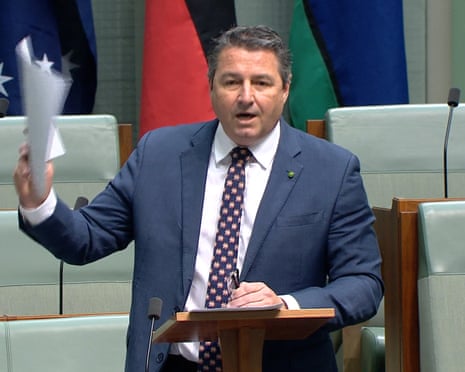
Despite the leadership-level agreement, the deal has exposed significant internal fractures within the Coalition. Nationals MP Pat Conaghan, who served as the deputy chair of the parliamentary inquiry into gambling harm, expressed public fury over the compromise. Conaghan questioned the utility of government inquiries if the findings—specifically the call for a total ban on ads—are ignored in favor of minor tweaks. He, along with Liberal MP Andrew Wallace, took the rare step of crossing the floor to vote against the amendments, joining a group of independents in protest.

Other Coalition members, including Senators Andrew McLachlan and Paul Scarr, have reserved their right to cross the floor when the bill reaches the Senate. These dissenters argue that the public overwhelmingly supports stronger action against the gambling industry and that the current deal represents a failure of political courage. The internal revolt highlights the difficulty major party leaders face in managing the diverse views of their caucuses on issues with high social impact.

In the House of Representatives, Independent MP Zali Steggall criticized the government for the lack of transparency, noting that full details of the amendments were only released minutes before the vote. This "rush to legislate" has become a point of contention for the crossbench, who feel sidelined by the "major party stitch-up" between Labor and the Coalition.

Broader Legislative Context: NDIS and AI Strategy
The rush of activity in Canberra extends beyond gambling and tax reform. The government is also pushing to guillotine debate on several key bills to ensure their passage before the end of the week. This includes major reforms to the NDIS aimed at curbing costs and improving the sustainability of the program. The Senate is expected to vote on the NDIS legislation late Tuesday, following the resolution of the "widow tax" dispute.

In a separate development, Assistant Minister for Science and Technology Andrew Charlton delivered a significant speech at the Australian National University, calling for Australia to adopt artificial intelligence "everywhere we can." Charlton warned that the country is currently facing a multi-billion dollar "import bill" for foreign AI models. He argued that simply building data centers is not enough to capture the economic value of the AI boom; instead, Australia must develop its own intellectual property and models to ensure that economic rents do not flow exclusively offshore.

Charlton estimated that Australian businesses and individuals are already spending up to $8 billion annually on AI subscriptions, a figure that could quadruple within a decade. His speech signaled a shift in government focus toward the industrial application of AI as a primary driver of future productivity growth, rather than viewing it merely as a technological novelty.

Corporate Accountability and Social Impacts
The legislative debates are occurring against a backdrop of significant corporate and social developments. Mining giant BHP released its annual report, revealing that 109 workers were terminated or resigned due to sexual harassment in the last financial year. The report also noted 22 departures related to racial harassment. These disclosures come as the mining sector faces intense scrutiny and multiple class-action lawsuits regarding workplace culture and safety at remote sites.
Additionally, the Australian Federal Police (AFP) has confirmed it will investigate the unauthorized disclosure of a diplomatic memo involving the Japanese government. The leak, dubbed "melon-gate," involved correspondence regarding Prime Minister Albanese’s appearance on a podcast and his interactions with Japanese officials. The AFP’s Special Investigations Command will review the incident to determine if any laws were breached in the release of the confidential document.
As the parliament moves toward the end of the sitting week, the focus remains on the implementation of the Labor-Coalition deals. While the closure of the "widow tax" negative gearing loophole and the new gambling restrictions will soon become law, the political fallout from the compromise is likely to persist. The government must now navigate the implementation of these complex measures while addressing the concerns of a public increasingly wary of the influence wielded by the gambling and property sectors on national policy.