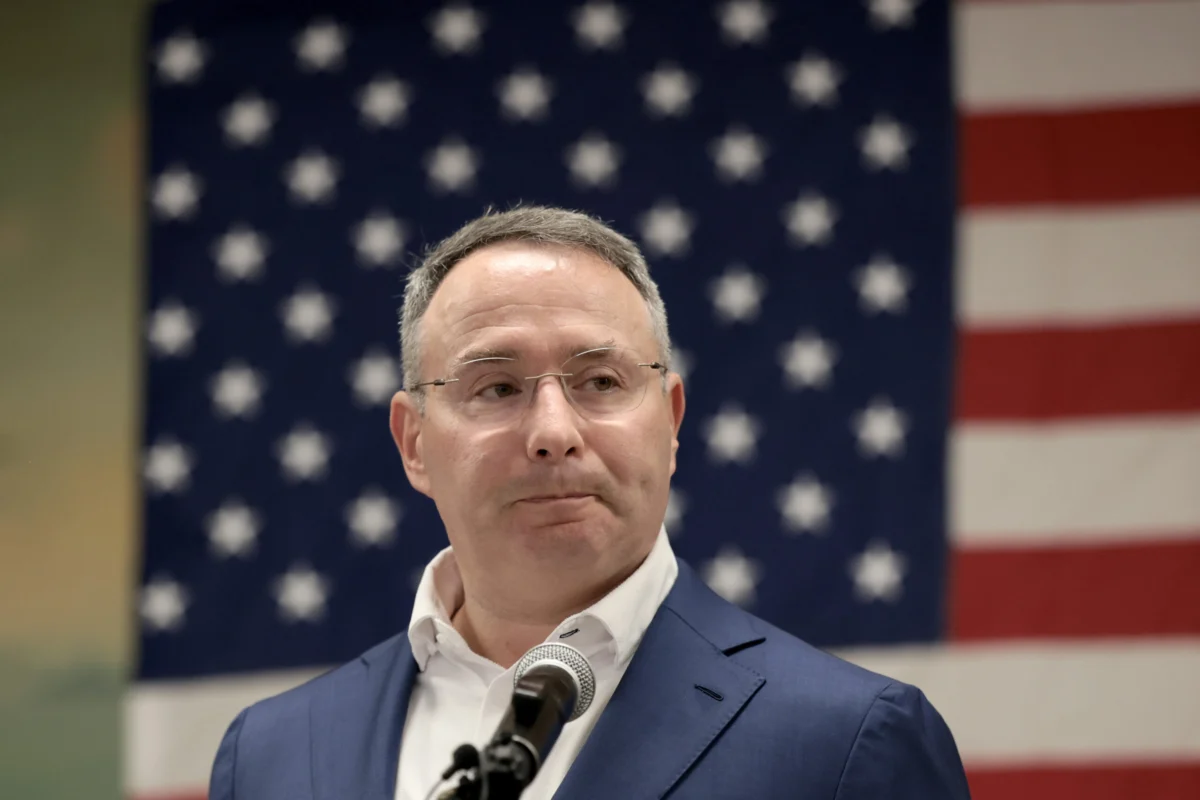
Despite an impressive resume, substantial financial backing, and high public recognition, former Army Lieutenant Colonel Alexander Vindman experienced an unexpected defeat in Florida’s Democratic Senate primary, prompting speculation that a peculiar "Larry David Curse" may have influenced the outcome. Vindman, widely regarded as the frontrunner, was decisively beaten by Angie Nixon, a comparatively lesser-known state representative, defying conventional political wisdom and raising questions about the dynamics of modern campaigning and celebrity endorsements.
A Seemingly Unbeatable Candidate’s Unexpected Downfall
Alexander Vindman entered the Florida Senate primary race with what many political observers considered an almost unassailable profile. A decorated combat veteran, he earned a Purple Heart during his service in Iraq as a lieutenant colonel in the U.S. Army. His public profile surged dramatically when he emerged as a key whistleblower in the 2019 impeachment inquiry against then-President Donald Trump, testifying about the administration’s alleged quid pro quo attempt with Ukrainian President Volodymyr Zelenskyy. This act cemented his image as a patriotic figure willing to stand up for democratic principles, garnering significant national attention and a reputation for integrity.
Beyond his compelling backstory, Vindman demonstrated formidable campaign strength. He amassed a war chest exceeding $16 million, dwarfing his opponent’s fundraising efforts by a staggering $15 million. This financial advantage typically translates into widespread advertising, robust ground operations, and a strong organizational presence, all factors that contribute to a high probability of success in a primary contest. His name recognition, particularly among Democratic voters familiar with national politics, was also considered a significant asset.
The Challenger: Angie Nixon’s Progressive Ascent
Vindman’s opponent, Angie Nixon, presented a stark contrast. A member of the Florida House of Representatives from Jacksonville, Nixon was not widely known outside her immediate district. She ran as a Democratic Socialist of America (DSA)-backed candidate, a political alignment that, while gaining traction in some progressive strongholds, was considered an uphill battle in a state like Florida, which has increasingly leaned moderate to conservative in recent years. Political analysts noted that Florida’s overall electoral landscape, particularly among non-urban voters, does not traditionally favor overtly progressive candidates in statewide races.
The primary aimed to select the Democratic challenger to incumbent Republican Senator Ashley Moody, who is seeking to serve the remaining two years of Senator Marco Rubio’s term. Given Florida’s evolving political demographics, where many moderate Democrats have reportedly shifted their affiliations or votes towards the Republican Party, the Democratic primary pool itself might have leaned more progressive than the general electorate. However, few anticipated the extent of Nixon’s appeal within that pool.
Primary Results Defy Expectations
The election results on Tuesday delivered a stunning upset. Angie Nixon triumphed over Alexander Vindman by more than 12 percentage points, securing over 700,000 votes out of a total of approximately 1.25 million. This decisive victory left many pundits and Vindman supporters scrambling for explanations. The margin of victory indicated a significant groundswell of support for Nixon, demonstrating that her campaign, despite its financial limitations, successfully mobilized a substantial portion of the Democratic base.
The outcome highlighted the potential for insurgent, ideologically driven campaigns to overcome well-funded, establishment-backed candidates, even in states not traditionally associated with strong progressive movements. Nixon’s success in mobilizing voters, particularly against a candidate with Vindman’s national profile and resources, suggested a powerful grassroots effort and a resonance with a segment of the Democratic electorate eager for a distinct progressive voice.
The "Larry David Curse": A Comedic Explanation for Political Misfortune
In the absence of conventional political explanations that fully account for Vindman’s stunning loss, some observers have turned to a more unconventional, even whimsical, theory: the "Larry David Curse." This theory posits that any association with the renowned comedian and creator of Curb Your Enthusiasm brings with it an inexplicable streak of bad luck, particularly in electoral or award-related outcomes.
Vindman’s connection to Larry David is multifaceted. He appeared as himself in two episodes of the critically acclaimed HBO series Curb Your Enthusiasm, including its much-anticipated series finale. In a memorable storyline, Vindman testified against Larry David in a fictional political bribery trial, further cementing his public image in a comedic context. Beyond his on-screen appearances, David actively campaigned for Vindman. He sent out a fundraising text message earlier in the summer, reportedly reaching individuals far beyond Florida’s borders. In characteristic Larry David fashion, the message blended praise with his signature brand of self-deprecating, almost insulting, humor: "The man is everything I’m not, which should give you an idea of what a tremendous person he is. Vindman is not a puppet. He loves this country. He loves it so much it’s almost off-putting. I love it too, but come on. Get a life, Vindman!"
The Origins of the Curb Curse
The concept of the "Curb curse" originated from Larry David’s own perplexing lack of Emmy awards for his work on Curb Your Enthusiasm. Despite the show’s immense critical acclaim, its 12 seasons spanning 24 years, and David’s numerous nominations for writing and acting, he never won an individual Emmy for the series. The show itself garnered only two Emmys in its entire run, both for directing and editing, rather than for David’s central creative contributions. A Screen Rant article, following his most recent and final Emmy strikeout in 2024, explicitly declared, "Curb Your Enthusiasm Continues a 24-Year Larry David Curse After The Show’s Ending."
This peculiar pattern of individual recognition eluding David, despite widespread admiration for his work, forms the basis of the "curse." Now, with Curb Your Enthusiasm having concluded, the theory suggests that this electoral misfortune has transferred to those associated with him. The parallel drawn is stark: David couldn’t win an Emmy in 2024, and Vindman couldn’t win a primary in 2026. This humorous, yet ironically persistent, narrative offers a culturally resonant lens through which to view an otherwise inexplicable political defeat.
Beyond the Curse: Conventional Political Analysis
While the "Larry David Curse" provides a lighthearted, pop-culture explanation, conventional political analysis offers more grounded, albeit less entertaining, insights into Vindman’s defeat. One significant factor could be the shifting demographics and ideological landscape within the Florida Democratic Party. The strong showing by a DSA-backed candidate like Angie Nixon suggests a progressive surge within the party’s base. This shift might indicate that a significant portion of active Democratic primary voters are increasingly looking for candidates who align with more left-leaning policies, even in a state generally perceived as moderate.
Furthermore, Florida’s closed primary system likely played a role. In a closed primary, only registered party members can vote. It is plausible that many moderate or centrist Democrats in Florida, disillusioned with the national party or attracted by Republican platforms, have either re-registered as Republicans or become independents, thus precluding them from participating in the Democratic primary. This winnowing of the Democratic electorate could have left a more ideologically concentrated pool of voters, more amenable to Nixon’s progressive platform than Vindman’s more centrist appeal.
Another contributing factor could be the very nature of Larry David’s endorsement itself. While David is beloved by many, his public persona is one of irascibility and social awkwardness. His fundraising message, while humorous to fans of Curb Your Enthusiasm, might have come across as off-putting or even genuinely unhelpful to voters unfamiliar with his comedic style or those expecting a more traditional, earnest endorsement. David’s history of public antics, such as his viral attack on Elmo, underscores a personality that does not always seek to endear himself to the masses. Such an endorsement, rather than a clear boon, might have inadvertently "singed" Vindman’s campaign, creating a subtle, negative perception among some voters.
The Aftermath: Repercussions and Future Implications
The unexpected outcome of the Florida Democratic Senate primary carries significant implications for the state’s political landscape. For the Florida Democratic Party, Nixon’s victory signals a potential shift in the priorities and preferences of its active base. It underscores the growing influence of progressive movements and the power of grassroots organizing, even against well-funded opponents. The party will now face the challenge of uniting its factions behind Nixon as she prepares to face the formidable task of unseating an incumbent Republican in the general election, an even more challenging endeavor in a state that has become increasingly difficult for Democrats to win statewide.
For Alexander Vindman, the defeat represents a significant setback in his post-military and post-whistleblower career. Despite his national prominence and compelling personal story, he failed to translate that into primary success. His experience serves as a cautionary tale about the complexities of political campaigns, where traditional advantages like fundraising and name recognition do not always guarantee victory, and where unforeseen factors, both real and comically imagined, can play a decisive role.
As for the "Larry David Curse," while purely anecdotal and humorous, it provides a fascinating cultural footnote to a genuinely surprising political event. The image of a hypothetical Curb Your Enthusiasm episode where Vindman confronts David ("You cost me the election, Larry.") and David dismisses him with characteristic indifference ("Cost you an election. Poor Candidate Vindman. Like Al Gore. [Fake crying] Cost him an election.") underscores the blending of pop culture and political reality in the public imagination. Whether it was a genuine curse, the evolving political landscape, or simply the unpredictable nature of elections, Alexander Vindman’s primary loss remains a striking reminder that in politics, as in comedy, sometimes the most unexpected outcomes are the ones that endure.