Leah Stewart, a survivor of a harrowing shark attack at Sydney’s Coogee Beach, has expressed profound gratitude to the community for their support as she navigates an arduous recovery process that included life-altering surgeries. Her message of hope comes as Australian authorities confront a dual crisis involving a worsening H5 bird flu outbreak in marine mammals and a significant federal investment aimed at addressing the nation’s chronic housing shortage through advanced manufacturing.
Stewart’s recovery journey has become a focal point of national attention following the attack that occurred several months ago. The incident, which took place at one of Sydney’s most popular coastal destinations, left the victim in a medically induced coma for an extended period. Doctors were forced to perform multiple surgeries to stabilize her condition, ultimately resulting in the amputation of one of her arms.
In a recent update shared via a GoFundMe campaign, Stewart detailed the milestones she has reached in regaining her autonomy. She described the past few months as "incredibly difficult" but noted that she has finally progressed enough to build a sense of independence. The survivor noted that she can finally "see some light" after a period of intense physical and psychological trauma, crediting the outpouring of financial and emotional support for her ability to focus on rehabilitation.
Escalation of the H5 Bird Flu Crisis in South Australia
While the community rallies around Stewart, environmental officials are sounding the alarm over a biological threat spreading through the nation’s southern waters. A second long-nosed fur seal is suspected to have succumbed to the H5 bird flu strain in South Australia, marking a concerning escalation in the virus’s movement through mammalian populations. This latest fatality occurred offshore at the Pages Conservation Park, a site already reeling from high mortality rates among avian species.

The suspected death follows the confirmed passing of another fur seal just 24 hours earlier, which represented the first recorded instance of a mammal dying from the H5 strain on the Australian mainland. The South Australian government has mobilized teams to collect samples for confirmatory testing, with results expected in the coming days. The virus has already devastated local bird populations, with more than 1,000 dead crested terns discovered across Troubridge Island and the Pages islands in recent weeks.
The Pages islands serve as a critical breeding ground for the endangered Australian sea lion, raising fears that the virus could decimate already vulnerable species. Although long-nosed fur seals are more transient in the area, their susceptibility to the virus indicates a broad environmental contamination. Despite the wildlife toll, health officials maintain that the risk to the general human population remains low and that no detections have been found in commercial poultry or livestock sectors.
Phillip Island Penguin Vaccination Program
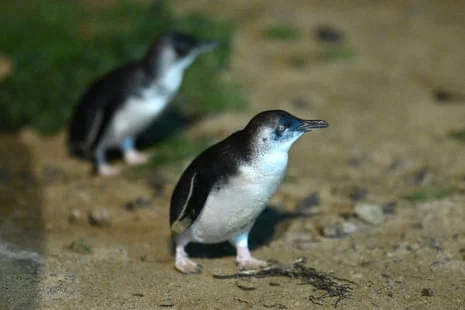
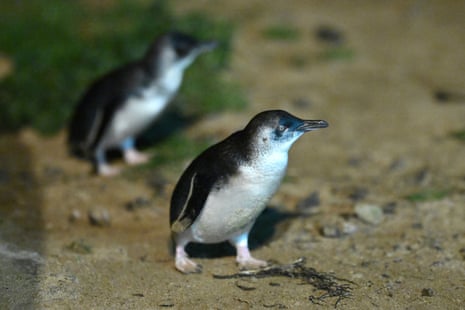
In response to the looming ecological threat, conservationists have launched an unprecedented vaccination campaign for the "little penguins" of Phillip Island. Located southwest of Melbourne, Phillip Island is home to a world-famous colony of approximately 5,000 penguins. Following the confirmed death of at least one penguin from the H5 strain, authorities began an emergency effort to inoculate the remaining population to prevent a total colony collapse.
The vaccination process leverages the unique behavioral patterns of the species. The penguins participate in a nightly "parade," returning to their specific burrows along predictable paths after a day of foraging at sea. This ritual allows rangers to corral the birds into temporary pens, where they receive the first of two required doses. Ben Thomas, the reserve manager for Phillip Island Nature Parks, stated that the operation began on quieter pathways to refine the logistics before moving to the western end of the parade grounds where the largest concentrations of birds are found.
The program represents a proactive shift in Australian wildlife management. By attempting to build immunity within the colony, officials hope to create a biological buffer against the mass mortality events seen in other parts of the world. The H5 strain reached Australian shores in June, making Australia the last continent to grapple with this specific variant of the highly pathogenic avian influenza.
Federal Government Defense of Wildlife Strategy
Federal Environment Minister Murray Watt addressed the situation on Monday, characterizing the death of the fur seals as a "very serious development." Speaking to national media, Watt acknowledged that while the news is distressing, the government has been preparing for this contingency for over two years. The strategy has focused on bolstering wildlife populations to ensure they remain resilient enough to survive significant losses.
"We need to be realistic," Watt stated, noting that the patterns of infection seen in Australia mirror the devastating impacts observed in Europe, North America, and South America. He emphasized that being the last continent to experience the outbreak allowed Australian scientists and policymakers to study international responses and implement more robust monitoring systems. The government has pledged to continue all possible efforts to protect the nation’s unique biodiversity from the evolving viral threat.
Advanced Manufacturing Investment to Tackle Housing Shortage
Parallel to these environmental challenges, the federal government has announced a massive $240 million investment in advanced manufacturing to combat the national housing crisis. The National Reconstruction Fund (NRF) will contribute $120 million toward a project north of Perth designed to produce residential apartments at an industrial scale. The initiative is a collaboration between the federal government, the Western Australian state government, and Wesfarmers, the parent company of major retailers such as Bunnings and Kmart.
The "Built Living" project aims to revolutionize the construction industry by utilizing factory-based manufacturing techniques. Once the facility is fully operational, it is expected to deliver 2,000 apartments per year. Government projections suggest that this method will be 50% faster than traditional on-site construction and up to 20% cheaper. This efficiency is seen as vital for meeting ambitious national housing targets amid rising labor costs and supply chain bottlenecks.
Federal Industry Minister Tim Ayres highlighted the project as a critical step in building national capability. "Australia needs to build more homes, but we also need to build more capability," Ayres said. He argued that integrating advanced manufacturing into the housing supply chain is the only way to lift productivity and provide affordable housing for the next generation of Australians. The project is scheduled to break ground before the end of the year.

Broader Economic and Public Health Implications
The convergence of these events highlights the complex intersection of public safety, environmental health, and economic stability currently defining the Australian landscape. The recovery of Leah Stewart underscores the ongoing risks associated with the country’s coastal lifestyle and the resilience of its citizens. Meanwhile, the bird flu outbreak poses a long-term threat to the tourism industry, particularly in regions like Phillip Island where wildlife sightings are a primary economic driver.
The housing investment represents a significant gamble on modular construction technology, a sector that has seen varying degrees of success in the past. By involving a retail giant like Wesfarmers, the government is betting that corporate logistics and supply chain expertise can be successfully applied to large-scale residential development. If successful, the Perth facility could serve as a blueprint for similar hubs across the country, potentially stabilizing the rental market and lowering the barrier to entry for first-time homebuyers.
Environmental Vigilance and Community Action
As the H5 bird flu continues to spread, state governments are urging citizens to remain vigilant. The South Australian government has issued a standing request for residents to report any sightings of sick or dead wildlife to the appropriate hotlines. Public cooperation is considered essential for tracking the movement of the virus and identifying new "hot zones" before they lead to further mass mortality events.
The scientific community is also closely monitoring the potential for the virus to mutate. While the current risk to humans is low, the ability of the H5 strain to jump from birds to mammals like seals and sea lions necessitates constant surveillance. Researchers are working around the clock to sequence the virus from the recently deceased mammals to determine if any genetic changes have occurred that could increase its infectivity or virulence.
The Australian government’s multi-pronged approach to these disparate issues reflects a broader strategy of national resilience. Whether through the direct medical support of shark attack survivors, the proactive vaccination of endangered penguins, or the industrialization of the housing sector, the focus remains on mitigating immediate threats while building infrastructure for long-term stability. The coming months will be a critical test of these policies as the bird flu reaches its peak season and the first foundations of the new manufacturing project are laid.