The Iranian government has issued a formal warning that it will launch a massive retaliatory campaign against any nation assisting the United States in its latest effort to impose a comprehensive economic embargo on the Islamic Republic. This declaration follows a high-stakes announcement from U.S. Treasury Secretary Scott Bessent, who characterized the new measures as the most aggressive financial offensive ever directed at a foreign adversary. The escalating tension has already sent shockwaves through global energy markets and forced regional neighbors to choose between their economic ties with Tehran and their access to the American financial system.
The White House and the Treasury Department have signaled that these measures are intended to achieve the total financial isolation of Iran, moving beyond previous restrictions to implement what are known as secondary sanctions. Under this framework, the U.S. will penalize any foreign entity—including banks, shipping companies, and government agencies—that continues to engage in trade with Iranian partners. Bessent’s "with us or against us" ultimatum has left little room for diplomatic ambiguity, placing significant pressure on major world economies that rely on Iranian energy or trade.
The Threat of Retaliation and Regional Escalation
In response to the U.S. pressure, Mohsen Rezaei, Iran’s security chief, warned that Tehran would deliver an "earthquake-like" response if the proposed measures are fully implemented. Speaking to state media, Rezaei emphasized that Iran would not suffer the economic consequences of a blockade in isolation. He warned that if regional neighbors assist the U.S. in what he termed an "economic war," Iran would ensure that "not a drop of oil" leaves the Persian Gulf.
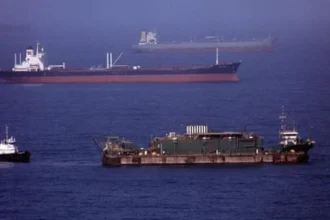
This threat specifically targets the Strait of Hormuz, a critical maritime chokepoint through which approximately one-fifth of the world’s daily oil consumption passes. Any disruption to shipping in the strait would likely cause a dramatic spike in global crude prices, impacting economies far beyond the Middle East. Rezaei further suggested that Iran has developed the capability to target alternative oil export routes, indicating that the scope of Iranian military retaliation would not be limited to its immediate coastal waters.
The rhetoric from Tehran suggests a fundamental shift in strategy. While Iran has endured decades of "maximum pressure" campaigns, officials now suggest that a total blockade of their oil exports is a red line that could trigger a kinetic military conflict. Foreign Minister Abbas Araghchi dismissed the U.S. moves as a sign of "desperation," arguing that Washington has returned to failed economic tactics after failing to achieve its objectives through military posturing.
UAE Trade Suspension and the Role of Secondary Sanctions
The geopolitical landscape shifted significantly ahead of the formal U.S. announcement when the United Arab Emirates (UAE) announced a total cessation of trade with Iran. As Iran’s largest trading partner in the Middle East, the UAE’s decision represents a major blow to Tehran’s ability to bypass traditional financial hurdles. Iranian officials have expressed belief that the move was directly coordinated with Washington to maximize the psychological and economic impact on the Iranian market.

The effectiveness of these fresh US sanctions rests largely on the enforcement of secondary sanctions. Unlike primary sanctions, which only prohibit U.S. citizens and companies from doing business with a target, secondary sanctions force third-party countries to choose between the Iranian market and the American market. For most nations, the choice is clear; the risk of being barred from the U.S. dollar-clearing system is an existential threat to their domestic banking sectors.
However, the U.S. strategy faces potential resistance from major global players like China, Russia, and India. China, in particular, has historically been the primary consumer of Iranian crude oil. In previous months, the Chinese Commerce Department directed its domestic firms to ignore U.S. warnings, labeling American sanctions as illegitimate. Beijing has even deployed government statutes designed to nullify the impact of U.S. law within Chinese jurisdictions, setting the stage for a broader trade and tariff dispute between Washington and Beijing.
Economic Collapse and the Plunge of the Rial
The internal economic situation in Iran has reached a critical juncture. Following the U.S. president’s announcement of a "crushing economic operation," the Iranian rial plummeted to a record low on the unregulated market. On Monday, the currency was trading at 1.992 million per dollar, a 4.5% drop in a single week. This devaluation has fueled hyperinflation, making basic goods unaffordable for many ordinary citizens and depleting the country’s foreign exchange reserves.
The impact of the current naval blockade has been more severe than previous diplomatic efforts. Abdolnaser Hemmati, the governor of Iran’s central bank, admitted that crude exports have "virtually stopped." Unlike previous years when "dark fleets" and ship-to-ship transfers allowed Iran to maintain a baseline of revenue, the presence of U.S. naval assets near Iranian ports has made such maneuvers increasingly difficult and expensive.
Iran vows to retaliate against countries that cooperate with fresh US sanctions as hyperinflation takes hold
The Treasury Department believes that the Iranian economy is currently on the verge of a total collapse. By cutting off the final avenues for oil revenue, the U.S. aims to force Tehran back to the negotiating table or trigger domestic instability. However, critics of this policy argue that such measures primarily harm the civilian population. Esmail Baghaei, a spokesperson for the Iranian foreign ministry, stated that the sanctions demonstrate "hostility and spite" toward the Iranian people, noting that the humanitarian consequences of such financial isolation are profound.
Legal Challenges and International Sovereignty
The international legal community has also weighed in on the legality of the U.S. offensive. Reza Nasri, an international lawyer with ties to the Iranian foreign ministry, argued that the U.S. announcement is less about Iran and more about a "claim of jurisdiction over the world." According to Nasri, by demanding that every sovereign state adhere to U.S. trade prohibitions, Washington is effectively targeting the concept of national sovereignty itself.
This sentiment is echoed by academics in Tehran who view the return to economic warfare as an admission of military failure. Hassan Ahmadian, a professor at the University of Tehran, noted that almost every sector of the Iranian economy has been under some form of sanction since 2018. He argued that the current "fanfare" regarding an economic war is a public admission that military and intelligence operations conducted by the U.S. and its allies failed to produce a change in Iranian policy.
Global Energy Security and the Strait of Hormuz
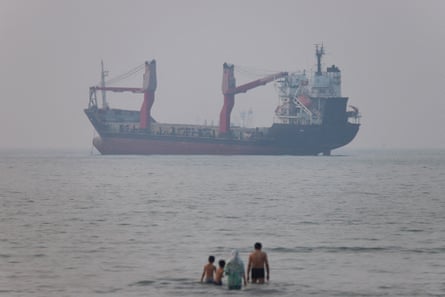
As the U.S. ramps up its pressure, the focus remains on the Strait of Hormuz. Shipping through the region remained severely disrupted over the weekend, causing insurance premiums for oil tankers to soar. The U.S. administration has recently claimed to view the strait as "American territory" in terms of its right to enforce international maritime security, a claim that has been met with fierce opposition from Tehran.
The risk of a miscalculation in these crowded waters is high. If Iran follows through on its vow to target oil exports from neighboring countries, the resulting conflict could draw in several regional militaries. The U.S. has maintained that its naval blockade is a lawful exercise of economic pressure, but Tehran views it as an act of war that justifies a military response.
Diplomatic Maneuvers and Future Outlook
Amid the rising tensions, some regional players are attempting to navigate a middle path. Pakistan’s army chief, Field Marshal Syed Asim Munir, traveled to Tehran on Monday to discuss regional security and the potential revival of trade memorandums. While Pakistan has been cautious not to run afoul of U.S. sanctions, the visit suggests that some neighbors are still looking for ways to maintain a working relationship with Iran to avoid being caught in the crossfire of a regional war.
The coming weeks will determine whether the U.S. "financial offensive" can achieve its goal of economic capitulation or if it will lead to a new era of regional conflict. With China and Russia signaling their intent to resist American dictates, the effectiveness of the sanctions may depend on Washington’s willingness to engage in a full-scale trade war with its largest economic rivals.
As Iran vows to retaliate against countries that cooperate with fresh US sanctions, the international community remains on high alert. The combination of a naval blockade, hyperinflation, and aggressive rhetoric has created a volatile environment where economic policy and military strategy are now inextricably linked. Whether through the halls of the United Nations or the waters of the Persian Gulf, the confrontation between Washington and Tehran is entering its most dangerous phase in decades.