Agriculture Secretary Brooke Rollins announced Friday that the administration will unveil a series of major initiatives next week designed to deregulate the meatpacking industry, fulfilling a core campaign promise to allow American ranchers to process and sell their own beef. The move is intended to break the dominance of a small group of multinational corporations that currently control the vast majority of the nation’s meat supply. Rollins described the forthcoming policy shift as a "matter of national security," arguing that the United States must secure its ability to "feed and fuel ourselves" without relying on what the administration calls a "nasty monopoly" of large-scale processing plants.
The proposed changes focus on waiving significant "red tape in processing" that has historically prevented smaller operations from entering the market. Currently, federal regulations require rigorous inspections and certifications that many independent ranchers find cost-prohibitive. By streamlining these requirements, the Department of Agriculture (USDA) intends to empower farmers to slaughter and package their own livestock for direct sale to consumers. Furthermore, Rollins indicated that the new measures would expand the ability of these independent producers to sell their products across state lines, a move that would fundamentally alter the competitive landscape of the American protein market.
Breaking the Meat Processing Monopoly
The administration’s focus on the meat industry follows a period of intense pressure from rural advocates and conservative commentators who argue that the "Big Four" meatpacking companies—Tyson, JBS, Cargill, and National Beef—exert too much control over the supply chain. These four entities currently process approximately 85% of the grain-fed beef slaughtered in the United States. President Donald Trump recently took to social media to criticize this concentration of power, labeling the current system a "meat processing cartel" that makes life "miserable" for domestic producers.

The president’s rhetoric aligns with a growing movement among cattlemen who feel squeezed by low prices for live cattle and high prices for consumer beef. For years, independent ranchers have argued that the lack of regional processing capacity forces them to accept whatever prices the major plants offer. By waiving red tape to allow ranchers to process and sell their own beef, the administration hopes to create a more decentralized and resilient food system that benefits both the producer and the end-user.
However, the path toward deregulation is fraught with political and logistical challenges. Industry leaders have noted that cattle herds in the United States are currently at a 75-year low, a factor that contributes to high grocery store prices regardless of processing efficiency. While the USDA believes that empowering local ranchers will eventually lower costs, some analysts suggest that the immediate impact on the national supply may be limited by the sheer scale required to feed the American population.
Backlash Over Foreign Beef Imports
The announcement of the "red tape" reduction comes as Secretary Rollins defends the administration against sharp criticism from within the Republican Party. Earlier this week, the president moved to pause higher tariffs on 300,000 metric tons of foreign beef, a decision aimed at providing immediate relief to consumers facing record-high grocery bills. Rollins described the tariff suspension as a "very short-term fix" intended to get affordable meat onto American plates, though she admitted in recent interviews that she was not yet certain which countries would provide the bulk of the imported beef.
This reliance on foreign imports has sparked a backlash from industry leaders and several GOP lawmakers who argue that the move undermines domestic producers. Critics contend that importing large quantities of foreign beef will discourage American ranchers from rebuilding their herds, potentially leading to long-term dependency on international suppliers. The promise to allow ranchers to process and sell their own beef is widely seen as an attempt to appease these domestic stakeholders while the administration grapples with the immediate political fallout of high inflation.
Public Health and the Measles Outbreak
As the USDA focuses on food security, the Department of Health and Human Services (HHS) is navigating a growing public health crisis. Secretary Robert F. Kennedy Jr. has come under fire for suggesting that reports of measles-related deaths in Pennsylvania may have been "fabricated." The outbreak, which has claimed the lives of at least two individuals, including a newborn, has become a flashpoint for the administration’s skeptical stance on traditional medical reporting.
Anti-vaccine activists associated with Kennedy’s former organization, Children’s Health Defense, have reportedly begun "outreach" efforts in Pennsylvania to investigate the deaths independently. This has led to a public confrontation with Pennsylvania Governor Josh Shapiro, who accused Kennedy of spreading "inaccurate and misleading claims." Public health officials, including infectious disease experts at the Children’s Hospital of Philadelphia, have warned that the secretary’s rhetoric creates a "fertile ground for conspiracy theories" that could exacerbate the spread of preventable diseases.
The administration is also facing pushback over its proposed 336-page federal research roadmap for autism. Scientific bodies and advocacy groups have expressed alarm that the plan, drafted by advisers appointed by Kennedy, may divert federal funding away from genetic research in favor of "fringe" alternative therapies. Experts warn that some of the proposed treatments, such as chelation therapy and the use of industrial bleach, lack scientific validation and could be dangerous to the public.
Legal Hurdles and Administrative Challenges
The administration’s agenda is further complicated by a series of legal setbacks in federal court. On Thursday, a judge halted the implementation of an executive order that sought to limit mail-in voting ahead of the upcoming midterm elections. U.S. District Judge Indira Talwani placed a 14-day hold on the directive, noting that states lacked the time and funds to redesign ballots and update election management systems so close to the voting period.

Simultaneously, the president’s legal team was dealt another blow in New York. Judge Alvin K. Hellerstein rejected a third attempt by the president to move his hush-money conviction to federal court. The judge ruled that the arguments for dismissal based on presidential immunity were "neither new nor legally sufficient," ensuring that the state-level conviction remains in place.
In a separate ruling, a federal judge in California declared that sanctions imposed by the administration against the AI firm Anthropic were illegal. The court found that the government had unfairly designated the creator of the Claude AI models as a "supply chain risk" in retaliation for the company’s refusal to allow its technology to be used for military surveillance and autonomous weapons. Judge Rita Lin stated that "national security is not a blank check to punish and retaliate against government critics."
Trade Wars and the "Lake America" Directive
On the international front, the administration has escalated its trade dispute with Canada. Following the collapse of negotiations in Ottawa, the president signed an executive order directing federal agencies to rename the U.S. portion of Lake Ontario as "Lake America." While the move is largely symbolic—as the U.S. has no authority to rename the Canadian side of the lake—it underscores the deepening rift between the two neighbors.
Canadian Prime Minister Mark Carney responded by noting that the name Ontario has a 400-year history rooted in indigenous languages and predates the founding of both nations. The naming dispute coincides with the imposition of 50% tariffs on several Canadian imports, including steel and auto parts. In response, Canada has retaliated with tariffs on hundreds of American goods, signaling a protracted economic conflict that could further impact North American supply chains.

National Security and the Space Frontier
Despite these domestic and international tensions, the president remains focused on expanding American influence in space. During a visit to NASA’s Johnson Space Center in Houston, he announced the creation of the U.S. Space Academy, a new military service institution modeled after West Point and Annapolis. The president argued that a "nation cannot be first on Earth if we’re going to be second in space," emphasizing the need to train a new generation of engineers and service members for the Space Force.
The administration also highlighted progress on the first nuclear-powered interplanetary spacecraft, which is slated for a mission to Mars in 2028. This project is part of a broader strategy to make space travel more routine and maintain American dominance in a new era of extraterrestrial competition.
Infrastructure and the Lincoln Memorial Saga
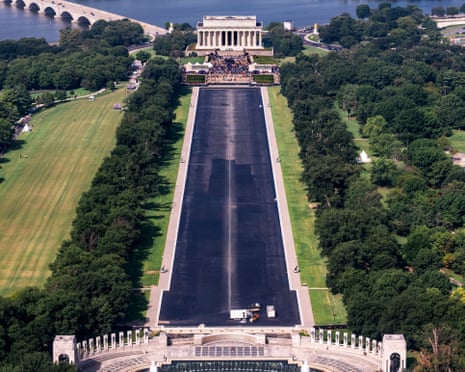
Closer to home, the administration is defending its management of iconic national landmarks. The president recently claimed that the ongoing renovation of the Lincoln Memorial reflecting pool is nearing completion and will open in a few weeks. However, local reports and photographic evidence suggest the $16 million project continues to face delays. While the administration blames "vandalism" and "neglect by previous administrations" for the pool’s condition, legal filings from allies of the president suggest the damage was actually caused by a "botched installation" by a private contractor.
As the administration prepares for the "big announcements" regarding the beef industry next week, it remains embroiled in a complex web of legal challenges, trade disputes, and public health controversies. The commitment to waiving red tape to allow ranchers to process and sell their own beef represents a significant attempt to reassert a populist economic agenda, even as the broader political landscape remains volatile. Success in the agricultural sector may provide the administration with the political capital needed to navigate the numerous hurdles currently facing its legislative and executive goals.