Rescue crews in the eastern Mediterranean are racing against time to locate more than 20 people missing after a high-speed catamaran ferry carrying nearly 270 passengers and crew capsized and sank off the coast of northern Cyprus. Local authorities have confirmed that at least seven individuals have died in the incident, which occurred shortly after the vessel departed from the port of Kyrenia. The disaster has triggered a massive search and rescue operation involving both Turkish and Turkish Cypriot maritime units as they navigate adverse weather conditions to find survivors.
The vessel, identified as the Filo Jet and operated by the Filo Denizcilik company, was en route to the southern Turkish port of Tasucu when it began taking in water. According to official statements from the self-declared Turkish Republic of Northern Cyprus (TRNC), the ferry faced severe mechanical or structural distress just 15 minutes after leaving the harbor. The ship eventually capsized near Diana Beach, a popular coastal area, before sinking to a depth of approximately 514 meters (1,686 feet).
Prime Minister Ünal Üstel confirmed that 237 people have been successfully pulled from the water, but the fate of 23 others remains unknown. The rescue effort has been described by local officials as one of the most significant maritime emergencies in the region’s recent history. Emergency services, including helicopters and specialized dive teams, have been deployed to the site, which is currently being battered by the same adverse weather that is believed to have contributed to the initial capsizing.

The Initial Moments of the Northern Cyprus Ferry Disaster
The Filo Jet departed Kyrenia, also known as Girne, under what were reported as challenging sea conditions. Witnesses and survivors indicated that the vessel began to list significantly almost immediately after clearing the breakwater. The rapid influx of water left the crew with little time to stabilize the ship or deploy all life-saving equipment effectively. By the time the distress signal was broadcast, the catamaran was already dangerously low in the water.
Transport Minister Erhan Arikli told reporters that the speed at which the vessel sank has complicated the investigation into the cause of the accident. The fact that the ship now rests more than 1,600 feet below the surface means that any physical recovery of the hull for forensic analysis will be an immense technical challenge. Arikli noted that 161 of the rescued survivors required immediate hospitalization, while 76 others have been reunited with their families after receiving treatment for shock and minor injuries.
Local maritime experts are looking into whether the catamaran design, which is typically built for speed and stability in moderate seas, may have been compromised by a combination of high waves and an internal breach. The "taking in water" reported by the Prime Minister suggests a potential hull failure or a problem with the vehicle loading deck, though officials have cautioned against speculation until a formal inquiry can be conducted.
Search and Rescue Operations in the Eastern Mediterranean
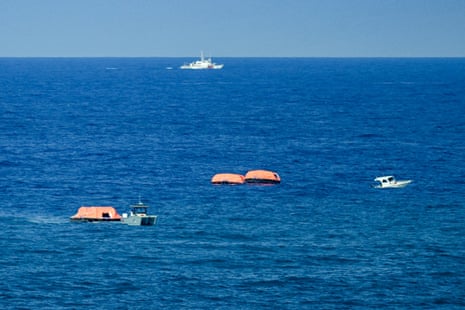
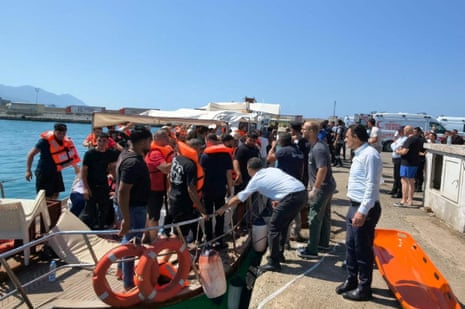
The response to the Northern Cyprus ferry disaster has been a multi-agency effort, drawing on resources from both sides of the divided island’s northern territory and mainland Turkey. The Turkish Cypriot interior ministry confirmed that four coast guard vessels and a civilian passenger boat, the Akgünler Express, were the first to arrive on the scene. They were quickly joined by five Turkish coast guard ships and two search-and-rescue helicopters dispatched from the Turkish mainland.
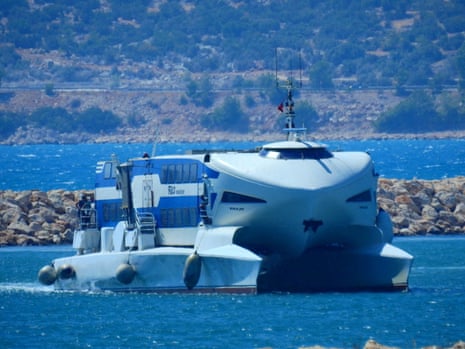
The search area has expanded as officials account for the strong currents that characterize the waters between Cyprus and the Turkish coast. Rescuers are using thermal imaging and sonar to scan the surface and the upper layers of the water column. The Mayor of Kyrenia, Murat Senkul, characterized the situation as "very serious," urging the public to rely only on official channels for information to prevent the spread of misinformation during the chaotic recovery period.
The depth of the wreck is a significant factor in the ongoing updates. At 514 meters, the Filo Jet is well beyond the reach of standard commercial divers. Any attempt to inspect the wreckage will require Remotely Operated Vehicles (ROVs) capable of handling high-pressure environments. For now, the "utmost priority," according to Prime Minister Üstel, remains the 23 missing passengers who may still be adrift in the Mediterranean.
Political and Maritime Context of the Northern Cyprus Ferry Disaster
The location of the accident adds a layer of logistical complexity due to the political status of Northern Cyprus. As a territory recognized only by Turkey, the coordination of international aid is often filtered through Turkish channels. This has made the role of the Turkish Coast Guard vital in the hours following the capsizing. The route between Kyrenia and Tasucu is a major artery for both tourism and trade, frequently used by those traveling between the island and the Turkish mainland.
The port of Kyrenia is the primary maritime gateway for the northern part of the island, handling thousands of passengers weekly. The Filo Jet was a staple of this crossing, and its loss is expected to have an immediate impact on regional transport logistics. Maritime safety in these waters is governed by local regulations that mirror international standards, but the severity of this disaster has already prompted calls for a comprehensive review of ferry safety protocols and weather-related departure clearances.

Regional correspondents have noted that this event is being viewed as the worst maritime catastrophe in the territory since it declared independence in 1983. The emotional weight of the incident is felt across the community, as many residents have family members who regularly use these ferry services for work or education.
Survivors and the Humanitarian Response in Nicosia
As survivors were brought to shore, they were transported to various medical facilities, with the primary hub being the state hospital in northern Nicosia. Mehmet Harmanci, the mayor of northern Nicosia, has been overseeing a localized humanitarian effort to support the victims. "We have not seen anything like this before," Harmanci said, noting that the city has mobilized to provide food, warm clothing, and psychological support for those who lost everything when the ship went down.
The survivor population is diverse, consisting of both local residents and international travelers. Identifying the nationalities and identities of the seven confirmed deceased is currently a top priority for the interior ministry. Consular officials are expected to be involved as the identification process moves forward. For those still missing, families have gathered at the Kyrenia port, waiting for any news from the coast guard vessels that continue to circle the site of the sinking.
The Filo Denizcilik company has established a crisis management team and a dedicated hotline for relatives. In a public statement, the company expressed deep sadness over the "tragic accident" and insisted that all resources were being mobilized to assist the authorized search and rescue teams. The company’s safety record and the maintenance history of the Filo Jet are expected to be central themes of the upcoming governmental investigation.
Broader Implications for Maritime Travel and Safety
The Northern Cyprus ferry disaster is likely to resonate through the maritime industry, particularly concerning the operation of high-speed catamarans in the Mediterranean. These vessels are prized for their efficiency, but their stability profiles in heavy following seas or during rapid flooding events are often scrutinized following major accidents. The speed with which the Filo Jet was overwhelmed—just 15 minutes after departure—indicates a catastrophic failure that will require a technical explanation.
In the short term, other ferry operators in the region may face increased inspections and stricter adherence to weather advisories. The Mediterranean is known for sudden, violent storms that can create hazardous conditions for smaller or specialized vessels. If the investigation finds that the ferry should not have been cleared for departure given the "adverse weather conditions" mentioned by the Prime Minister, there could be significant legal and regulatory consequences for port authorities and the shipping company alike.
Furthermore, the environmental impact of a vessel sinking to such a depth will need to be monitored. While the Filo Jet is a passenger ferry, it would have carried a significant amount of fuel and hydraulic fluids. At 514 meters, the pressure is immense, and the integrity of the fuel tanks will be a concern for environmental agencies in both Cyprus and Turkey.
Next Steps in the Recovery and Investigation
As the sun sets over the Mediterranean, the search and rescue operation continues under floodlights. The window for finding survivors in the water is closing, but authorities have not yet shifted the mission to a recovery-only phase. The 23 missing individuals remain the central focus of the hundreds of personnel currently deployed at sea.
Once the search concludes, the focus will shift entirely to the judicial and technical inquiry. Investigators will review the ship’s manifests, maintenance logs, and communication records between the bridge and the port control. They will also look at satellite weather data from the time of departure to determine if the risks were underestimated.
The Northern Cyprus ferry disaster has left a mark on the region that will take years to fade. For the families of the seven confirmed dead and the dozens still waiting for news of the missing, the focus remains on the immediate grief and the hope for a miracle at sea. The maritime community, meanwhile, awaits the findings of an investigation that must explain how a routine 15-minute journey turned into a deep-sea tragedy.