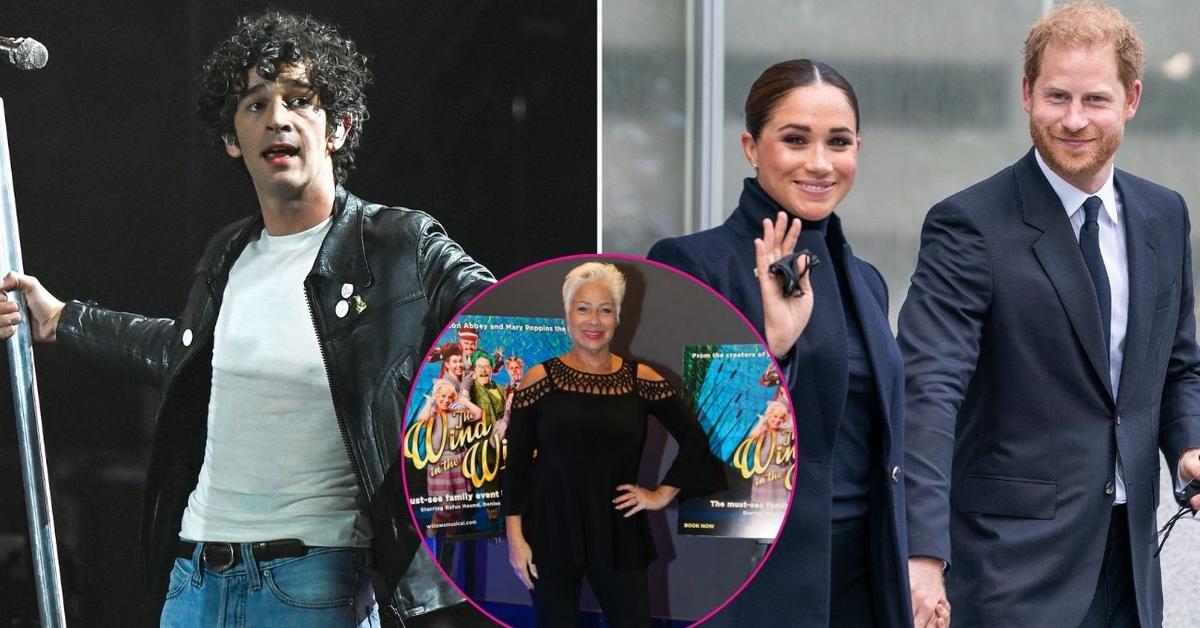
British actress Denise Welch, mother of The 1975 frontman Matty Healy, recently delivered a scathing critique of the relentless media harassment directed at Prince Harry and Meghan Markle, the Duke and Duchess of Sussex. Welch took to social media to characterize the intense public scrutiny as "disgraceful bullying" and a "blood sport" perpetuated by the United Kingdom’s press, drawing stark parallels to the treatment endured by Prince Harry’s late mother, Princess Diana.
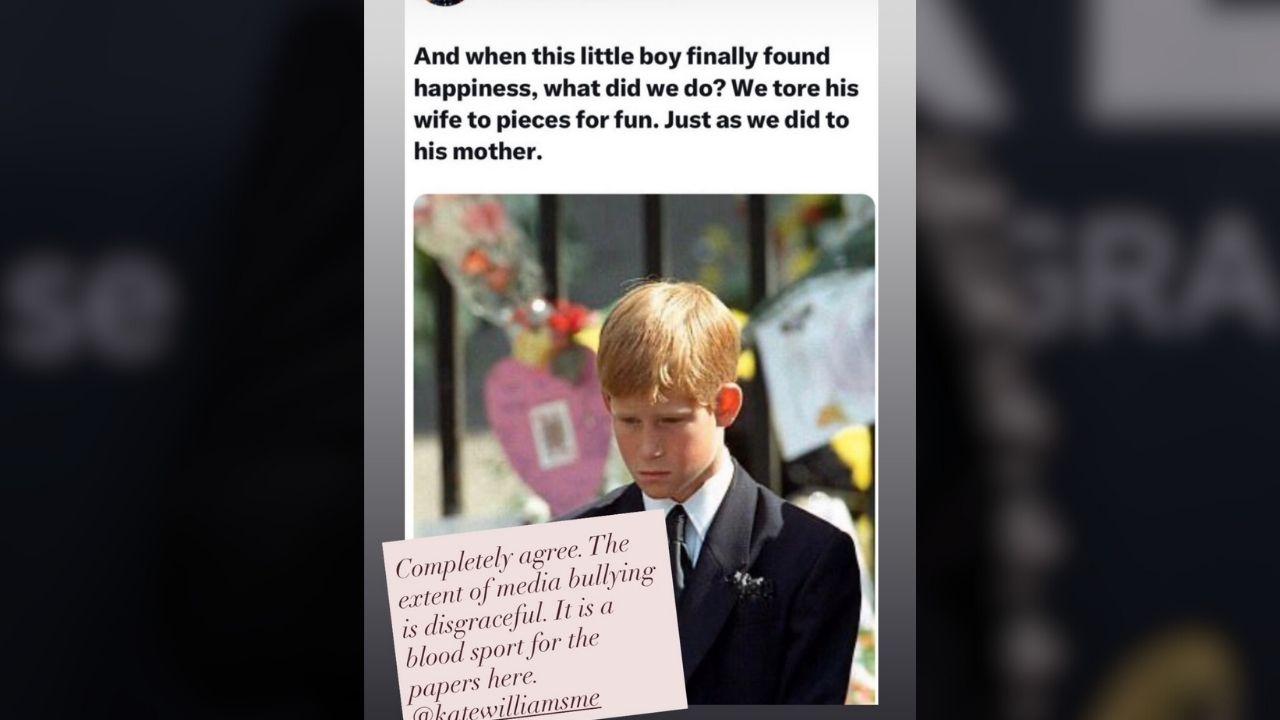
On Sunday, August 30, Welch, 68, shared a poignant image on her Instagram Stories. The photo depicted a young Prince Harry, then just 12 years old, visibly saddened during the 1997 funeral of his mother, Princess Diana. Accompanying the somber photograph was text that read, "And when this little boy finally found happiness, what did we do? We tore his wife to pieces for fun. Just as we did to his mother." Welch amplified the message with her own commentary, asserting, "Completely agree. The extent of media bullying is disgraceful. It is a blood sport for the papers here [in the United Kingdom]." Her remarks underscore a deep-seated concern shared by many about the invasive nature of tabloid journalism and its psychological toll on public figures.
The Echo of History: Princess Diana’s Media Ordeal
Welch’s comparison of Meghan Markle’s experience to that of Princess Diana is not merely rhetorical; it taps into a painful historical precedent within the British Royal Family. Princess Diana, throughout her public life, faced an unprecedented level of media attention, ranging from adoration to intense intrusion. Her marriage to Prince Charles, her humanitarian work, and ultimately her divorce were all played out under the unforgiving glare of global cameras and headlines. Diana herself often spoke of feeling hunted by the paparazzi, a sentiment tragically realized in her fatal car crash in Paris in 1997, an event widely linked to a high-speed chase involving photographers.
Prince Harry has frequently articulated how his mother’s death profoundly shaped his worldview and his deep-seated distrust of the tabloid press. He has spoken openly about the trauma of walking behind his mother’s coffin as a child, an experience that he believes instilled in him a fierce desire to protect his own family from similar fates. This personal history provides critical context for his and Meghan’s decision to distance themselves from the traditional royal framework and the UK media landscape.
Meghan Markle’s Royal Entry and the Rise of Scrutiny
The initial public reception of Meghan Markle, an American actress, upon her engagement to Prince Harry in 2017, was largely positive. Her background as a biracial woman, a successful professional, and a vocal advocate for social justice was seen by many as a refreshing modernization of the monarchy. However, this honeymoon period proved short-lived. Almost immediately after their wedding in May 2018, the narrative in certain segments of the UK press began to shift, becoming increasingly critical and, at times, overtly hostile towards the Duchess of Sussex.

Reports emerged detailing alleged conflicts within the palace, accusations of extravagant spending, and criticisms of her perceived departure from traditional royal protocols. Many commentators, including Denise Welch, pointed to a pattern of reporting that seemed disproportionately negative and often racially tinged, particularly when contrasted with similar actions by other members of the Royal Family. This escalating media pressure, coupled with a perceived lack of support from "The Firm" (the Royal Family institution), created an untenable situation for the couple.
The "Megxit" Decision and a New Chapter in California
In January 2020, Prince Harry and Meghan Markle announced their intention to step back as "senior" members of the Royal Family, a move swiftly dubbed "Megxit" by the media. They expressed a desire for financial independence and, crucially, a longing for greater privacy and an escape from the relentless media intrusion they had experienced in the UK. Later that year, they relocated to Montecito, California, with their son, Prince Archie, marking a significant departure from centuries of royal tradition.
Their move was not without its own controversies and continued media attention. From their multi-million dollar deals with Netflix and Spotify to their candid interviews, including a bombshell conversation with Oprah Winfrey in March 2021, the Sussexes remained firmly in the global spotlight. During the Oprah interview, Meghan openly discussed her struggles with mental health while living in the UK, revealing that she had experienced suicidal thoughts and felt unsupported by the institution. Prince Harry also elaborated on the deep rift with his father, King Charles, and brother, Prince William, stemming from their departure and the ongoing media pressures. These revelations further fueled the public debate about the nature of royal life and the ethical responsibilities of the press.

Denise Welch: A Resolute Voice of Support
Denise Welch has consistently stood as a vocal champion for Prince Harry and Meghan Markle, often using her platform to counter what she views as unfair and relentless attacks. Her recent Instagram post is not an isolated incident but rather a continuation of her long-standing advocacy. In May 2024, during an appearance on the popular ITV talk show Loose Women, Welch expressed her exasperation with the continuous "bashing" of the Duke and Duchess. She declared herself "sick to death" of the criticism, stating that Meghan has been "continuously trashed by the media" and that she finds "the way she has been treated" to be "a disgrace."
Welch further underscored her support earlier in 2024, taking to Instagram to defend Meghan during her tour of Nigeria. Sharing a photo of the Duchess, Welch highlighted Meghan’s extensive history as a spokeswoman for women of color and gender equality, noting her role as a UN women’s advocate long before she met Prince Harry. Welch passionately wrote, "I am appalled that this woman is abused and berated by the public and media on a daily basis. Not many people could mentally cope with the hate she contends with. No wonder her husband took her away and despite everything they are thriving." These statements position Welch as a prominent public figure willing to directly confront the prevailing negative narratives surrounding the Sussexes.
Recent Developments and Royal Reconciliations
The narrative surrounding Prince Harry and Meghan Markle has recently taken another intriguing turn. Reports suggest that the couple, now parents to Prince Archie, 7, and Princess Lilibet, 5, have quietly relocated back to England. This potential return comes amidst King Charles’s ongoing battle with cancer, with sources indicating that Prince Harry is actively seeking to mend his fractured relationship with his father. The prospect of the Sussex family re-establishing a more permanent base in the UK, even if not fully re-entering royal duties, adds a new layer of complexity to their public story and their interactions with the British press.
This period of potential reconciliation highlights the enduring ties between Harry and his homeland, despite the intense challenges he and Meghan have faced. The shift in geographical base, whether temporary or long-term, could inevitably alter the dynamics of their public life and their ongoing struggle for privacy and respect from the media.
Broader Implications: Media Ethics and the Monarchy’s Evolving Image
The ongoing saga of Prince Harry and Meghan Markle, amplified by voices like Denise Welch, transcends mere celebrity gossip. It ignites crucial discussions about the ethical boundaries of journalism, the right to privacy for public figures, and the evolving nature of the British monarchy in the 21st century. Welch’s powerful description of the media’s approach as a "blood sport" resonates with those who believe that certain elements of the press prioritize sensationalism and personal destruction over factual reporting and compassion.
The Sussexes’ experience has brought to the forefront questions about media accountability, particularly in an age where social media can both amplify and distort narratives instantaneously. It also forces a critical examination of the monarchy’s capacity to adapt to modern societal expectations, including issues of diversity, mental health, and personal autonomy within a highly scrutinized institution. The public remains sharply divided, with fervent supporters on both sides, underscoring the deep cultural and political fissures that the Sussexes’ story has exposed.

Ultimately, Denise Welch’s outspoken defense serves as a potent reminder that the "disgraceful bullying" faced by Prince Harry and Meghan Markle continues to be a contentious issue, sparking vital conversations about empathy, ethics, and the power of the press. As the Duke and Duchess navigate their future, whether in the UK or abroad, the intense spotlight, and the corresponding debate over its fairness, shows no signs of dimming.