Former President Donald Trump has initiated a significant escalation in his long-standing conflict with the news media, threatening to deploy the full regulatory power of the Federal Communications Commission (FCC) against NBC News journalist Kristen Welker. This marks an unprecedented move, as it is the first time the former president has publicly named an individual journalist and threatened a U.S. federal agency’s intervention over their reporting. The threat stemmed from Welker’s on-air comments regarding Trump’s influence and endorsement success rate in recent midterm primary elections.
A History of Media Hostility and the Latest Target
Donald Trump’s relationship with the press has been characterized by deep antagonism throughout his political career, frequently labeling news organizations he deemed critical as "fake news" and "enemies of the people." His tenure in the White House saw numerous verbal attacks on journalists and outlets, often questioning their credibility and motives. This latest declaration, however, introduces a new dimension by directly invoking a regulatory body against an individual reporter. The statement was issued via his social media platform, Truth Social, a primary channel for his communications since leaving office.
The incident centers on comments made by Kristen Welker, a veteran broadcast journalist and the moderator of NBC’s Meet the Press, during an appearance on local Washington, D.C. affiliate WRC-TV. Welker, recognized for her extensive experience covering national politics, offered an assessment of the former president’s sway in the ongoing midterm election cycle. Her remarks focused on his endorsements and their outcomes, a key indicator of his continued influence within the Republican Party.
The Comment That Sparked Controversy
During the WRC-TV segment, Welker observed, "He’s going to loom large over these midterms. There’s no doubt about that. He, of course, has endorsed a slate of candidates in the primaries. He’s had some mixed results, but most recently, his pick of Senator Darline Graham was successful in her primary battle, so now she takes on Dr. Annie Andrews in South Carolina." This analysis highlighted both Trump’s undeniable impact on the electorate and the varied success of his chosen candidates.
While Welker’s statement might appear to be a measured political analysis, even acknowledging Trump’s significant influence, the former president interpreted it as a deliberate misrepresentation of his endorsement record. He quickly took to Truth Social to express his strong disapproval, launching a direct attack on Welker and NBC News. His post accused her of "purposeful inaccuracy" and vowed to report her to the FCC for "rebuke or punishment," framing her comments as an abuse of "freely given Public Airwaves."
Trump’s Defense of His Endorsement Record
In his Truth Social post, Trump derided Welker as "the unpopular ‘Hostess’ of the once great Meet the Press, now considered Meet the Fake Press." He vehemently contested her characterization of his endorsement results as "mixed," asserting a near-perfect success rate. "Kristen Welker… just stated that Donald Trump has ‘mixed results’ on his Endorsements of Candidates, when the recent WINS of Darline Graham and Mike Mazzei, stand at 100% for the U.S. Senate, and 98% for the U.S. House, recently and over the long term. How can anyone be allowed to say this, working for freely given Public Airwaves? Results are attached. Because of this purposeful inaccuracy, she will be reported to the FCC for rebuke or punishment," Trump wrote.
He further elaborated on his perceived success, stating, "Unfortunately, she is not the only one. The Radical Left News is going out of their way to harass, demean, and libel anything ‘TRUMP.’ Their new weapon is to say that my 99% SUCCESS Rate on Endorsements, 100% on Senatorial Endorsements (Many of whom were not even given a shot of winning until I Endorsed!), is either a mixed result, or not very good. In actuality, it is, without question, the strongest Endorsement in the History of Politics." These claims underscore his belief in the unparalleled power of his political backing and his frustration with media narratives that suggest otherwise.
The FCC’s Limited Authority and Press Freedom
The Federal Communications Commission is an independent U.S. government agency tasked with regulating interstate and international communications by radio, television, wire, satellite, and cable. Its primary responsibilities include licensing broadcasters, managing spectrum allocation, and enforcing regulations related to technical standards and content, particularly concerning obscenity or indecency. However, the FCC’s authority explicitly does not extend to policing the truthfulness or perceived bias of news content, a critical distinction rooted in the First Amendment’s protection of a free press.
Legal experts widely agree that any attempt by Trump to leverage the FCC to punish a journalist for their reporting would face insurmountable legal hurdles. The First Amendment to the U.S. Constitution guarantees freedom of speech and the press, acting as a robust safeguard against government censorship or content regulation of news broadcasts. The notion that the FCC could "rebuke or punish" a journalist for a factual assessment of political events, even if contested by a political figure, runs contrary to decades of established legal precedent and the fundamental principles of a democratic society.
Historically, the FCC enforced the "Fairness Doctrine" from 1949 to 1987, which required broadcasters to present controversial issues of public importance in a way that was honest, equitable, and balanced. However, this doctrine was repealed due to concerns that it chilled free speech and was seen as unconstitutional. Its repeal solidified the FCC’s hands-off approach to the content of news programming, further limiting its ability to intervene in cases like the one Trump is proposing.
Assessing Trump’s Endorsement Track Record
While Trump maintains an almost perfect record for his endorsements, a closer examination of the 2022 midterm primaries reveals a more nuanced picture, supporting Welker’s "mixed results" assessment. While some high-profile Trump-backed candidates did secure victories, demonstrating his significant sway with a segment of the Republican base, others faced defeats. For instance, in Florida’s 7th District, incumbent U.S. Rep. Cory Mills, who had received Trump’s endorsement, lost his primary to Ryan Elijah, a former TV news anchor. Similarly, in Minnesota, state House Speaker Lisa Demuth notably defeated MyPillow CEO Mike Lindell, another prominent Trump ally and endorsed candidate, by a significant margin in the Republican primary for governor.
These instances, alongside other less prominent losses, indicate that while Trump’s endorsement carries substantial weight, it is not an automatic guarantee of victory. His influence is undeniable, often shaping primary outcomes and pushing candidates further to the right, but it is not absolute. Welker’s comments, therefore, align with a broad consensus among political analysts regarding the varied success of Trump’s endorsements, reflecting a reality more complex than the "100% success" rate claimed by the former president.
Broader Implications for Press Freedom and Democracy
This threat by Donald Trump to weaponize a federal agency against an individual journalist raises serious concerns about press freedom and the health of democratic institutions. Such actions can create a chilling effect, potentially discouraging journalists from robustly scrutinizing public figures or offering independent analyses, for fear of government reprisal. A free and independent press is considered a cornerstone of democracy, serving as a vital check on power and providing the public with diverse information necessary for informed decision-making.
The explicit naming of Kristen Welker also represents a qualitative shift in the former president’s attacks on the media. While he has often targeted entire networks or shows, singling out an individual journalist by name for potential government action carries a more direct and personal threat. This tactic could intimidate individual reporters and erode the public’s trust in journalists, whom Trump frequently characterizes as biased or untruthful.
Reactions from the FCC and NBC News
The threat drew immediate condemnation from within the FCC itself. Anna Gomez, a Democratic commissioner on the Federal Communications Commission, quickly reiterated the agency’s stance on such matters. "As I’ve said many times, the FCC has no authority to punish journalists this administration doesn’t like," Gomez stated, emphasizing the clear jurisdictional limits of the commission. She further warned, "These threats to press freedom are dangerous. They undermine the foundation of our democracy, and they have no place in it." Her statement underscored the FCC’s commitment to upholding the First Amendment and resisting political pressure to interfere with news content.
NBC News also stood firmly behind its journalist. An NBC News spokesperson issued a brief but unequivocal statement in support of Welker: "Kristen is one of the best in the business and we stand by her." This response highlighted the network’s confidence in Welker’s journalistic integrity and its resolve to protect its reporters from political intimidation. The unified front from both the FCC commissioner and NBC News indicates a strong resistance to attempts to undermine journalistic independence.
A Pattern of Challenging Media Organizations
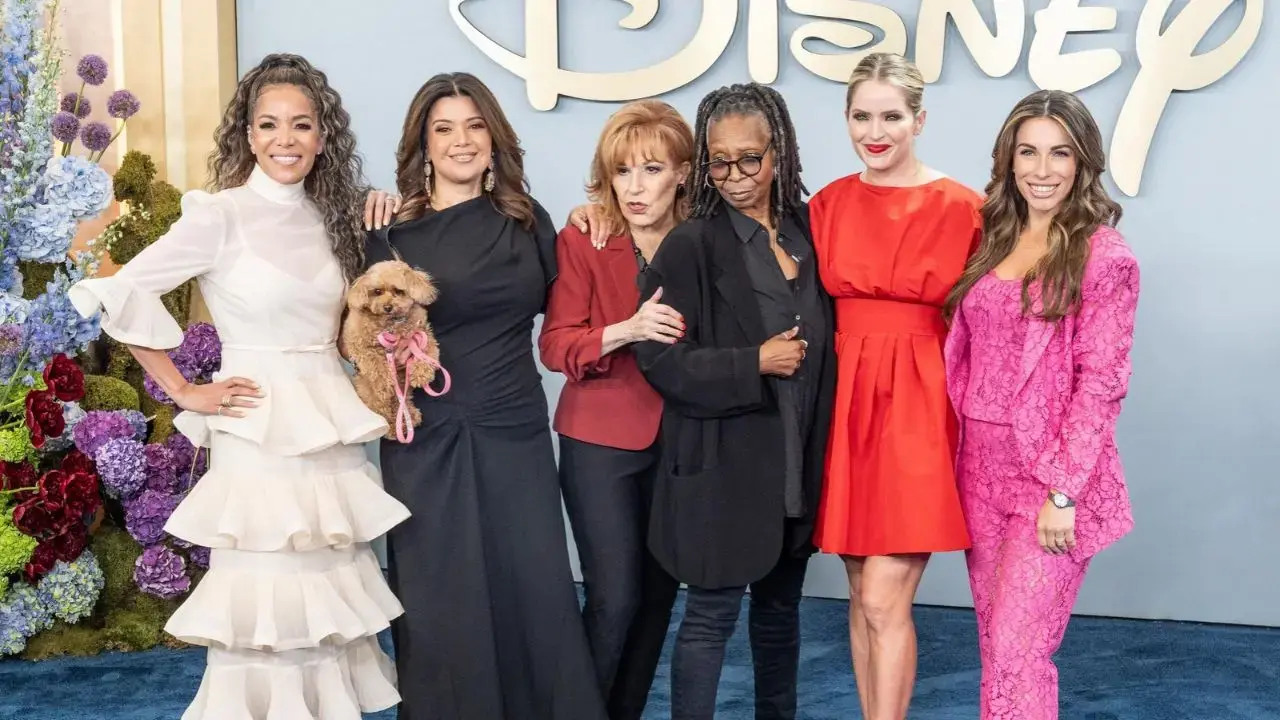
This incident with Kristen Welker is not isolated. It occurs within a broader context of challenges to media organizations and their broadcast licenses. Notably, Disney/ABC is currently embroiled in a lawsuit against the FCC, alleging that the agency’s efforts to challenge its broadcast licenses and the content of its popular talk show The View constitute a violation of the network’s free speech rights. The lawsuit specifically points to actions during the Trump administration, suggesting a pattern of attempting to use regulatory power to influence or punish media content.
The Disney/ABC case, while distinct in its specifics, echoes the underlying tension between political figures and media organizations over perceived bias and the scope of broadcast regulation. Both situations highlight the ongoing legal and political battles over the boundaries of free speech, the role of federal agencies, and the independence of the press in a highly polarized political landscape. These legal challenges are crucial tests of the First Amendment’s protections in the modern media environment.
The former president’s threat against Kristen Welker serves as a stark reminder of the persistent tension between political power and journalistic independence. While legal experts and regulators affirm the FCC’s lack of authority to intervene in news content, the act of threatening such action itself carries significant weight, shaping public discourse and the environment in which journalists operate. As the nation approaches pivotal midterm elections, the debate over media scrutiny, political endorsements, and the limits of government power continues to intensify, underscoring the enduring importance of a free and robust press in American democracy.