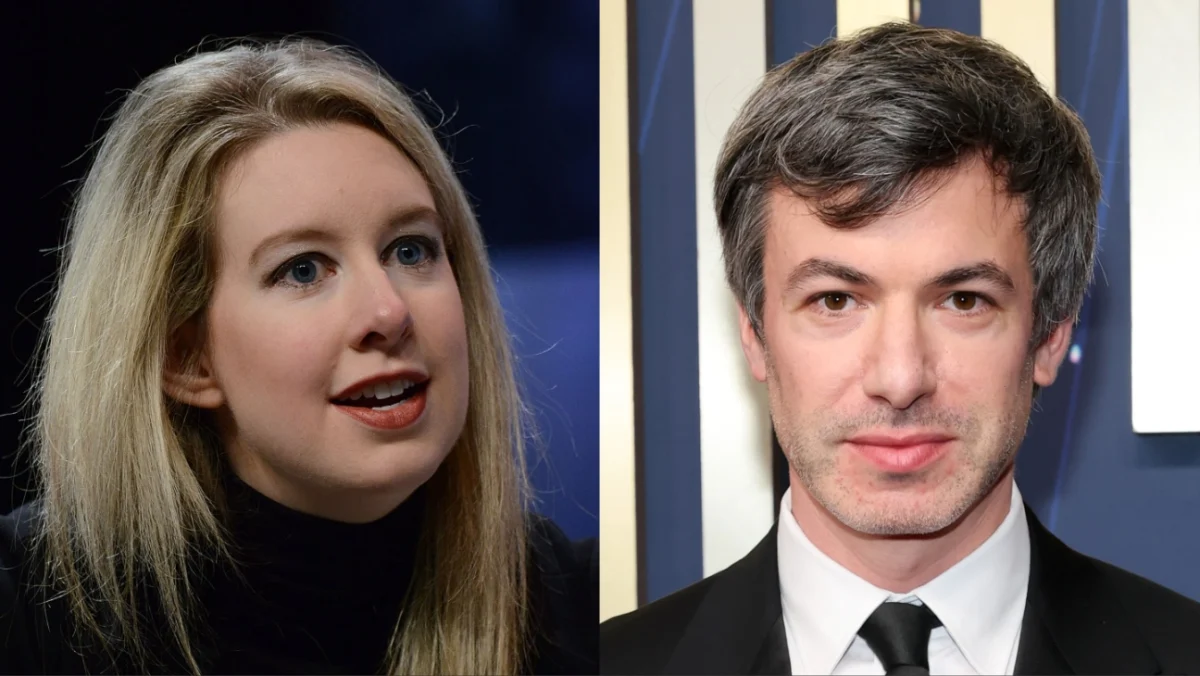
A new Elizabeth Holmes documentary, titled You Can See Everything and co-directed by Nathan Fielder and Lance Oppenheim, premiered to an astonished audience at the Telluride Film Festival on Sunday, generating immediate and overwhelmingly intense reactions. Festivalgoers described the film as "shocking," "brilliant," "insane," and "what the f*** did I just watch?" signaling a boundary-pushing exploration of the convicted Theranos founder’s life leading up to her incarceration.
The Surprise Premiere and Unprecedented Buzz
The unexpected screening at Telluride quickly became the festival’s most talked-about event. Attendees, many of whom were film critics and industry insiders, took to social media in the immediate aftermath to articulate their bewilderment and enthusiasm. The consensus pointed to a documentary that defies conventional categorization, leaving audiences both deeply impressed and profoundly unsettled. Official critical reviews are anticipated in the coming days, but the initial public response has set a high bar for the film’s unique narrative and stylistic approach.
Delving into the Abyss: The Film’s Premise
You Can See Everything provides an intimate and unprecedented look at Elizabeth Holmes during a pivotal period: the 34 days leading up to her imprisonment. Filmed in April and May of 2023, the A24 docudrama follows Fielder, Oppenheim, and their crew as they shadow Holmes. This access was granted after her January 2022 conviction on multiple counts of defrauding investors and wire fraud.
A24, the film’s distributor, released a teaser trailer and a logline to coincide with the Telluride premiere, offering further insight into the project. The logline states: "Thirty-four days before she’s sent to prison, notorious Silicon Valley founder Elizabeth Holmes invites a skeptical film crew to document her every move. What begins as an intimate portrait of an enigmatic felon becomes a mind-bending three-year journey into the abyss. From boundary-pushing directors Nathan Fielder and Lance Oppenheim comes You Can See Everything." This suggests the film transcends a simple observational account, evolving into something far more complex and perhaps disorienting over time.
The Visionary Directors: Fielder and Oppenheim
The collaboration between Nathan Fielder and Lance Oppenheim brings together two distinct yet complementary filmmaking sensibilities, promising a unique take on the Elizabeth Holmes narrative. Both directors are known for their innovative approaches to documentary and reality-bending storytelling.
Nathan Fielder’s Signature Style
Nathan Fielder first gained widespread recognition for his highly influential Comedy Central series, Nathan For You, which blurred the lines between reality television, cringe comedy, and social experiment. His work often involves elaborate schemes and meticulous planning designed to evoke genuine reactions and expose the absurdities of human behavior and societal norms. In recent years, Fielder has continued to explore the docudrama genre with HBO’s critically acclaimed series The Rehearsal, which saw him orchestrate complex simulations of life events for ordinary people. He also co-created, wrote, and starred in the black comedy series The Curse for Paramount+. Fielder’s involvement in You Can See Everything suggests a film that will likely challenge viewers’ perceptions of truth, authenticity, and the nature of documentary itself, particularly given his past explorations of performance and manipulation within real-world settings.
Lance Oppenheim’s Documentary Acumen
Lance Oppenheim is a celebrated documentarian known for his visually distinctive and often surreal portrayals of unusual subjects and communities. His key works include Some Kind of Heaven (2020), a critically praised film about a retirement community in Florida, and more recent projects like Spermworld (2024) and the docuseries Ren Faire (2024). Oppenheim’s films often delve into the inner lives of his subjects, revealing profound truths through a unique aesthetic lens. His recent narrative feature debut, Primetime, starring Robert Pattinson, also premiered at the Venice Film Festival, garnering significant awards buzz. Oppenheim’s experience in crafting compelling, character-driven documentaries, combined with Fielder’s experimental approach, positions You Can See Everything to be an unusually nuanced and stylistically bold examination of Elizabeth Holmes.
Elizabeth Holmes: A Legacy of Deception and Public Fascination
The story of Elizabeth Holmes and Theranos has captivated the public imagination for years, making her a figure of enduring fascination. Holmes founded Theranos in 2003, promising a revolutionary blood-testing technology that could perform a multitude of tests from just a few drops of blood. She quickly rose to prominence as a Silicon Valley prodigy, attracting billions in investment and gracing the covers of major magazines. However, investigative journalism, most notably by The Wall Street Journal, began to expose the widespread fraud and scientific inaccuracies at the heart of Theranos.
The deception unraveled publicly, leading to regulatory scrutiny, federal charges, and ultimately, her conviction in January 2022 for defrauding investors and wire fraud. After multiple appeals, Holmes began her 11-year prison sentence in May 2023. Her narrative has been dissected in books, podcasts, and dramatic series, exploring themes of ambition, hubris, gender in the tech world, and the dangerous allure of Silicon Valley’s "fake it ’til you make it" culture. The unique access granted to Fielder and Oppenheim for You Can See Everything offers a fresh, and potentially definitive, look at Holmes during the crucial moments before her imprisonment, promising new insights into her persona and the psychological dimensions of her story.
Broader Implications: Truth, Media, and Accountability
You Can See Everything is poised to spark significant discussion not only about Elizabeth Holmes but also about the nature of truth, documentary filmmaking, and media representation. Fielder’s history of blurring reality and performance suggests that the film may actively interrogate how narratives are constructed, especially around public figures. The logline’s mention of a "skeptical film crew" further hints at a meta-commentary on the documentary process itself.
The film’s exploration of Holmes’s final days of freedom could offer a unique psychological portrait, potentially challenging existing public perceptions or adding new layers of complexity to her widely scrutinized image. In an era where trust in institutions and media is frequently debated, a film that delves into a figure known for profound deception, through the lens of directors who question reality, carries significant cultural weight. It could provoke conversations about accountability in the tech industry, the ethics of documentary filmmaking, and the public’s insatiable appetite for stories of rise and fall.
Anticipated Release and Next Steps
A24 is set to release You Can See Everything in theaters sometime in October. The strategic timing of this release, following Holmes’s actual imprisonment, amplifies the film’s relevance and potential impact. With the initial, fervent reactions from Telluride, anticipation for the wider theatrical release is expected to build rapidly. The film is positioned not just as another account of the Theranos scandal, but as a potentially groundbreaking piece of cinema that redefines how audiences engage with true crime and biographical narratives. As the film approaches its general release, critical analysis and public discourse will undoubtedly continue to unpack the layers of this "mind-bending" Elizabeth Holmes documentary.