Archaeological researchers have uncovered evidence suggesting that ancient Indonesian foragers were consuming psychoactive substances as far back as 25,000 years ago, potentially marking the earliest known instance of human drug use. The discovery, centered on the dental remains of two individuals found on the island of Sulawesi, indicates a long-standing tradition of using the areca nut, commonly known as the betel nut. This finding pushes the timeline for habitual human drug consumption back by several millennia, challenging previous assumptions about the origins of chemical stimulant use in prehistoric societies.
The study, led by an international team of scientists, focused on two exceptionally rare skeletons unearthed from separate cave sites on Sulawesi. Analysis of the teeth revealed distinct, deep-seated wear patterns and chemical traces of arecoline, the primary psychoactive compound found in betel nuts. The research suggests that these early inhabitants of the Indonesian archipelago were not merely occasional users but likely engaged in a routine habit of sucking on the hard, abrasive seeds to achieve a mild stimulant effect.
Uncovering the Origins of Mind-Altering Nuts in Ancient Indonesia
The archaeological investigation began with the examination of skeletal remains belonging to pre-agricultural foragers. One skeleton was dated to approximately 7,000 years ago, while the second, more ancient individual was dated between 16,000 and 25,000 years old. Despite the vast age gap between the two specimens, both exhibited nearly identical dental abnormalities that puzzled the research team.
Writing in the journal Science Advances, the researchers described deep, rounded grooves etched into the surfaces of the remaining teeth. In some instances, the wear was so severe that it had exposed the sensitive dental pulp, a condition that would have caused significant physical discomfort. Professor Adam Brumm of Griffith University’s Australian Research Centre for Human Evolution characterized the wear as highly unusual, noting that it appeared as though a spherical, abrasive object had been systematically rotated against the tooth enamel over a period of years.
The betel nut, which is actually the seed of the Areca catechu palm, is frequently misidentified because it is traditionally wrapped in the leaves of the betel vine for consumption. Today, the substance remains the world’s fourth most widely used psychoactive drug, trailing only alcohol, caffeine, and nicotine. It is estimated that roughly ten percent of the global population, primarily in the Asia-Pacific region, continues to chew the seeds for their stimulatory and medicinal properties.
Chemical Analysis and the Discovery of Ancient Stimulants
To confirm their hypothesis that the dental grooves were caused by betel nut consumption, the scientists conducted a series of laboratory tests. They analyzed the dental tissues of the Sulawesi foragers for chemical signatures of arecoline. The presence of this specific alkaloid provided the "smoking gun" needed to link the physical tooth wear to the use of mind-altering substances.

The researchers also performed experimental simulations to understand how the foragers might have consumed the nuts. In modern traditions, betel nuts are typically crushed and mixed with slaked lime—a powder made from ground, burnt seashells—to create a "quid." The lime facilitates a chemical reaction that releases higher concentrations of arecoline, intensifying the resulting high. However, the extreme wear on the ancient teeth suggested a different method of delivery.
The team proposed that these ancient Indonesian foragers sucked on the whole, hard nuts for extended periods. To test the efficacy of this method, scientists soaked betel nuts in artificial saliva and found that the seeds released enough arecoline to induce a noticeable, albeit milder, stimulant effect. This suggests that the foragers had discovered the psychoactive properties of the palm seeds long before the development of more complex preparation techniques involving lime.
A Vicious Cycle of Pain and Substance Use
The physical toll of this habit was evident in the skeletal remains. Professor Brumm noted that the foragers were likely caught in a self-perpetuating cycle of drug use and dental trauma. While the betel nut may have been used initially as a traditional remedy for toothache or general mouth pain due to its numbing, astringent qualities, the abrasive nature of the nut eventually wore the teeth down to the nerve.
This destruction of the enamel would have led to chronic dental pain, prompting the individuals to suck on more nuts to numb the area. "These individuals were seemingly caught in a self-perpetuating cycle where they were continually sucking on the nuts to treat the tooth pain caused by this nut-sucking habit," Brumm stated. The research highlights a complex relationship between prehistoric humans and their environment, where the quest for relief or stimulation often came at a high physiological cost.
The taste of the raw nut is described as intensely bitter and astringent. Professor Brumm, who experimented with sucking on a nut himself, noted that it causes the mouth to go numb almost immediately. This anesthetic quality likely made it an attractive substance for foragers living in a world without modern medicine, where dental infections and oral hygiene issues were common.
Indonesian Foragers May Have Sucked on Mind-Altering Nuts 25,000 Years Ago to Manage Daily Life
The discovery on Sulawesi provides a rare glimpse into the daily lives and social habits of early modern humans in the Wallacea region. Before this study, the oldest confirmed traditions of psychoactive drug use were generally dated to about 13,000 years ago, involving the fermentation of grains for barley beer in the Levant. The Sulawesi find effectively doubles the known history of human interaction with mind-altering plants.
Dr. Elisa Guerra-Doce, an associate professor in European prehistory at the University of Valladolid in Spain, emphasized the importance of the find, stating that it provides direct evidence of the antiquity of human drug use. She noted that the findings demonstrate that the consumption of areca nuts is a millennia-old tradition that predates the dawn of agriculture.
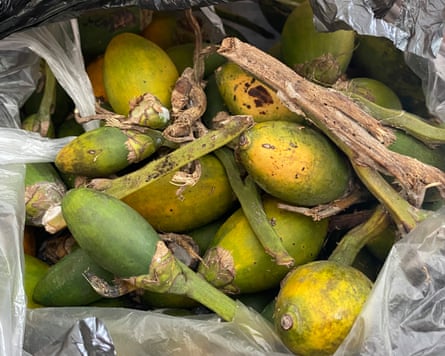
The island of Sulawesi has become a focal point for understanding human evolution and cultural development in Southeast Asia. It is home to some of the world’s oldest cave art, including a recently discovered painting of a pig and human figures that dates back at least 51,200 years. The fact that the same region now holds the record for the earliest drug use suggests that the ancient cultures of Wallacea were sophisticated and deeply experimental with the natural resources at their disposal.
Broader Implications for Human Evolutionary History
The study of ancient drug use is more than a curiosity for archaeologists; it offers insights into the cognitive and social development of Homo sapiens. The habitual use of stimulants suggests a level of foresight and a desire to alter one’s internal state, whether for ritualistic, medicinal, or recreational purposes. In the case of the Sulawesi foragers, the use of mind-altering nuts appears to have been an integrated part of their survival strategy or social fabric.
The persistence of betel nut use into the modern era also speaks to the powerful nature of the substance. Despite being linked to significant health risks in contemporary society, including oral cancer and cardiovascular issues, the habit remains deeply entrenched in the cultural identity of many Southeast Asian and Pacific Island communities. Understanding its prehistoric roots helps researchers map the spread of these traditions alongside human migration patterns.
As archaeological techniques become more refined, particularly in the field of paleoproteomics and dental calculus analysis, scientists expect to find further evidence of plant-based drug use in other parts of the world. The Sulawesi skeletons represent a breakthrough because they provide both physical (wear patterns) and chemical (arecoline) evidence, a combination that is rare in the archaeological record.
Future Research and the Legacy of Ancient Traditions
The discovery that Indonesian foragers may have sucked on mind-altering nuts 25,000 years ago, research finds, opens new avenues for exploring the relationship between early humans and tropical flora. Future excavations in the limestone caves of Sulawesi and neighboring islands may yield more specimens that can clarify whether this habit was localized or widespread across the region.
The researchers plan to expand their investigation to look for other chemical markers in ancient teeth, potentially uncovering the use of other psychoactive plants that leave less obvious physical traces than the abrasive betel nut. As the timeline of human drug use continues to be pushed back, it becomes increasingly clear that the human drive to explore altered states of consciousness is as old as the species itself.
The findings on Sulawesi serve as a reminder that the history of human innovation is not limited to tools and technology. It also encompasses a deep, ancient knowledge of the natural world’s chemical potential—a knowledge that has shaped human culture and biology for tens of thousands of years. The legacy of these ancient foragers lives on today in the red-stained smiles of millions across the Asia-Pacific, continuing a tradition that began in the dark caves of the Pleistocene.