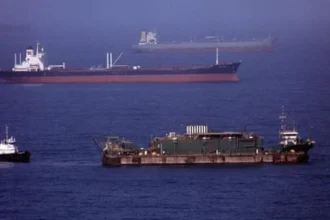
A wave of Russian drone attacks targeting critical infrastructure across Ukraine left at least nine people dead and more than 40 injured overnight, marking a significant escalation in the Kremlin’s campaign against Ukrainian logistics and maritime hubs. Local officials reported that the strikes focused primarily on the northeastern region of Sumy and the southern port city of Mykolaiv, hitting warehouses and grain storage facilities essential to the nation’s battered economy.
In the Sumy region, which has seen intensified cross-border activity in recent months, emergency services confirmed five fatalities and 24 injuries following a series of detonations in residential and industrial sectors. Meanwhile, in Mykolaiv, a vital gateway to the Black Sea, four people were killed and 19 others were treated for shrapnel wounds and respiratory issues after drones struck port-side warehouses. The attacks come at a time when Ukraine is struggling to maintain its export corridors amidst constant aerial threats.
Ukrainian President Volodymyr Zelenskyy, currently on an international diplomatic mission in Canada, condemned the strikes as "daily terror" and vowed that every Russian assault would be met with a "just response." The Ukrainian leader is currently engaged in high-level talks in Calgary, focusing on securing advanced air defense systems and preparing the nation’s energy grid for the upcoming winter. Despite his absence from Kyiv, the Ukrainian military reported successful retaliatory strikes against eight Russian infrastructure facilities within the last 24 hours.
Strategic Impact of Russian Drones Kill at Least Nine in Strikes Targeting Warehouses and Ports in Ukraine
The humanitarian toll of the latest bombardment underscores the persistent vulnerability of Ukraine’s civilian and commercial infrastructure. In Mykolaiv, the destruction of warehouses further complicates the logistics of grain transport, an industry that remains a lifeline for the country. Military analysts suggest that by targeting these specific sites, Russia aims to degrade Ukraine’s ability to store and move supplies while simultaneously demoralizing the population through high-casualty events.

The strikes in Sumy appear to be linked to the ongoing friction along the border, where both sides have engaged in a grueling war of attrition. Warehouses in this region often serve as staging points for humanitarian aid and military supplies, making them primary targets for Russian loitering munitions. The high number of injuries reported by local health authorities suggests that the drones struck areas with high population density or worker presence during the night shift.
In a morning briefing, Ukrainian officials noted that while a significant number of the Iranian-designed Shahed drones were intercepted by air defense teams, the sheer volume of the "swarm" tactics employed by Russian forces allowed several munitions to bypass the perimeter. This has renewed calls from the Zelenskyy administration for more sophisticated electronic warfare capabilities and long-range interceptors from Western allies.
Ukrainian Retaliation and the Deep-Strike Campaign
While the news that Russian drones kill at least nine in strikes targeting warehouses and ports in Ukraine dominated headlines, Kyiv’s own long-range capabilities were on full display. President Zelenskyy confirmed that Ukrainian "warriors" hit an oil refinery in the remote Yamalo-Nenets region of the Russian Arctic and a seaport in Dagestan on the Caspian Sea. These strikes represent a massive geographical expansion of Ukraine’s retaliatory reach, hitting targets thousands of miles from the front lines.
Additionally, infrastructure sites in the Moscow, Voronezh, Astrakhan, and Bryansk regions were reportedly targeted by Ukrainian-made drones. The strike on the Dagestan seaport is particularly notable, as it targets a logistics hub used by Russia to receive military equipment from regional allies. By hitting an oil refinery in the Yamalo-Nenets region, Ukraine is signaling its ability to threaten Russia’s primary source of revenue: its energy sector.
"Russia continues its daily terror against Ukraine, and every day, it receives a just response," Zelenskyy said in a statement released via social media. He expressed gratitude to the engineers and soldiers who have developed Ukraine’s long-range precision capabilities, which have increasingly brought the reality of the war home to the Russian hinterland.

Assassination Attempt and Security Breaches in the High North
The volatility of the current conflict was further highlighted by a revelation from Norwegian Prime Minister Jonas Gahr Støre, who disclosed that President Zelenskyy’s plane was nearly struck by a drone earlier this week. The incident occurred as the president was departing Moldova for a summit in Oslo. According to Norwegian officials, the drone incursion was part of a larger Russian aerial operation that also violated the airspace of Romania and Moldova.
"That is just the reality he lives in," Støre told the broadcaster NRK, referring to the constant threats against the Ukrainian president’s life. The incident has raised questions about the safety of diplomatic travel in Eastern Europe and the potential for a catastrophic escalation should a head of state be targeted during an international flight.
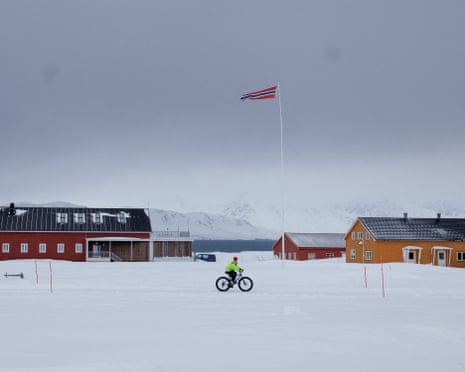
Simultaneously, a shadow war is unfolding in the Arctic. NATO allies Britain, Norway, and the United States reported that they successfully foiled a clandestine Russian plot to sabotage critical undersea fiber-optic cables. These cables, which link the Svalbard archipelago to mainland Norway, are buried as deep as 2,700 meters and carry vast amounts of satellite data for NASA’s Near Space Network and the SvalSat ground station.
Subsea Sabotage and the Vulnerability of Global Communications
The foiled operation involved Russian vessels simulating the deployment of a "fingerprint-less" weapon designed to disable subsea infrastructure without leaving clear evidence of state involvement. NATO officials tracked and confronted the Russian ships in the High North earlier this spring, though the full details of the encounter and the nature of the weapon remain classified.
Norway’s Defense Minister, Tore Sandvik, issued a stern warning to Moscow following the report. "We have made it unequivocally clear to Russian authorities that any attempt to target our critical infrastructure will be detected and met with consequences," Sandvik said. He emphasized that the joint operation between the UK, US, and Norway sent a clear message that Russia cannot operate covertly in the Arctic.
The protection of these cables is of paramount importance to global telecommunications and scientific research. The SvalSat station is the world’s largest satellite ground station, and any disruption to its data flow would have immediate consequences for international space agencies and maritime navigation. This incident highlights a new front in the conflict where the battle for data and connectivity is as crucial as the battle for territory.
Espionage and False Flag Allegations in Moscow
Diplomatic tensions between the West and Russia reached a new low on Thursday following the arrest of a Russian security guard at the British Embassy in Moscow. The Russian Federal Security Service (FSB) alleged that the individual was recruited by Ukrainian intelligence to carry out a "false flag" attack on the British Ambassador. According to the FSB, the plan involved a staged sabotage that would then be blamed on Russian security forces to justify further Western intervention.
Neither London nor Kyiv has officially responded to these allegations, which the FSB released without providing supporting evidence. The arrest occurred just hours after British prosecutors charged a 31-year-old British man for allegedly making contact with Russia’s GRU military intelligence agency. This tit-for-tat cycle of espionage charges suggests that the intelligence war between Russia and NATO is intensifying alongside the conventional military conflict.
The FSB’s claim of a "Ukrainian blogger" acting as a middleman for the SBU security agency is a common trope in Russian state media, often used to frame domestic arrests as part of a larger foreign conspiracy. Regardless of the veracity of the claims, the incident further isolates the remaining Western diplomatic missions in Moscow, making the prospect of a negotiated peace even more remote.
Space Policy and the Future of European Sovereignty
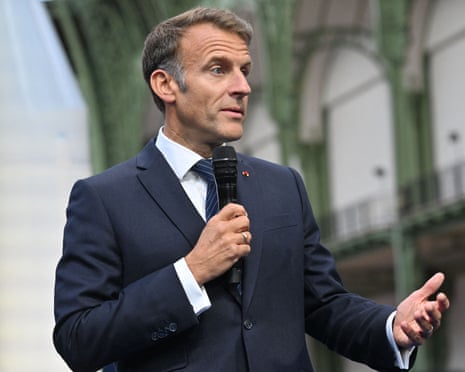
Against the backdrop of the news that Russian drones kill at least nine in strikes targeting warehouses and ports in Ukraine, European leaders met in Paris for an International Space Summit. French President Emmanuel Macron and European Commission President Ursula von der Leyen used the platform to argue that Europe’s security on Earth is now inextricably linked to its capabilities in space.
Macron called for a bold new initiative to develop an independent European crewed spaceflight program. He argued that the continent’s current reliance on foreign launchers—primarily from the United States and private companies like SpaceX—leaves its strategic interests "fragile." Macron urged EU member states to "step up efforts" to ensure that Europe remains a first-rate power in the space domain.
Ursula von der Leyen echoed these sentiments, noting that the "jamming and spoofing" of navigation signals has already disrupted civilian aircraft in European airspace. She linked these cyber-attacks and electronic warfare tactics directly to the broader conflict with Russia. "Our security on Earth increasingly depends on our security in space," von der Leyen stated, pledging massive investments in the European space economy to ensure long-term independence.
Long-Term Consequences of Infrastructure Warfare
The ongoing destruction of Ukrainian ports and warehouses is expected to have a cascading effect on global food security and commodity prices. As Russia continues to refine its drone technology and swarm tactics, the cost of defending these sites has skyrocketed. The international community faces a growing challenge in sustaining Ukraine’s defensive posture while also protecting the broader global infrastructure—from subsea cables to satellite networks—that Russia has shown a willingness to target.
The strikes in Sumy and Mykolaiv are a grim reminder that the front lines of this war are not confined to the trenches of the Donbas. They extend to every grain elevator, every shipping container, and every data center that supports the Ukrainian state. As winter approaches, the focus on "warehouses and ports" is likely to shift toward energy infrastructure, as the Kremlin seeks to use the cold as a weapon of war once again.
While NATO remains focused on providing military hardware, the foiled Arctic plot and the space summit discussions suggest a broadening of the alliance’s strategic focus. The defense of the "High North" and the "High Frontier" of space are no longer theoretical concerns but active theaters of the ongoing geopolitical struggle. The events of September 10, 2026, serve as a stark indicator that the conflict has evolved into a multi-domain war with no clear end in sight.