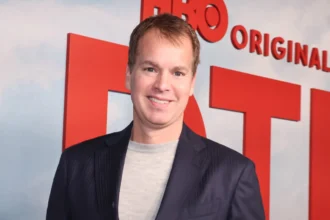
Comedian and actor Caleb Hearon is charting a new course in his burgeoning career, signaling a profound artistic pivot with his co-written and starring role in the grief dramedy Trash Mountain, which premiered to an engaged audience at the Toronto Film Festival. The film, a deeply personal exploration of loss and family estrangement, sees Hearon stepping beyond his established comedic persona, a transition he explicitly addressed, stating, "If anything, I’m eager to prove that I’m not just a clown." This declaration underscores a deliberate move to showcase a broader range of dramatic capability, challenging preconceptions of his public image.
Hearon’s Artistic Evolution and Personal Inspiration
Caleb Hearon has rapidly risen through the ranks of comedy, garnering a significant following for his sharp wit, relatable observational humor, and incisive social commentary. Known for his viral online sketches and an acclaimed HBO Max comedy special, Hearon has cultivated an image as a master of contemporary comedic timing. His comedic prowess has often involved a self-deprecating, often exaggerated, take on everyday anxieties and absurdities, establishing him as a distinctive voice in modern stand-up. However, beneath the layers of humor lies a profound wellspring of personal experience, particularly the unexpected death of his own father, an event that profoundly shaped the emotional core of Trash Mountain.
This personal tragedy served as the primary catalyst for Hearon to explore the complex tapestry of grief through a dramatic lens. The decision to channel such a raw, formative experience into a film project marks a significant departure from his usual stand-up material, though it retains the authentic voice that defines his work. For Hearon, comedy had previously functioned as a crucial coping mechanism, a way to process the overwhelming emotions associated with loss. Trash Mountain represents an evolution of that process, moving beyond the immediate catharsis of laughter to a more nuanced, introspective examination of sorrow, memory, and familial bonds.
Crafting a Grief Dramedy: The Trash Mountain Narrative
Trash Mountain centers on Gavin, a young gay man from Chicago, portrayed by Hearon, who is compelled to return to his rural Missouri hometown following the death of his estranged hoarder father. The narrative quickly establishes Gavin as a character marked by emotional distance, seemingly having retreated from significant relationships in his life. His return home forces a confrontation not only with his past but also with the physical manifestation of his father’s mental illness – a house overflowing with accumulated possessions, a veritable "mountain of rubbish" that dominates the family property.
Central to Gavin’s journey is his reunion with his half-sister, Abbi, played by the acclaimed actress Zooey Deschanel. Their dynamic forms the emotional backbone of the film, as they navigate the shared trauma of their father’s life and death, attempting to make sense of the detritus he left behind. The film deftly explores the intricate and often fraught relationship between siblings, especially when united by grief and a complicated family history. The physical act of sifting through their father’s possessions becomes a metaphor for sifting through memories, regrets, and unspoken emotions, challenging Gavin and Abbi to decide what to hold onto and what to discard, both literally and figuratively.
The Delicate Balance: Comedy and Tears in Trash Mountain
Co-writing Trash Mountain with Ruby Caster presented a unique challenge: how to infuse humor into a narrative deeply rooted in profound grief without trivializing the subject matter. Caster articulated her apprehension at the Toronto Film Festival premiere, expressing concern about striking the wrong chord, crafting a joke that would inadvertently cross the fine line between eliciting laughter and tears when dealing with such sensitive material. Hearon, ever the comedian, playfully diffused the tension by quipping, "You stepped across a lot of lines. And I want to talk about that, here, tonight," a moment that perfectly encapsulates the film’s very premise: finding levity amidst sorrow.
The film’s designation as a "grief dramedy" positions it within a popular yet challenging genre. This category of storytelling demands a delicate balance, requiring creators to navigate the emotional landscape of loss with sensitivity while still offering moments of lightheartedness or absurdity that are inherent to the human experience. The collaborative writing process between Hearon and Caster was evidently instrumental in achieving this equilibrium, allowing Hearon’s comedic instincts to be tempered and refined by the narrative’s overarching dramatic weight. Their shared vision aimed not to mock grief but to illustrate how humor often emerges, unexpectedly, in the most challenging moments, serving as a vital coping mechanism and a testament to resilience.
Zooey Deschanel’s Return and Personal Connection
Zooey Deschanel’s role as Abbi marks a notable appearance for the actress, known for her distinctive roles in films like 500 Days of Summer and All The Real Girls, and her long-running success on the television series New Girl. Her involvement in an independent grief dramedy like Trash Mountain highlights a deliberate choice to engage with projects offering complex characters and emotionally rich narratives. Deschanel’s performance is anticipated to bring her signature blend of warmth and vulnerability to Abbi, a character grappling with her own history and the complicated legacy of their father.
Deschanel herself brought a deeply personal connection to the film’s themes, revealing at the Toronto Film Festival that she chose to incorporate a scarf belonging to her late grandfather into her wardrobe for the film. This personal touch underscores the film’s exploration of how objects can serve as powerful conduits for memory and connection to those who have passed. "I have them in my closet, and every time I see them I think of my grandfather. These objects can be conduits for people that have passed," Deschanel shared, emphasizing the universal resonance of finding solace and remembrance in cherished keepsakes. Her contribution not only adds authenticity to the film but also reinforces the shared human experience of processing loss through tangible links to the past.
Directorial Vision and Broader Ensemble
Under the direction of Kris Rey, known for her nuanced character studies and independent filmmaking sensibilities, Trash Mountain is poised to offer an intimate and authentic portrayal of familial grief. Rey’s directorial approach is expected to guide the performances with sensitivity, allowing the raw emotions of the characters to unfold organically against the backdrop of rural Missouri. Her previous works often explore themes of identity, relationships, and the search for meaning in everyday life, making her a fitting choice to helm this poignant dramedy.
The film also boasts a talented supporting cast, further enhancing its ensemble strength. Veteran actress Jackie Weaver, known for her powerful dramatic roles, joins the cast, alongside Jaboukie Young-White, Kyle Martin, and Holmes. Their collective presence is expected to provide rich texture to the film’s narrative, portraying the community and extended family that surrounds Gavin and Abbi. Notably, acclaimed filmmaker Lilly Wachowski is among the executive producers, a testament to the project’s artistic merit and its potential to resonate with a broad audience. Wachowski’s involvement signals a strong endorsement of the film’s unique voice and its exploration of complex human emotions.
The Toronto Film Festival Platform and Cultural Impact
The world premiere of Trash Mountain at the Toronto Film Festival (TIFF) places it on a prestigious international stage, known for launching critically acclaimed independent films and serving as a key precursor to the awards season. TIFF’s reputation as a "people’s festival" often means films receive a warm and engaged reception from diverse audiences, providing invaluable early feedback. For a grief dramedy tackling themes of loss, hoarding, and LGBTQ+ identity, TIFF offers an ideal platform to generate buzz, attract potential distributors, and initiate broader cultural conversations.
The film’s exploration of a hoarder father’s legacy and its impact on his children touches upon increasingly relevant societal issues. Hoarding disorder, often misunderstood and stigmatized, is brought into the spotlight, offering a humanizing perspective on the condition and its ripple effects on families. Furthermore, Gavin’s identity as a young gay man returning to a potentially conservative rural environment adds another layer of social commentary, subtly addressing themes of acceptance, belonging, and the complexities of reconciling one’s identity with their origins. Trash Mountain contributes to a growing body of work that seeks to de-stigmatize mental health challenges and foster empathy for diverse family structures.
Looking Ahead: Reaching Beyond the Festival
As the Toronto Film Festival continues its run through September 20, Trash Mountain is positioned to be a significant talking point among critics and industry insiders. The film’s nuanced portrayal of grief, combined with Caleb Hearon’s compelling dramatic performance and Zooey Deschanel’s poignant contribution, suggests a project with considerable emotional depth and artistic integrity. Hearon’s bold declaration of his dramatic intentions marks a pivotal moment in his career, signaling a desire to transcend the comedic roles that first brought him acclaim. Trash Mountain stands as a testament to the evolving landscape of storytelling, where humor and heartbreak can coexist, offering audiences a profoundly human experience that resonates long after the credits roll. The film’s journey beyond TIFF will undoubtedly be watched closely, as it seeks to find a wider audience ready to embrace its challenging yet ultimately cathartic narrative.