Director Alexandra Pechman’s feature debut, Magazine, is set to premiere in the Toronto International Film Festival’s Discovery section on September 11, offering audiences a meticulously crafted journey back to the distinct New York media and literary scene of 2011, a pivotal year where print media, though embattled, still commanded significant cultural weight. The film captures this transient period with a blend of authenticity and critical affection, exploring a time before the full digital transformation irrevocably altered publishing and social dynamics.
The Shifting Sands of 2011 Media Landscape
The early 2010s represented a unique inflection point in American media. Digital titans like Gawker Media were at the zenith of their influence, redefining online journalism with a blend of snark, exposé, and rapid-fire commentary that often eclipsed traditional outlets. Simultaneously, Twitter, still in its relative infancy, was rapidly gaining traction, offering a new, often unfiltered, platform for news dissemination and public discourse that felt both exhilarating and somewhat chaotic compared to today’s more algorithm-driven environment. Amidst this digital surge, print media found itself in a precarious position. Major newspapers and magazines grappled with declining advertising revenues and readership, yet they continued to hold a revered, almost sacred, status in cultural and intellectual circles. The tactile experience of a glossy magazine or a well-bound literary journal still resonated, even as the internet threatened its very existence. It is this delicate balance—the last vestiges of print’s glory against the backdrop of a burgeoning digital age—that Magazine seeks to illuminate.
"Magazine": A Deep Dive into Literary Aspirations
The narrative of Magazine centers on Nora, portrayed by Lily McInerny, an eager intern and aspiring poet who dedicates her summer to a quarterly literary magazine named "Platen." Pechman deliberately designs "Platen" as an institution that embodies both the lofty ideals and the inherent pretentiousness often found within elite literary circles. It is a world where intellectual ambition clashes with personal insecurities, and the pursuit of artistic merit intertwines with social maneuvering. Nora’s journey through this environment is marked by a series of ill-fated romances and budding friendships, as she navigates a labyrinth of outsized personalities and complex ambitions typical of a New York-based publication revered for its focus on cultish literary figures. The film paints a vivid picture of the internal politics, creative pressures, and social hierarchies that defined such an establishment.
Alexandra Pechman’s Authentic Lens on Print Media
Director Alexandra Pechman brings an unparalleled level of personal experience and insight to Magazine. Her assertion, delivered with a hint of humor, that she possesses "the correct degree to make this movie," underscores her deep roots in the world she portrays. Pechman is an alumna of Northwestern’s esteemed School of Journalism, holding a bachelor of science in magazine journalism. Her career prior to filmmaking was immersed in publishing, beginning with formative internships at significant cultural touchstones like the AV Club and the venerable The Paris Review. She honed her meticulous eye for detail as a fact-checker at ArtNews and contributed writing to influential publications such as Art Forum and Vogue. This extensive background provided her with an intimate understanding of the industry’s nuances, from the editorial processes to the personalities that inhabit its ecosystem. Pechman’s transition to filmmaking, which includes credits on the Syfy series Channel Zero and various short films, has allowed her to channel this lived experience into a cinematic vision. Her deep personal connection to the project was such that she felt compelled to direct it herself, stating, "This was the first thing I ever started writing where I was like, ‘I can’t let anybody else [direct] this.’"
Inspirations and Thematic Resonance in "Magazine"
Pechman openly cites cinematic influences that resonate with the nostalgic and introspective tone of Magazine. She drew inspiration from films like Cameron Crowe’s Almost Famous (2000), which beautifully captures the romance and disillusionment of a young journalist entering the music scene of the 1970s, and Whit Stillman’s The Last Days of Disco (1998), an astute observation of social circles and existential dilemmas in New York’s late-1970s club culture. Both films skillfully evoke a sense of longing for a bygone era, whether in journalism or city living. By referencing these works, Pechman signals her intention to create a similar sense of historical immersion and emotional depth, allowing viewers to not just observe but also feel the specific texture of the early 2010s. The film aims to be more than a simple period piece; it is an exploration of the cultural zeitgeist, personal growth, and the lingering echoes of a time that, in retrospect, appears both innocent and complex.
The Pre-Digital Reckoning: Office Culture and Social Dynamics
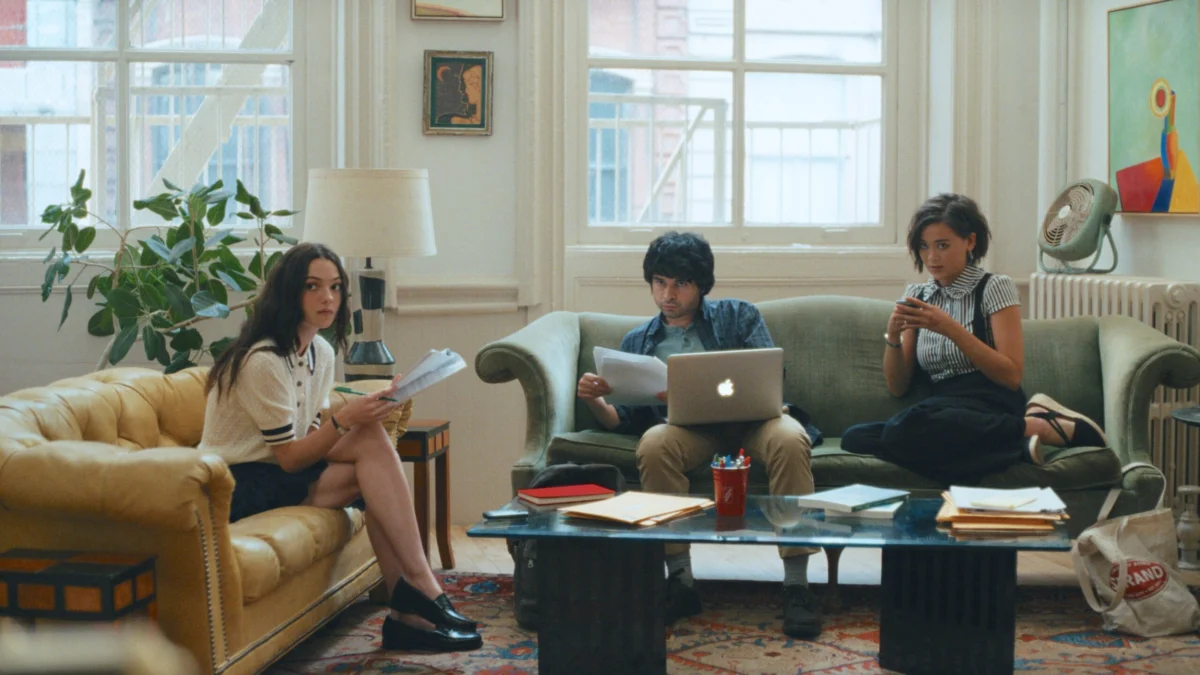
A central theme of Magazine is its setting in a "pre-#MeToo and pre-pandemic moment," an era that Pechman describes with a mix of fondness and critical distance. This was a time when in-person office culture was paramount, making the often arduous commute from a tiny Brooklyn apartment a worthwhile endeavor. Interoffice romances, while always complex, were far more common and generally perceived as less fraught with the professional and ethical considerations that later emerged. The office was a social hub where people still "dressed up to be among their co-workers," a sartorial ethos exemplified by the abundance of "Peter Pan collars and saddle shoes" seen in the film. Happy hours were not just an occasional treat but a "way of life," fostering a distinct camaraderie and blurring the lines between professional and personal spheres. Pechman reflects on this period, noting, "Everything [became] a lot more regulated and boundary-ed — for the better, for the most part — but I also missed the messiness and magic of that cusp-y time before we all really knew what to do with the internet." This sentiment highlights a craving for a certain raw, less curated form of social interaction that has largely dissipated in the age of digital omnipresence and heightened social awareness.
Why a Quarterly Literary Magazine for This Era of Print Media?
Pechman’s decision to center Magazine around a quarterly literary magazine, rather than an upstart blog, a legacy newspaper, or a bustling fashion magazine, was a deliberate and strategic choice. She sought to examine a specific type of elite publication, one that "gets its notoriety from it being a throwback, from it being a little bit encased in amber and a little bit trapped in the past." This particular niche allowed her to explore themes of nostalgia, intellectual snobbery, and the struggle to remain relevant in a rapidly changing world. A quarterly literary journal, by its very nature, operates on a different temporal rhythm than daily news or weekly fashion cycles, inherently possessing a sense of timelessness, even as the world around it accelerates. This choice amplifies the film’s portrayal of a subculture striving to preserve an older way of life and thought, making the clashes with emerging digital trends all the more poignant.
Crafting the Aesthetic: The Look and Feel of "Magazine"
The meticulous attention to detail in Magazine extends to its production design, creating an immersive and authentic visual landscape for the 2010s. Shooting on location in Tribeca, Pechman and her crew meticulously curated the film’s aesthetic, filling borrowed spaces with carefully sourced items. Many props and furnishings, like a beloved faded emerald velvet couch, were discovered through Facebook Marketplace, lending an organic patina to the faux literary journal’s office. The visual language was further shaped by extensive mood boards populated with iconic 2010s figures, including the reigning "It" girl Alexa Chung and indie-sleaze ingenue Cory Kennedy. Costume designer Michelle J. Li was instrumental in translating this vision, creating over 150 distinct looks for the diverse cast. The ensemble features rising stars and established talents, including Lily McInerny as Nora, White Lotus favorite Jake Lacy, AnnaSophia Robb, and Iris Apatow, all contributing to the film’s rich tapestry of characters and styles.
Critical Acclaim and Audience Engagement with the Print Media Narrative
Early reactions to Magazine indicate that viewers are taking notice of its painstaking attention to detail and its affectionate, yet critically astute, portrayal of the era. The Hollywood Reporter‘s review by Angie Han captures this sentiment, stating, "For us in 2026, [the romance] is rooted in nostalgia, starting with an opening sequence that lingers over the tactile relics of a not-that-far-bygone era: well-worn paperbacks, a BlackBerry with a keyboard, a tangle of iPod earbud wires." This highlights the film’s ability to evoke a powerful sense of anachronistic longing for audiences experiencing the 2010s from a modern vantage point. Yet, for the character of Nora, the experience is immediate and raw. As Han notes, "For Nora, it’s precisely the opposite. An aspiring poet from Arizona, she just knows, instinctively, that the New York literary scene will be where she finally finds her people." This contrast between nostalgic reflection and present-tense discovery forms the emotional core of the film, allowing audiences to connect with both the era and the character’s personal journey.
Gen Z’s Unexpected Connection to the 2010s Print Media World
One of the more surprising revelations for Pechman as Magazine has begun to screen for audiences is the strong, often unexpected, resonance it finds with younger viewers. She observed that Gen Z audiences, in particular, are charmed by an era where iPhones were not yet ubiquitous and the concept of Zoom was still a decade away from becoming a household term. This fascination mirrors the recent resurgence in popularity of Lena Dunham’s Girls, another series set in 2010s New York, which has found a new generation of admirers among Gen Z streamers. Pechman explains this phenomenon, noting, "In starting to talk to younger people about the movie, in a lot of ways they key into the nostalgia of the movie even more." She posits that this generation, which has grown up in an almost entirely digital and often hyper-curated world, is "so starved for that authenticity and that tactility and culture." Magazine offers them a glimpse into a world where interactions were often more direct, physical objects held greater significance, and the boundaries between online and offline life were not as thoroughly blurred, providing a unique form of historical escape and cultural discovery.
As Magazine prepares for its TIFF premiere, it stands as a compelling cinematic artifact, meticulously capturing a pivotal moment in the history of print media and cultural evolution. Alexandra Pechman’s debut feature not only offers a nostalgic look at the early 2010s New York literary scene but also sparks a broader conversation about authenticity, connection, and the ever-changing landscape of human interaction in an increasingly digital world. The film’s ability to bridge generational gaps, evoking longing in older audiences and curiosity in younger ones, solidifies its place as a significant cultural commentary.