On Sunday, Sept. 13, 2026, the Moon will be in its Waxing Crescent phase, with only 5% of its Earth-facing surface illuminated by the Sun. This celestial event marks the early stages of a new lunar cycle, following the recent New Moon phase where the lunar disk was entirely obscured from terrestrial view. According to data provided by NASA’s Daily Moon Guide, the slender sliver of light will be visible low in the sky shortly after sunset, offering a brief window for observation before it sets below the horizon.
Astronomers note that the 5% illumination level makes the Moon a challenging but rewarding target for skywatchers. At this stage, the Moon is positioned in a specific alignment between the Earth and the Sun, allowing only a fraction of the sunlit side to be visible from our perspective. This phase is often accompanied by a phenomenon known as "Earthshine" or the "Da Vinci Glow," where sunlight reflecting off the Earth dimly illuminates the dark portion of the lunar face.
The progression of the Moon phase today explained for September 13, 2026, serves as a primary indicator for the timing of the upcoming lunar month. As the Moon continues its eastward orbit around the Earth, the amount of visible light will increase incrementally each night. This process, known as waxing, will continue until the lunar disk reaches its peak illumination later in the month.
Understanding the Waxing Crescent on September 13, 2026
The Waxing Crescent phase is defined by the Moon’s movement away from the Sun in the sky. For observers in the Northern Hemisphere, this thin sliver appears on the right side of the lunar disk. On September 13, 2026, the Moon will be positioned such that it trailing the Sun across the sky, becoming visible only as the glare of twilight fades.
This particular Moon phase today represents the first visible sign of the Moon’s return to the evening sky. Because the illumination is so low, at just 5%, the Moon will appear exceptionally thin, often described as a "fingernail" or "sickle" shape. This stage is critical for various cultural and religious calendars that rely on the first sighting of the crescent moon to mark the beginning of a new month.
Meteorological conditions will play a significant role in the visibility of the Moon on this date. Observers will require a clear western horizon, free of obstructions such as buildings or heavy cloud cover, to catch a glimpse of the crescent before it follows the Sun into the horizon. The low angle of the Moon during this phase means it resides in the thicker part of the Earth’s atmosphere, which can sometimes give it a deep orange or yellow hue.
The Mechanics of the Lunar Cycle
The lunar cycle, also known as a synodic month, lasts approximately 29.5 days. This is the time it takes for the Moon to return to the same position relative to the Sun as seen from Earth. The Moon phase today explained for September 13, 2026, is a direct result of this orbital geometry. As the Moon orbits our planet, the angle of sunlight hitting its surface changes, altering the portion of the illuminated half that we can see.
NASA scientists emphasize that the Moon does not actually change shape; rather, our vantage point changes. Half of the Moon is always illuminated by the Sun, except during a lunar eclipse. The phases we observe—ranging from the dark New Moon to the brilliant Full Moon—are simply the result of our shifting perspective as the three celestial bodies (Sun, Earth, and Moon) dance through space.
The September 2026 cycle is part of a larger astronomical pattern that has been tracked for millennia. By understanding the current 5% illumination, researchers can calculate precisely when the Moon will reach its subsequent milestones. This predictability is essential for maritime navigation, tidal predictions, and the planning of modern space missions.
Tracking the September 2026 Lunar Calendar
Following the Waxing Crescent on September 13, the lunar disk will continue to expand. The next major milestone in the cycle will be the First Quarter Moon, which occurs when exactly 50% of the Moon is visible from Earth. This stage typically follows the New Moon by about seven days.
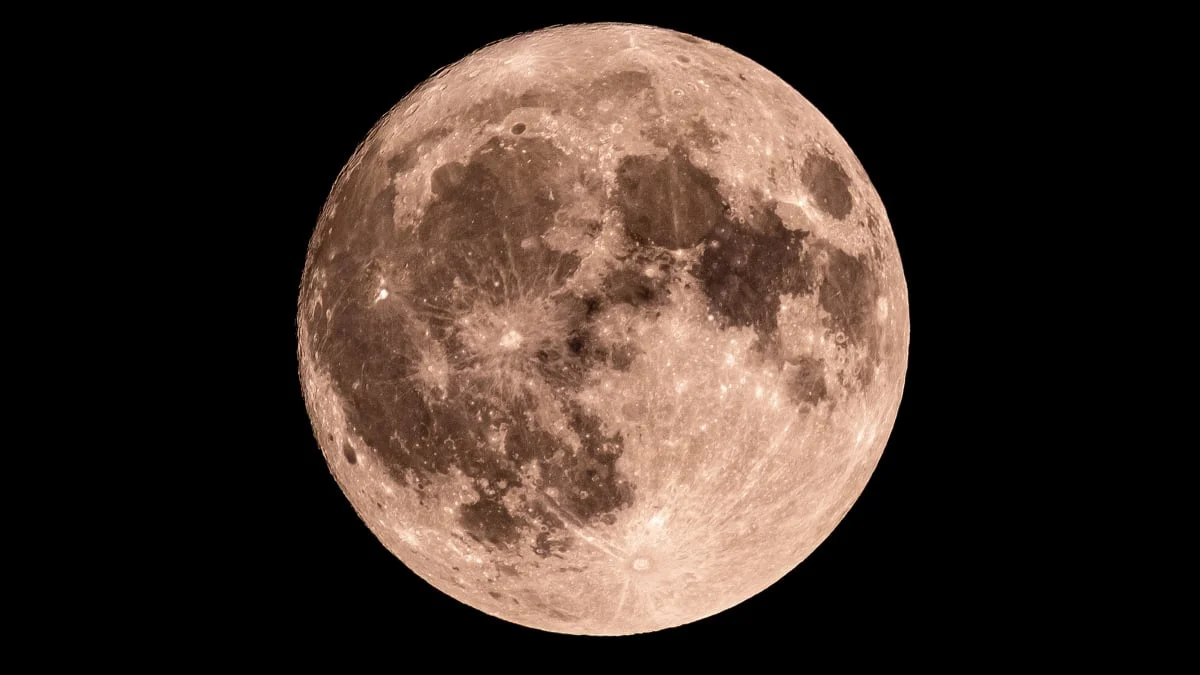
The most anticipated event of the month is the Full Moon, scheduled to take place on September 26, 2026. At that time, the Earth will be positioned between the Sun and the Moon, allowing the entire day-side of the Moon to be visible. The September Full Moon is often referred to as the Harvest Moon in the Northern Hemisphere, as it occurs closest to the autumnal equinox, providing extra light for farmers working late into the evening.
Between the Waxing Crescent of September 13 and the Full Moon of September 26, the Moon will pass through the Waxing Gibbous phase. During this time, more than half of the Moon is lit, but it has not yet reached the full, round appearance. Each of these transitions provides unique opportunities for scientific study, particularly regarding the shadows cast along the "terminator"—the line dividing the light and dark sides of the Moon.
The Eight Phases of the Lunar Cycle
To fully grasp the Moon phase today explained for September 13, 2026, it is helpful to review the eight distinct stages of the lunar cycle. These phases are universal, though their orientation appears different depending on whether an observer is in the Northern or Southern Hemisphere.
- New Moon: The Moon is between the Earth and the Sun. The side facing Earth is dark, making it invisible to the naked eye.
- Waxing Crescent: A small sliver of light appears. This is the phase observed on September 13, 2026, with 5% visibility.
- First Quarter: The Moon has traveled one-quarter of the way around the Earth. Half of the disk is illuminated.
- Waxing Gibbous: The illuminated portion continues to grow, covering more than half but less than 100% of the surface.
- Full Moon: The Moon is 100% illuminated. This will occur on September 26, 2026.
- Waning Gibbous: After the Full Moon, the illuminated portion begins to shrink.
- Third Quarter: Exactly half of the Moon is lit again, but on the opposite side from the First Quarter.
- Waning Crescent: A final thin sliver is visible before the Moon returns to the New Moon phase to start the cycle over.
Scientific and Observational Importance
For professional astronomers and amateur stargazers alike, the 5% Waxing Crescent on September 13, 2026, offers a specific technical advantage. Because the light is so faint, the craters and mountain ranges along the lunar terminator are cast in long, dramatic shadows. This high-contrast lighting makes it much easier to observe the Moon’s topography through a telescope or binoculars.
The study of lunar phases is also critical for the NASA Artemis program, which aims to establish a sustainable human presence on the Moon. Lighting conditions dictate when and where lunar landers can touch down. Missions are often timed to coincide with specific phases to ensure solar-powered equipment has maximum access to sunlight or to provide enough shadow for thermal management.
Furthermore, the Moon’s phase influences the visibility of other celestial objects. On September 13, 2026, the low 5% illumination means the sky will remain relatively dark. This is an ideal time for astronomers to observe deep-sky objects such as nebulae and distant galaxies, which are often washed out by the glare of a brighter or Full Moon.
Cultural and Biological Impacts
The Moon phase today explained for September 13, 2026, also has implications beyond the field of astronomy. Many biological rhythms in marine life are tied to the lunar cycle. The gravitational pull of the Moon, which changes in intensity based on its position, governs the tides. During the Crescent phases, the gravitational influence of the Sun and Moon are not aligned, leading to "neap tides," which have a smaller range between high and low water.
In many cultures, the sighting of the Waxing Crescent is a moment of celebration or reflection. It represents a time of new beginnings and growth. Historically, the transition from the dark New Moon to the first sliver of light was used to reset calendars and plan agricultural activities.
As the world looks toward the sky on September 13, 2026, the 5% Waxing Crescent serves as a reminder of the constant motion of our solar system. While it may appear as a small, fleeting light in the evening sky, it is a key component of a complex gravitational system that has shaped life on Earth for billions of years.
Looking Ahead: The Remainder of 2026
As the lunar cycle progresses through September 2026, the transition from the Waxing Crescent to the Full Moon will be followed by the waning phases. By the end of the month, the Moon will once again retreat into a slender crescent, this time visible in the early morning hours before sunrise.
Technological advancements continue to make tracking these phases easier for the general public. Tools like NASA’s Daily Moon Guide and various mobile applications provide real-time data on illumination, moonrise times, and lunar distance. These resources ensure that even those without professional equipment can stay connected to the movements of our nearest celestial neighbor.
The Moon phase today explained for September 13, 2026, is just one chapter in the ongoing story of lunar observation. Whether for scientific research, navigation, or simple curiosity, the appearance of that 5% sliver of light remains a significant event in the rhythmic pulse of the natural world. Following the Full Moon on September 26, the cycle will reset, bringing a New Moon in early October and continuing the eternal loop of light and shadow.