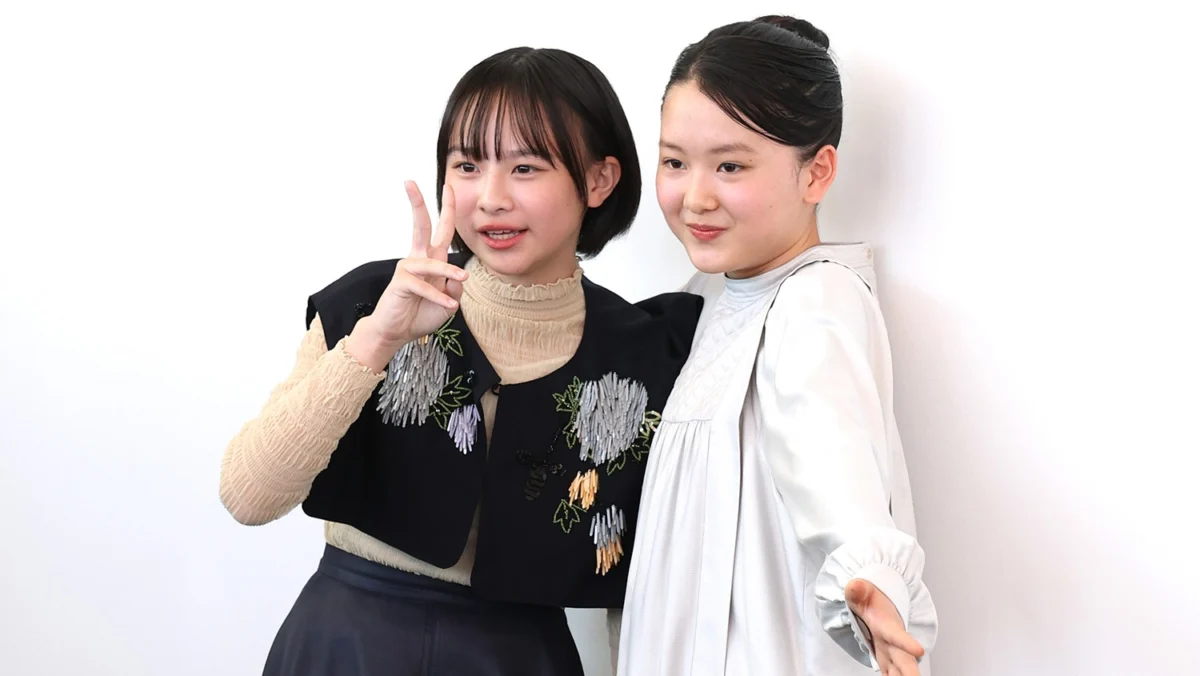
Child actresses Furi Nanase and Rokka Okada, the burgeoning stars of Japanese auteur Hirokazu Koreeda’s latest acclaimed drama, Look Back, forged an unexpected and profound friendship during the film’s production, navigating the complexities of their roles and burgeoning international fame side-by-side. Both 11-year-old fifth graders when principal photography commenced, the duo brought contrasting levels of industry experience and distinct personalities to the set, a dynamic that mirrored the characters they would portray.
Okada, a seasoned young performer, had already accumulated an extensive filmography in Japanese cinema and television since infancy. "I’ve been working in this business since before I could even understand things, so it’s like everyday life to me now," she shared, reflecting on her long-standing career. Her casting in Look Back was predicated on her remarkable poise and Koreeda’s confidence in her ability to master the specific dialect of Japan’s remote Akita prefecture, the fictional home of her character. In stark contrast, Nanase was a complete newcomer, discovered and selected purely for her innate, effervescent charisma and seemingly boundless self-assurance.
The initial encounter between the two young actresses was marked by a blend of curiosity and professional assessment. Nanase recalled her first impression of Okada, admitting, "I remember looking at her on the first day and thinking, Hmm, is she really so good?" This initial skepticism quickly dissolved as they began to interact. "But then we were introduced and started talking, and I was like, wow, this girl is really interesting!" Nanase recounted, signaling the immediate connection that would define their working relationship.
Their bond solidified rapidly, evolving into a deep friendship that transcended the demands of the film set. The pair even celebrated their 12th birthdays just one day apart during production, a small but significant detail that underscored their growing camaraderie. By the time Look Back held its well-received world premiere at the Venice Film Festival, Nanase and Okada were inseparable, captivating audiences and critics alike. Their coordinated, stylishly retro outfits and endearing antics on the red carpet – including synchronized poses and joyous jumps – landed them on various fashion outlets’ best-dressed lists, cementing their status as breakout stars.
The Hollywood Reporter subsequently interviewed Nanase and Okada on the Lido, marking their inaugural engagement with the international press. The actresses spoke candidly about their mutual support throughout the rigorous filmmaking process. "I can’t imagine how I could have gotten through this whole experience without her by my side," Okada confessed, emphasizing the comfort and joy her co-star brought. "I think I would have been really scared, but instead it has been so fun together." Their shared experience underscored the unique challenges and rewards of navigating the film industry at such a young age, particularly under the discerning eye of a director renowned for his work with child actors.
Hirokazu Koreeda stands as one of Japan’s most decorated contemporary directors, widely celebrated for his gentle humanism and his extraordinary ability to elicit unforgettable performances from child actors. His 2004 breakthrough, the poignant child-abandonment drama Nobody Knows, propelled its 12-year-old star, Yuya Yagira, to international acclaim, earning him the Cannes Film Festival’s best actor award and making him the youngest recipient in the festival’s history. This early triumph established a hallmark of Koreeda’s career, with much of his subsequent critically lauded work hinging on the delicately naturalistic portrayals by young performers.
Notable examples include the switched-at-birth saga Like Father, Like Son, which secured the Cannes Jury Prize in 2013, and his Palme d’Or triumph, Shoplifters, in 2018. More recently, his 2023 film Monster earned him the best screenplay award, further demonstrating his consistent success in crafting narratives that resonate through the authenticity of child perspectives. Koreeda’s unique approach often involves fostering an environment where young actors can be themselves, rather than rigidly adhering to scripts, a method he meticulously applied to Nanase.
Nanase recounted her audition process for Koreeda and his producers, noting the unconventional nature of the casting call. Unlike typical auditions that require prepared scenes, she was simply instructed to attend the meeting and "be herself." This non-traditional approach immediately set a tone of trust and collaboration. "The moment he entered the room, he had this aura of someone who takes his time and has everything under control, which was very comforting," Nanase remembered. She also highlighted Koreeda’s respectful communication style: "He spoke to me like I was a grown-up person, but he was very kind and gentle."
On set, Koreeda continued this nurturing methodology. He would explain the core idea of each scene to his inexperienced star, providing the dialogue only shortly before cameras began to roll. "He would share the main idea behind the scene and tell me what he would like me to do," Nanase explained. Crucially, he would then invite her input, asking, "What do you think about this? Do you think it’s a good idea? Is there anything else you want to try?" This collaborative spirit, which empowered Nanase to contribute to her performance, significantly eased her anxieties. "Before we started, I was a little worried about how everything would feel on set, but it never once made me nervous," she affirmed.

Before pre-production began, Koreeda issued a specific directive to his young actors: they were not to read Tatsuki Fujimoto’s original Look Back manga, nor watch the popular anime adaptation that preceded his film. Instead, Koreeda’s team suggested they watch two of his own acclaimed films, Shoplifters and Monster, with their parents. The intention was to provide them with a profound understanding of the artistic endeavor they were embarking upon and the thematic depth characteristic of his work.
Okada described her impressions of these films, stating, "Both films had something in them that sticks in your heart, something that you don’t find in normal movies." She concluded, "I thought they were beautiful," indicating a clear grasp of Koreeda’s distinct narrative and emotional style. This preparation allowed the young actresses to internalize the director’s artistic vision without being influenced by pre-existing interpretations of the Look Back narrative.
Look Back is a feature film adaptation of Japanese artist Tatsuki Fujimoto’s wildly popular manga of the same name. Fujimoto is globally recognized for his critically acclaimed and commercially successful works, including Chainsaw Man, which has garnered a massive following and multiple adaptations. Look Back, however, offers a more introspective and delicate coming-of-age drama. The story chronicles the journey of Fujino (played by newcomer Nanase), a spirited grade-schooler whose exceptional talent for drawing comic strips has earned her local celebrity status in her small-town elementary school in remote northern Japan.
Fujino’s burgeoning ambition to become a celebrated artist is further ignited when she encounters the drawings of Kyomoto (Okada), a reclusive classmate who seldom leaves her home but possesses an unexpectedly mature and sophisticated artistic style. What initially begins as a fierce rivalry between the two aspiring artists gradually blossoms into an adoring friendship and a collaborative manga-making partnership. Fujino assumes the role of character artist, while Kyomoto specializes in backgrounds. The narrative spans 13 years, following the girls as they navigate adolescence, experience their first taste of professional publishing success, and eventually endure a heartbreaking falling out that sends them down divergent paths, exploring themes of ambition, loss, and the enduring power of creative bonds.
The film was shot on location across Japan’s northern Tohoku region over the course of a full year, a decision that allowed for a reverent and authentic portrayal of childhood innocence within the picturesque Japanese countryside. The narrative unfolds against the backdrop of shifting seasons, capturing the halting wonders and profound dramas inherent in growing up. Mid-way through the film, adult actresses Natsuki Deguchi and Aju Makita, who bear a striking resemblance to their younger counterparts, seamlessly step into the roles of the more mature Fujino and Kyomoto, visually reinforcing the passage of time and the characters’ evolution. This long-term commitment to filming, allowing the young actresses to truly live within the story’s timeframe, is a testament to Koreeda’s dedication to naturalism.
Beyond dialect coaching for Okada, the only other in-depth preparation required of the younger stars was intensive drawing practice. Nanase received training to draw figures, while Okada meticulously learned to sketch backgrounds and panoramas, mirroring their characters’ artistic specializations. Koreeda personally accompanied the two on a shopping excursion to a Tokyo bookshop, where they acquired numerous drawing books and materials. Subsequently, they enrolled in online drawing classes and regularly met with a professional manga artist, immersing themselves fully in the craft their characters mastered. This hands-on training was crucial in lending authenticity to their performances as budding artists.
Okada expressed profound admiration for Koreeda’s guidance throughout this process. "All of the directors I’ve worked with so far have always been very nice to me, but director Koreeda is on another level," she stated. "He is so good at giving advice. I remember when we were shooting one of the first drawing scenes together, he told us to focus all our attention on the sound of our pens scratching the paper, like it’s music, and that was somehow very helpful." This anecdote highlights Koreeda’s ability to provide intuitive and imaginative direction, allowing his young actors to connect deeply with their roles through sensory experiences.
At its heart, Look Back is a story about the genesis and evolution of artists, exploring the dedication, collaboration, and personal sacrifices involved in creative pursuits. Both Nanase and Okada affirmed their intention to carry this artistic spirit forward into the next phases of their own burgeoning careers. Nanase, embodying the unwavering resolve of her character, Fujino, declared, "My character, Fujino, has so much determination once she decides she wants to become a manga artist, and that’s how I want to be too." She added, "I’ll be carrying her with me when I go to my next audition — absolute confidence!"
Despite her lifelong background in acting, Okada revealed that Look Back had similarly reshaped her perspective on her professional trajectory. "Kyomoto is able to look inside herself and think deeply about what kind of artist she wants to become," the 12-year-old observed. Inspired by this introspection, Okada stated, "I want to try to do that too — so I can try to reach higher and higher with my acting." Their experiences on Look Back, under Koreeda’s gentle tutelage, have evidently provided them not only with significant professional exposure but also with profound personal insights that will undoubtedly shape their future artistic endeavors. The film stands as a testament to Koreeda’s enduring ability to cultivate and showcase exceptional young talent, leaving a lasting impact on his collaborators and audiences alike.