Apple’s latest flagship wearable, the Apple Watch Ultra 4, enters the market this week as a refined powerhouse designed specifically for high-endurance athletes and users prioritizing granular health data. While the external aesthetics remain largely unchanged from its predecessor, the internal hardware receives a significant overhaul, headlined by the new S11 silicon chip and a sophisticated second-generation Health Sensing System. These updates aim to address the two primary demands of the "prosumer" smartwatch market: extended battery longevity and medical-grade biometric accuracy.

The launch of the Apple Watch Ultra 4 coincides with the release of watchOS 27, an operating system that leverages the device’s hardware to introduce advanced artificial intelligence capabilities. However, several of the most anticipated software features, including Live Rewind and Siri Recap, are scheduled for a staggered release later this year. This phased rollout, particularly in the European market where privacy regulations remain a hurdle, suggests a strategic shift in how Apple deploys its AI-driven "Audio Intelligence" suite.
A Familiar Design Optimized for Durability
The Apple Watch Ultra 4 retains the rugged industrial design that has defined the product line since its inception. Constructed from aerospace-grade titanium, the chassis is available in two finishes: Natural Titanium and Black Titanium. Despite calls for more varied color palettes, the decision to stick with the established aesthetic emphasizes the device’s identity as a tool rather than a fashion accessory. The 49mm case houses a flat sapphire crystal display that continues to offer industry-leading peak brightness, ensuring legibility in direct sunlight—a critical requirement for outdoor navigation.

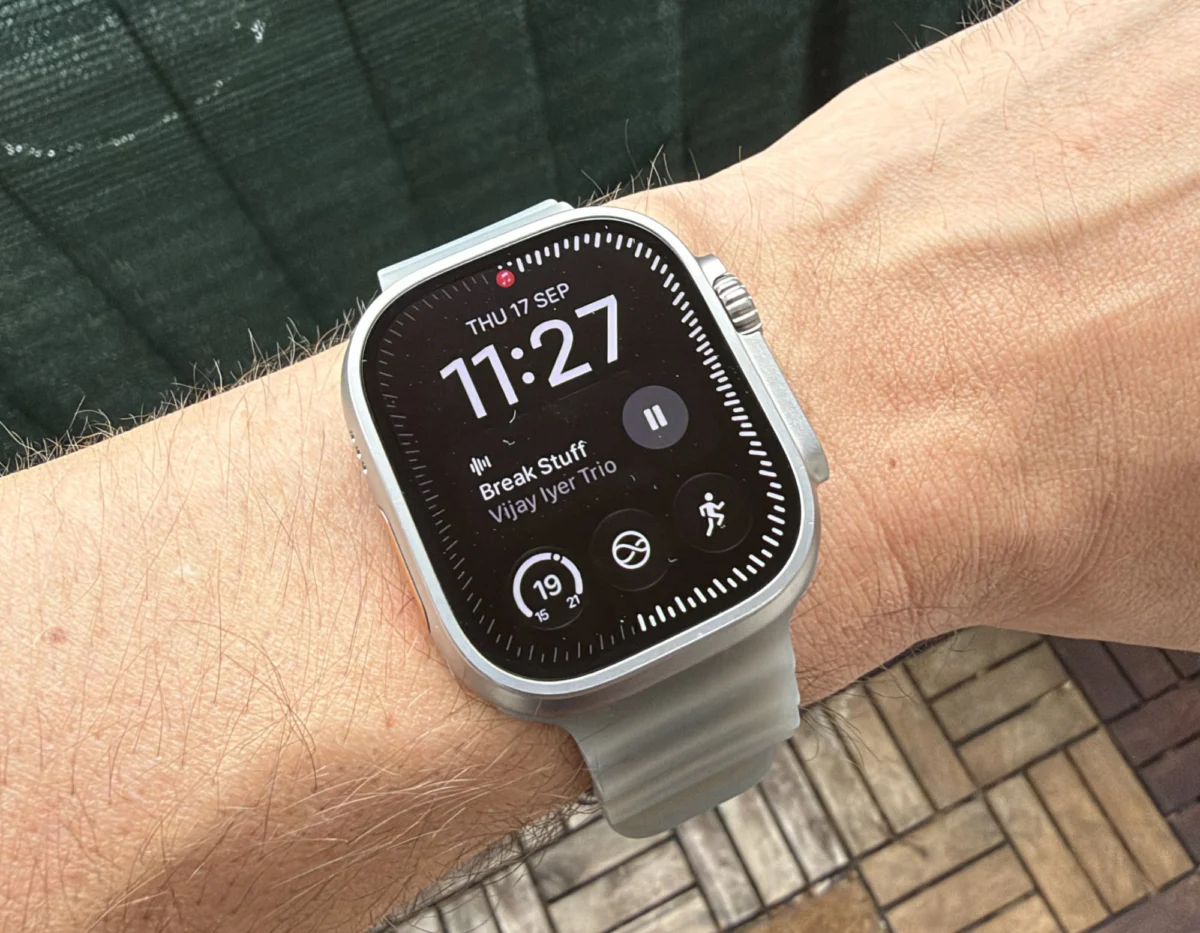
While the exterior remains stagnant, the tactile experience is improved through software integration with the Digital Crown and the customizable Action Button. The Ultra 4’s display remains its most striking feature, utilizing the extra screen real estate to accommodate the new Siri Modular watch face. This face introduces a dynamic center complication that automatically surfaces the most relevant widget from the user’s Smart Stack, such as upcoming calendar events or real-time weather alerts. By rotating the crown, users can cycle through these widgets without leaving the primary time-keeping screen.
Battery Performance for the Endurance Athlete
For years, the primary criticism of the Apple Watch lineup was its inability to match the multi-day battery life of dedicated sports watches from competitors like Garmin or Suunto. The Apple Watch Ultra 4 attempts to close this gap significantly. Apple’s official specifications claim up to 50 hours of battery life under normal usage and an impressive 84 hours when utilizing Low Power Mode. For those engaged in active GPS-tracked events, the watch is rated for 18 hours of continuous outdoor workout monitoring.

In practical field testing, these numbers translate to a device that can comfortably survive a three-day weekend trip without a charger. During a simulated high-intensity day involving an hour of bag work and calisthenics, the battery depleted by only 19 percent by the late evening. This level of endurance is positioned as a "game-changer" for Ironman competitors and ultramarathon runners, providing enough overhead to ensure the device does not power down during the final legs of a race.
The Second-Generation Health Sensing System
The cornerstone of the Apple Watch Ultra 4’s appeal to the health-conscious consumer is its entirely redesigned Health Sensing System. This hardware array includes new optical and electrical heart sensors capable of taking measurements with much higher frequency than previous models. This increased data density allows for a more precise calculation of Heart Rate Variability (HRV), a metric widely used by clinicians and athletes to monitor physical stress and recovery states.

A recent scientific study cited by Apple suggests that this new system is currently the most accurate wearable heart rate monitor on the market. The hardware improvements also enable the new "Readiness" score. By analyzing a rolling seven-day window of sleep data, activity levels, and resting heart rate, the watch provides a numerical value indicating whether a user should push for a personal record or prioritize rest. This feature mirrors the "Body Battery" or "Training Readiness" metrics found in specialized fitness trackers, marking Apple’s intent to dominate the professional training space.
The updated Vitals app further utilizes these sensors to provide a snapshot of the user’s health. It tracks five key metrics—heart rate, respiratory rate, wrist temperature, sleep duration, and blood oxygen—and alerts the user if two or more of these metrics fall outside their typical range. For those concerned about the battery drain or the visual distraction of the sensors’ green and red lights, Apple has integrated "Theater" and "Sleep" focus modes that automatically reduce sensor frequency during periods of rest or darkness.

Audio Intelligence and the S11 Chip
Under the hood, the S11 chip serves as the engine for a new category of features Apple calls Audio Intelligence. This suite uses on-device machine learning to process environmental sounds and speech. The most immediate application is an overhauled Music Recognition (Shazam) widget that can identify obscure tracks and remixes almost instantaneously. Additionally, the Sound Recognition feature has been enhanced to assist users with hearing impairments, using the watch’s microphones to listen for and alert the wearer to specific sounds like smoke alarms, sirens, or crying infants.
The more controversial elements of the Audio Intelligence suite, Live Rewind and Siri Recap, are currently in the beta phase. Live Rewind allows the watch to use an AI-powered buffer to recap the last 15 seconds of audio the user heard, such as a verbal instruction or a missed comment in a meeting. Siri Recap provides a high-level summary of the user’s daily interactions and notifications. To mitigate privacy concerns, Apple has confirmed that no audio data is stored on servers and that the watch will display a visual indicator and play an audible chime when these recording features are active.

Market Positioning and Global Implications
The Apple Watch Ultra 4 enters a crowded market where consumer spending on high-end wearables is increasingly tied to health and longevity trends. By focusing on "pro-grade" metrics, Apple is moving beyond the general consumer and targeting the "bio-hacker" and competitive athlete demographics. This strategy appears to be a response to the growing popularity of specialized health rings and recovery-focused wristbands.
However, the global rollout faces challenges. In the European Union, stringent privacy laws under the General Data Protection Regulation (GDPR) and the Digital Markets Act (DMA) have led to delays in the release of AI-centric features. European consumers may find themselves purchasing the Ultra 4 for its hardware and battery life while waiting months for the software features that define the S11 chip’s potential. This fragmentation of the user experience could impact sales in key international markets during the fourth quarter.

Integration with the Reimagined Health App
The utility of the Apple Watch Ultra 4 is inextricably linked to the redesigned Health app on the iPhone, which is launching alongside iOS 27. The app has moved away from a simple list of data points toward a more holistic "Health Dashboard." This new interface categorizes data into pillars such as Heart Health, Sleep Quality, and Fitness Level.
The integration allows for deeper analysis of post-workout recovery. For instance, the "Heart Rate Recovery" metric shows how quickly a user’s heart rate drops in the minutes following intense exertion. A faster recovery time is a primary indicator of cardiovascular fitness, and the Ultra 4’s new sensor array provides the granular data necessary to track this with high confidence. The app also introduces a real-time Steps complication for the watch face, addressing a long-standing request from users who found the "Activity Rings" system too abstract for simple step-tracking goals.

Industry Impact and Future Outlook
The release of the Apple Watch Ultra 4 signals a period of iterative refinement for Apple’s wearable division. By prioritizing internal sensor accuracy and battery life over external design changes, the company is betting that its core user base values utility over novelty. The inclusion of new band options, such as the Translucent Gray Ocean Band, serves as a minor concession to those seeking a fresh look, but the real story lies in the data.
Industry analysts suggest that the Ultra 4 will likely maintain Apple’s dominant position in the premium smartwatch segment, even as competitors attempt to undercut them on price. The $799 entry point remains steep, but for users who view the device as a critical health monitor or a necessary piece of athletic equipment, the investment is often seen as justifiable. As the AI features mature and the "Readiness" algorithms become more sophisticated through machine learning, the Apple Watch Ultra 4 is poised to transition from a secondary notification screen to a proactive health consultant on the wrist.