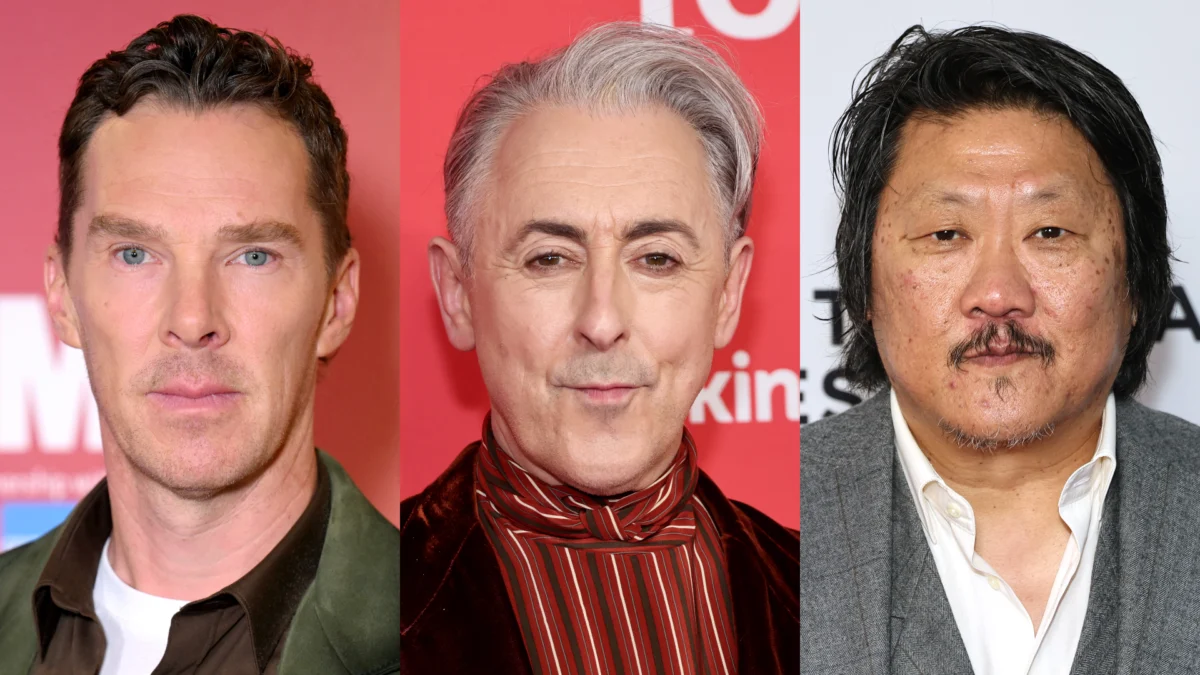
A trio of prominent British actors – Benedict Cumberbatch, Alan Cumming, and Benedict Wong – has publicly urged the United Kingdom to block the proposed $111 billion merger between Paramount Global and Warner Bros. Discovery, arguing that the deal poses an "immense harm" to the British public and its vital creative industries. Their impassioned plea, published in The Guardian, highlights concerns over job security, independent film financing, and the future of public service broadcasting.
The proposed Paramount-Warner Bros. merger is a monumental transaction poised to reshape the global entertainment landscape. If approved, it would combine two of Hollywood’s long-standing studios, creating a behemoth with extensive film and television assets, streaming platforms, and news divisions. The sheer scale of the deal has triggered alarms among regulators and industry stakeholders worldwide, particularly concerning market concentration and its potential ripple effects.
The U.K.’s culture secretary, Lisa Nandy, has already signaled her intent to scrutinize the deal. Amidst a recent cabinet reshuffle that saw Andy Burnham assume the role of Prime Minister, Nandy retained her post, underscoring the continuity of the government’s focus on cultural policy. She previously stated she was "minded to intervene" in the proposed acquisition, indicating a serious consideration of its impact on the U.K.’s public interest.
Cumberbatch, Wong, and Cumming, leveraging their standing as respected figures in the arts, articulated their concerns in an op-ed titled "A TV and cinema calamity could be disastrous for what you watch and what you know. Act now to stop that." They emphasized their professional roots within the British system, having spent their careers working alongside British crews on British stages and sets. This intimate understanding, they argued, gives them a responsibility to speak out on behalf of the public and the industry that sustains them.
Their core arguments against the Paramount-Warner Bros. merger center on several critical issues. First, they fear for the livelihoods of thousands of British film and television crews, whose stability could be jeopardized by consolidation-driven "synergies." Second, they expressed apprehension about the future of independent film financing, predicting a further narrowing of avenues for diverse storytelling. Finally, the potential loss of Channel 5, one of the U.K.’s public service broadcasters, to Hollywood ownership represents a significant threat to national media independence and content diversity.
The actors’ op-ed also acknowledged the broader international scrutiny facing the merger. In the United States, a coalition of 12 states, led by California, has filed a federal lawsuit to block the deal. These states contend that the merger would "raise prices, shrink the number of films made and degrade the quality of what audiences see." In response to this legal challenge, Larry Ellison’s Paramount has reportedly agreed to postpone the merger’s closing until the court rules on whether it violates antitrust laws. Meanwhile, the European Union has offered conditional backing to the deal, highlighting a divergence in regulatory approaches across major global markets.
However, Cumberbatch, Cumming, and Wong stressed that U.S. legal actions, while significant, do not absolve the U.K. of its own responsibility. "Their lawsuit confirms the danger; it cannot, however, do the U.K.’s work for it," they wrote. They underscored that the U.K. must make its own decisions based on its unique national interests. Should Nandy’s department decide to intervene, the actors believe it could be one of the most consequential decisions for U.K. film, television, and media in a generation.
The U.K.’s creative industries are not merely cultural assets; they are significant economic drivers. The actors highlighted that the sector supports approximately 180,000 jobs and reported a staggering £6.8 billion in production spend last year. These figures underscore the industry’s role in local economies and its contribution to the U.K.’s global standing. They argued that British film and television are "one of the things the U.K. still does better than almost anyone, and a cultural heritage we must protect."
A primary concern articulated in the op-ed revolves around the chilling effect of media consolidation on creative diversity and independent storytelling. The actors noted that they have observed "with growing alarm" what such mergers do to the "breadth and depth of the work we produce." They cited data showing that independent film acquisitions at the prestigious Sundance Film Festival plummeted by half between 2019 and 2025. This trend suggests that even award-winning documentaries and critically acclaimed films struggle to secure commercial distribution because their subjects might be deemed "inconvenient" by a shrinking pool of buyers. "Every merger of this kind narrows the funnel through which stories can reach audiences," they warned.
The financial underpinnings of the proposed Paramount-Warner Bros. merger also came under scrutiny. Warner Bros. Discovery is estimated to carry $84 billion in debt, and executives have reportedly promised investors around $6 billion in "synergies" as part of the deal. The actors translated this corporate jargon into stark terms: "In plain English, that means redundancies, cancelled productions, fewer films commissioned and fewer risks taken." This cost-cutting imperative, they contend, is precisely what makes the Paramount-WBD merger so dangerous for creative output and employment.
They drew parallels to past media consolidations that resulted in significant industry upheaval. The merger of Discovery with WarnerMedia in 2022 led to the shelving of completed films and thousands of job losses. Similarly, Skydance’s merger with Paramount Global last year saw approximately 2,000 employees laid off. These precedents serve as a cautionary tale, suggesting that the current proposal could trigger similar, if not more extensive, negative consequences for the U.K.’s creative workforce.
Beyond economic and creative concerns, the actors expressed profound apprehension about the impact on public service broadcasting and journalistic integrity. Paramount’s acquisition of Channel 5, a key U.K. public service broadcaster, is a particular point of contention. Furthermore, the combined entity would control vast news archives, including those of CNN and CBS News, which contain over 4.25 million videos, images, and media spanning nearly half a century of history. The actors argued that if one commercially driven owner controls access to these crucial historical records, they essentially control "the raw material of our historical memory."
They warned that folding these newsrooms into a single company could allow a "single boardroom’s commercial anxieties – or political debts – determine what millions of people see and what they never learn existed." They underscored this point by referencing reports that Paramount’s chief executive had allegedly told Donald Trump that "sweeping changes" would be made to CNN if the deal proceeded, raising serious questions about potential political influence over news content.
The actors concluded their op-ed by addressing the common sentiment that performers should refrain from engaging in legal or political debates. "Actors are often told to stay out of legal arguments," they acknowledged. However, they asserted that their extensive experience on U.K. sets, working alongside British crews, and witnessing the struggles of brilliant U.K. work to find buyers, makes this "not someone else’s argument. It is ours." Their collective voice aims to galvanize public and political attention on a decision they view as critical for the future of British culture and economy.
The call for intervention by these high-profile actors adds significant weight to the growing chorus of voices urging U.K. regulators to scrutinize the proposed Paramount-Warner Bros. merger thoroughly. The decision facing Culture Secretary Lisa Nandy and her department will undoubtedly have far-reaching implications for the U.K.’s cultural landscape, its economy, and the global entertainment industry for years to come.