The global consumer electronics market has seen a decisive shift as portable power stations transition from niche outdoor accessories to essential household infrastructure. Driven by an increase in extreme weather events and a growing reliance on mobile technology, manufacturers including Anker, EcoFlow, Bluetti, Jackery, and DJI have unveiled a 2026 lineup that prioritizes rapid charging, high-capacity lithium iron phosphate (LiFePO4) chemistry, and specialized utility. These devices, which function as high-capacity battery reserves, are now capable of maintaining everything from medical equipment and refrigerators to entire home circuits during prolonged grid failures.

The Evolution of Emergency Preparedness and Off-Grid Energy
The demand for reliable off-grid energy has reached record highs as power grid instability becomes a recurring concern in North America. Industry data suggests that the "backup economy" is no longer limited to those in hurricane-prone regions or dedicated van-life enthusiasts. Instead, suburban households are increasingly integrating portable power stations into their emergency preparedness kits to mitigate the risks of food spoilage and communication blackouts.
Modern power stations have largely moved away from traditional lithium-ion batteries in favor of LiFePO4 technology. This shift is significant for the consumer, as these batteries offer a lifespan of up to 10 years or 3,000+ charge cycles, compared to the 500 cycles typical of older models. Furthermore, the integration of Uninterruptible Power Supply (UPS) features—specifically those with transition times under 20 milliseconds—allows these units to act as a seamless bridge for sensitive electronics like desktop computers and CPAP machines.

Anker Solix C1000 Gen 2: Setting the Benchmark for Mid-Range Utility
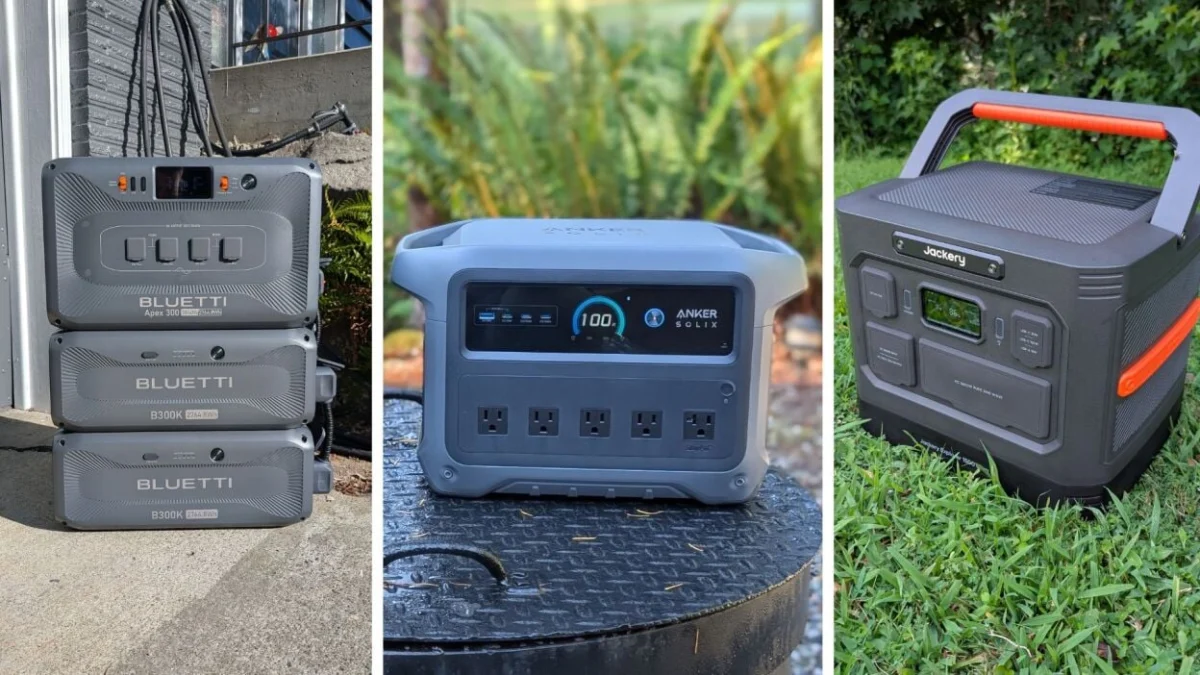
The Anker Solix C1000 Gen 2 has emerged as a primary contender for the most versatile unit in the current market. Weighing under 25 pounds, the device balances portability with a substantial 1,024Wh capacity. Technical improvements in the second generation have focused heavily on recharge efficiency; the unit can now achieve a 100% charge in approximately 49 minutes when using the "UltraFast" mode via the Anker app.
For users prioritizing renewable energy, the C1000 Gen 2 supports a 600W solar input, allowing for a full recharge in less than two hours under optimal sunlight. The port array is designed for high-demand tech, featuring three USB-C ports—two of which can deliver 140W simultaneously—making it one of the few portable units capable of fast-charging two high-performance laptops while simultaneously powering AC appliances.

EcoFlow and Bluetti: Diversifying Portability and Budget Options
In the compact segment, the EcoFlow River 3 Plus and the Bluetti Elite 10 Mini address the needs of casual campers and those requiring light-duty backup. The EcoFlow River 3 Plus, weighing roughly 10 pounds, provides a 286Wh capacity. Its design philosophy centers on ease of movement, featuring an ergonomic handle and a quiet operating volume that makes it suitable for use inside tents or small apartments. It also features a 220W solar input capability, which can replenish the battery in 90 minutes.
Conversely, the Bluetti Elite 10 Mini represents the entry-level tier of the market. Priced near $120, this 128Wh unit is designed for "palm-of-the-hand" portability. While its capacity is limited to roughly six smartphone charges, its inclusion of a 10ms UPS and a 200W AC output makes it a viable emergency tool for maintaining communication during short-term outages. Notably, Bluetti has moved away from the utilitarian black-and-gray aesthetic, offering the Elite 10 in a variety of colors, signaling a move toward lifestyle-oriented tech branding.

Ruggedization and Environmental Resistance in the Jackery Explorer Series
One of the most significant developments in the 2026 landscape is the push toward environmental durability. The Jackery Explorer 1500 Ultra addresses a long-standing criticism of portable power stations: their vulnerability to dust and moisture. With an IP65 rating, the 1500 Ultra is engineered to operate in dusty workshops and damp outdoor environments where standard units might suffer fan failure or circuit damage.
The 1500 Ultra provides a 1,536Wh capacity and can handle a surge load of up to 3,600W. This makes it particularly effective for high-draw power tools on construction sites or for running well pumps and sump pumps during storms. Jackery has also introduced a detachable metal base that allows users to clean the cooling fans, a feature designed to extend the unit’s operational life in harsh conditions like sandy deserts or woodworking shops.

DJI Power 2000: Optimizing for the Content Creator Ecosystem
DJI, a brand synonymous with drones and stabilization technology, has leveraged its battery expertise to enter the high-capacity power station market with the DJI Power 2000. This 2,048Wh unit is specifically calibrated for professional filmmakers and content creators. It features specialized SDC ports designed for the rapid charging of DJI drone batteries, reducing downtime in the field.
Beyond its drone-specific utility, the DJI Power 2000 is noted for its acoustic engineering. Operating at a maximum of 29 decibels, the unit is significantly quieter than many of its competitors, allowing it to be used on film sets or in recording studios without introducing noise interference. The unit is also expandable; it can be paired with up to ten expansion batteries to reach a total capacity of over 22kWh, positioning it as a bridge between portable power and permanent home storage.

Whole-Home Backup Solutions: The Anker Solix E10 and Bluetti Apex 300
As consumers look for alternatives to gasoline generators, the market for high-capacity, stackable battery systems has expanded. The Anker Solix E10 represents a move into professional-grade home integration. This system is designed to connect directly to a home’s transfer switch or inlet box, providing a 7.6kW output and a baseline 6,000Wh capacity. Its stackable design allows homeowners to add battery modules as their needs grow, potentially reaching capacities that can sustain a household for several days.
The Bluetti Apex 300 offers a similar scale of power but focuses on off-grid independence. With a 2,764.8Wh base capacity that is expandable to a massive 58,000Wh, the Apex 300 is marketed toward those living in remote areas or those seeking total energy autonomy. It supports both 120V and 240V outputs, meaning it can power heavy-duty appliances such as electric dryers, central air conditioning units, and electric vehicle chargers.

Specialized Utility: The Jackery FridgeGuard
Recognizing that food preservation is the primary concern for many during a blackout, Jackery has introduced the FridgeGuard. Unlike general-purpose batteries, the FridgeGuard is a slim, 2.6-inch tall unit designed to sit on top of a refrigerator. It remains plugged into the wall and the appliance simultaneously, acting as a dedicated UPS.
With a 1,024Wh capacity, it can maintain a standard refrigerator’s temperature for approximately 15 hours without intervention. This specialized approach reflects a broader trend in the industry: move away from "one-size-fits-all" devices toward hardware that solves specific, high-stress consumer problems.

Technical Standards and Consumer Selection Criteria
The transition from lead-acid and standard lithium-ion to LiFePO4 has standardized the expectation for longevity in the 2026 market. However, industry experts advise consumers to look beyond raw capacity (watt-hours) and focus on inverter efficiency and port variety.
Key selection factors now include:

- Transition Speed: For those using batteries as a backup for medical devices or servers, a UPS rating of 20ms or less is critical.
- Solar Charge Controllers: The inclusion of Maximum Power Point Tracking (MPPT) controllers ensures that solar panels can charge the battery efficiently even in fluctuating light conditions.
- App Integration: Bluetooth and Wi-Fi connectivity allow users to monitor discharge rates and firmware updates remotely, which is essential for units stored in garages or basements.
Impact on the Energy Sector and Future Outlook
The proliferation of high-capacity portable power stations is beginning to influence how local utilities manage peak demand. Some manufacturers are exploring "V2G" (Vehicle-to-Grid) or similar technologies that would allow these large battery reserves to feed power back into the grid during shortages, potentially earning credits for the owners.
As battery chemistry continues to evolve—with solid-state batteries on the distant horizon—the current generation of LiFePO4 units from Anker, EcoFlow, Bluetti, Jackery, and DJI represents the most stable and cost-effective energy insurance policy currently available to the public. The shift toward these silent, emission-free alternatives signals the eventual obsolescence of small gas-powered generators in the residential sector.