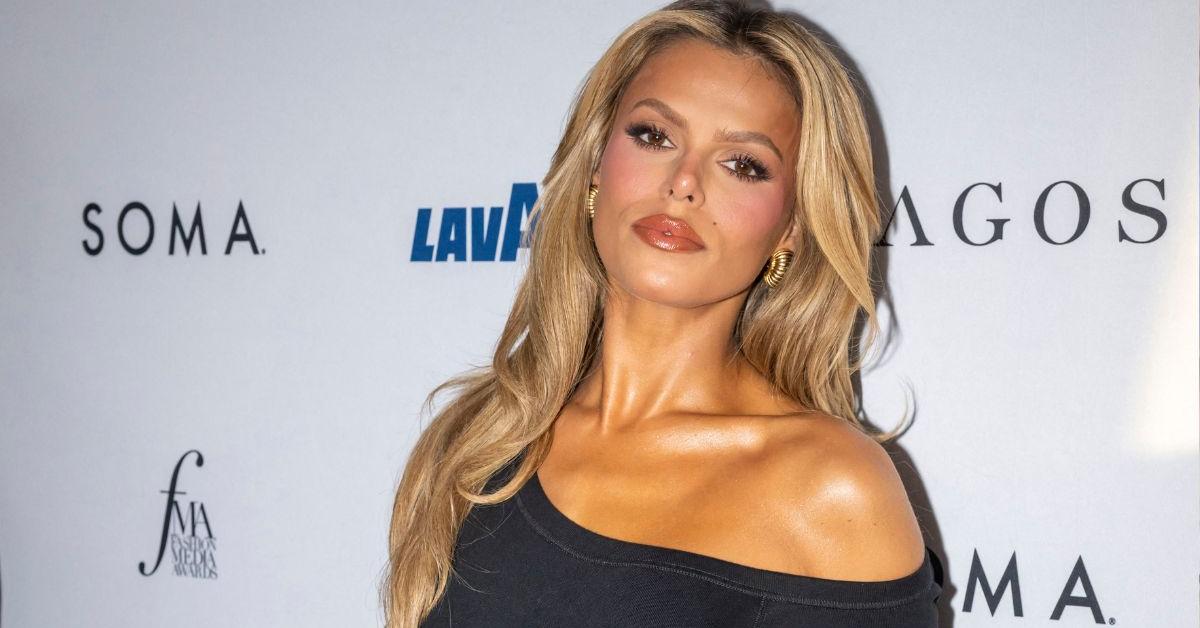
Model and reality television personality Brooks Nader recently revealed her profound regret over undergoing liposuction years ago, citing unwanted aesthetic consequences and a fundamental belief that the procedure was unnecessary for her. Speaking candidly at the Clarins Night of Extra event in Los Angeles on March 20, Nader disclosed that the cosmetic surgery left her with undesirable "dimples and ripples," a confession that casts a spotlight on the often-unforeseen outcomes of body-altering procedures and the intense pressures within the modeling industry. Her remarks serve as a poignant cautionary tale, urging a broader focus on natural health and well-being over surgical interventions.
Nader’s Liposuction Confession and Its Aftermath
Nader, a prominent figure known for her appearances in the Sports Illustrated Swimsuit Issue and her family’s reality show Love Thy Nader, made her startling admission without hesitation. "I probably shouldn’t say this, but I’m just going to say it," she told People magazine, before detailing her long-held remorse. The model explained that her decision to undergo liposuction stemmed from external pressures rather than a genuine need, and the procedure ultimately resulted in textural irregularities on her skin. This outcome, she stated, has led to lasting dissatisfaction, prompting her to advocate for a more conservative approach to cosmetic enhancements.
Her sentiment, "I just didn’t need it," underscores a growing dialogue among public figures and the general populace about the pursuit of an idealized physique. Nader’s experience highlights that even seemingly minor imperfections can be exacerbated or new ones created by surgical interventions, leading to psychological distress despite the initial intent to improve appearance. The complications she described, such as dimpling and rippling, are recognized potential side effects of liposuction, occurring when fat removal is uneven or the skin lacks sufficient elasticity to retract smoothly.
The Allure and Risks of Cosmetic Enhancements
Liposuction, a surgical procedure designed to remove localized fat deposits from specific areas of the body, remains one of the most popular cosmetic surgeries worldwide. It promises a more contoured silhouette by suctioning out fat cells that are resistant to diet and exercise. However, the procedure is not without its risks, including infection, scarring, nerve damage, and, as Nader experienced, contour irregularities. These aesthetic imperfections can be challenging to correct and often require additional, sometimes complex, revision surgeries.
Nader’s public disclosure brings to the forefront the broader conversation about body dysmorphia and the relentless pursuit of perfection fueled by media and societal standards. While cosmetic surgery can offer genuine benefits for some individuals, particularly in reconstructive cases or for those with severe body image issues, Nader’s regret serves as a reminder that elective procedures, especially when driven by external pressures, may not always deliver the desired long-term satisfaction. Her candor could potentially influence others to critically evaluate their motivations and expectations before undergoing similar operations.

Navigating Industry Pressures and Weight Loss Strategies
Brooks Nader’s journey through the demanding world of modeling has been marked by intense scrutiny regarding her physical appearance. Beyond her liposuction confession, she has been open about other cosmetic procedures, including veneers and Botox injections, all contributing to the "blonde bombshell" aesthetic she has cultivated. More significantly, Nader previously shared her experience with GLP-1 medications, a class of drugs gaining widespread attention for their efficacy in weight management.
In a November 2025 profile with Bustle, Nader revealed the stark realities of her profession, recalling an instance where her former agency explicitly told her she needed to lose 30 pounds to secure more job opportunities. This direct feedback, she confessed, fueled her determination to achieve a specific body type. "I didn’t shed one tear over it. I don’t feel bad for myself. I just say, ‘The facts are they want me to lose weight. How can I achieve that?’" she recounted, illustrating the pragmatic, albeit often emotionally taxing, mindset required to succeed in her field.
Her adoption of GLP-1s, initially developed for managing type 2 diabetes but now widely prescribed off-label for weight loss, marked a turning point in her career. Nader candidly stated, "The facts are that when I started GLP-1, my career took off. I’m not saying it’s OK. I’m not saying it’s right. I think everybody is different—but I lost 30 pounds, and I booked all the jobs." This admission highlights the powerful, sometimes ethically ambiguous, role of pharmaceutical interventions in shaping celebrity physiques and career trajectories within an industry obsessed with specific body metrics.

The GLP-1 Phenomenon and Ethical Debates
The surge in popularity of GLP-1 medications among celebrities and the general public has sparked considerable debate. These drugs, which work by mimicking a hormone that targets areas of the brain involved in appetite regulation, have proven highly effective for weight loss. However, their widespread use has raised questions about accessibility, potential side effects, and the ethics of prescribing them for purely cosmetic purposes, especially given supply shortages for diabetic patients who rely on them. Nader’s openness contributes to this ongoing public discussion, providing a firsthand account of their impact on career and personal perception.
Her discussions about body image issues and GLP-1 usage were also featured prominently on Love Thy Nader, offering viewers a raw look into the pressures she faces. In a confessional during one episode, Nader articulated the pervasive challenge: "Beauty standards in this industry are so unrealistic that you have to take shortcuts sometimes. I have so many huge life-changing shoots coming up. I feel like the pressure’s on and I’m gonna do whatever it takes to look my best." This statement encapsulates the intense, often unsustainable, demands placed on models to maintain an "ideal" figure, often at personal cost.
Evolving Beauty Standards and Public Impact

Nader’s frankness about her cosmetic procedures and weight loss methods resonates with a broader cultural shift towards greater transparency from public figures. In an era where filters and curated images dominate social media, celebrity confessions about cosmetic enhancements and their drawbacks can help demystify the pursuit of perfection and foster more realistic body expectations among audiences. Her decision to share her liposuction regret aligns with a growing movement advocating for self-acceptance and a critical examination of beauty standards.
This movement is increasingly evident in initiatives like the "unsexy trend," which aims to redefine beauty standards by celebrating natural bodies and challenging the hyper-sexualized, often unattainable, ideals perpetuated by media. Nader’s story, while rooted in personal experience, contributes to this larger narrative, urging both industry insiders and consumers to question the pervasive pressures that lead individuals to seek potentially regrettable "shortcuts." Her call to "do less with all that and be healthy" serves as a powerful counter-narrative to the relentless pursuit of cosmetic perfection.
A New Chapter: Baywatch and Beyond
As Brooks Nader navigates the complexities of her public image and personal reflections, her career continues to evolve. She is slated to appear in the highly anticipated remake of the iconic 1990s series Baywatch. Nader will portray Selene, a "sharp-tongued" Zuma beach lifeguard characterized by her wit and professional excellence. The character synopsis further details Selene’s strained relationship with Hobie, a fellow lifeguard, and the deepening rivalry that ensues when his daughter, Charlie, joins the team.

This role in the Baywatch revival, announced in September 2025 and expected to air later this year, places Nader in a high-profile position associated with athleticism and a specific physical ideal. Her portrayal of Selene, a character described as "excellent at her job" and possessing a strong personality, may offer Nader an opportunity to showcase her talents beyond her modeling background. The contrast between her public vulnerability about her cosmetic regrets and the confident, capable lifeguard she is set to play adds another layer to her public persona.
Nader, a former contestant on Dancing With the Stars, has demonstrated a willingness to engage with diverse media platforms, from reality television to acting roles. Her latest confession regarding her liposuction regret not only offers a glimpse into the personal cost of maintaining a public image but also positions her as a voice for authenticity in an industry often criticized for its superficiality. As she embarks on this new acting venture, Nader’s journey continues to reflect the ongoing dialogue about beauty, health, and the evolving definitions of self-acceptance in the public eye.