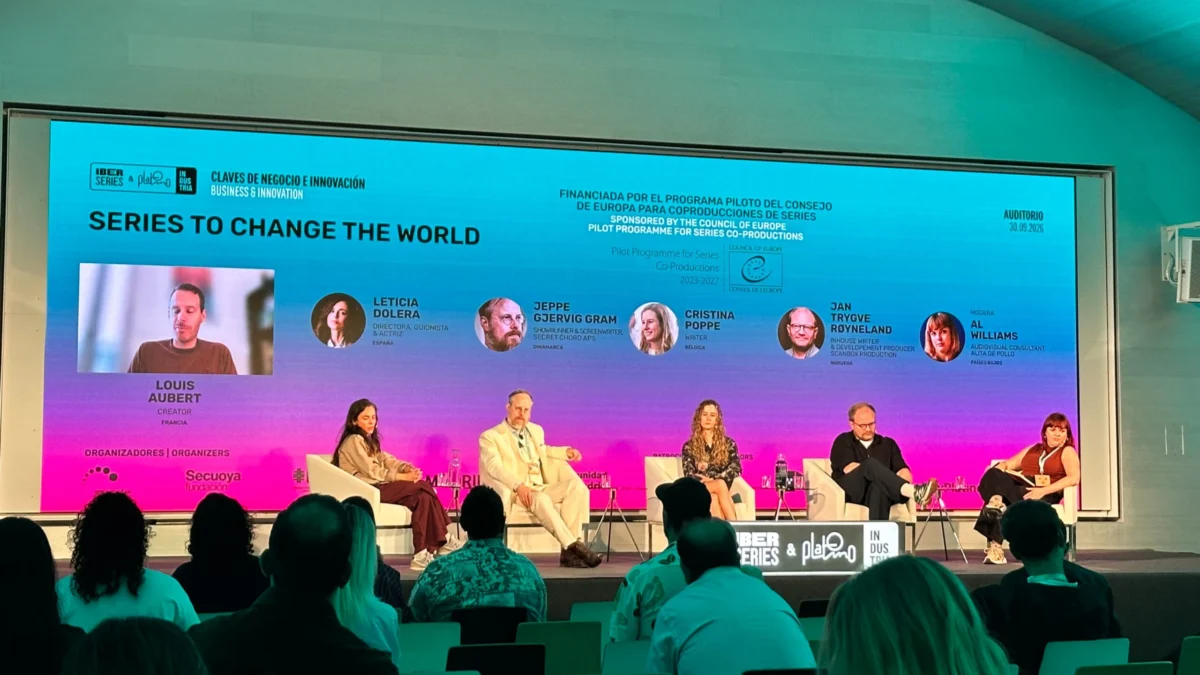
Madrid, Spain — Visionary European creators convened at the sixth edition of Iberseries & Platino Industria in Madrid this week to tackle a profound question: Can drama change the world? The panel, aptly titled “Series to Change the World,” explored the unique capacity of scripted narratives to shape public perception, ignite societal shifts, and foster critical dialogue around today’s most pressing global issues.
The gathering underscored a growing conviction within the entertainment industry that compelling storytelling is not merely a form of escapism, but a potent catalyst for social impact. From the intricate machinations of political power to the existential threat of climate change and the insidious rise of far-right ideologies, the creators shared their behind-the-scenes insights into crafting narratives that resonate deeply with audiences and challenge them to confront uncomfortable truths.
The Power of Scripted Narratives to Drive Change
The premise of the Iberseries panel was clear: scripted series possess an unmatched power to influence public discourse and catalyze societal transformation. The discussions centered on how diverse European voices are leveraging this power to champion pluralism, shift global conversations, and pave the way for a more informed and engaged populace. This perspective aligns with a broader trend in the entertainment sector, where content is increasingly viewed as a vehicle for addressing complex societal challenges, moving beyond traditional entertainment to inspire contemplation and action.
The esteemed panel featured a lineup of acclaimed writers, directors, and producers whose works have already made significant waves across the continent. Among them were Danish writer Jeppe Gjervig Gram, known for political dramas like Borgen and Follow the Money; Belgian writer Cristina Poppe, creator of the thought-provoking The Best Immigrant; Norwegian writer and Scanbox Production development producer Jan Trygve Røyneland; French creator Louis Aubert, behind the eco-thriller After Us; and Spanish director, screenwriter, and actress Leticia Dolera, acclaimed for Pubertat – Secrets, Lies, and Human Castles. Their collective experience offered a panoramic view of how contemporary drama grapples with the anxieties and aspirations of modern society.
Driving Societal Shifts Through Drama: A European Perspective
The conversation quickly delved into specific projects and the motivations behind them, revealing the varied approaches creators take to embed meaningful messages within entertaining narratives. The consensus was that while direct "world-changing" might be an ambitious claim, the ability of drama to foster debate and influence individual perspectives is undeniable.
Exploring Political Landscapes: Jeppe Gjervig Gram’s Borgen and Follow the Money
Jeppe Gjervig Gram, a veteran of Danish television, lauded the Danish public broadcaster DR for its consistent willingness to "push the envelope." He highlighted Borgen, a series that offered an unprecedented look into the complexities of Danish politics, and Follow the Money, which dared to expose the intricate world of big finance in the wake of the 2008 financial crisis. "Nobody had done a show about Big Finance, and DR was brave enough," Gram stated, emphasizing the network’s courage to tackle challenging, often opaque subjects.
Gram underscored that even when delving into dark or complex themes, his ultimate goal is to leave audiences with a "hopeful note." This philosophy suggests that drama, while confronting harsh realities, can also inspire optimism and a belief in the possibility of positive change. His works exemplify how deeply researched, character-driven narratives can demystify powerful institutions and engage viewers in critical thinking about their own societies.
Confronting the Climate Crisis: Louis Aubert’s After Us
The urgency of the climate crisis was a central theme, addressed by French creator Louis Aubert with his eco-thriller, After Us. Aubert acknowledged that despite years of headlines, the necessary systemic change is "definitely not happening fast enough." His response was to utilize the unique tools of storytelling to tap into audiences’ emotions, believing that intellectual understanding alone is insufficient for driving action.
After Us is a high-stakes thriller about a clandestine group of young activists, "Phoenix," who launch a coordinated operation across Europe. Their audacious plan involves kidnapping the children of powerful European corporate leaders meeting for an environmental forum in the Alps. Their objective: to expose corporate greenwashing and compel these leaders to take decisive action against climate change. Aubert stressed the importance of a compelling narrative, stating, "But you need a good story, a thriller that is entertaining." The series aims to "change minds, at least some of them," demonstrating how genre entertainment can be a Trojan horse for urgent social messaging.
Battling Far-Right Politics: Cristina Poppe’s The Best Immigrant
Belgian writer Cristina Poppe revealed that the inspiration for The Best Immigrant came from a desire to bring serious political trends, particularly the disconcerting rise of far-right politics, into a "public mainstream conversation." She cited Black Mirror as a "huge inspiration" for its speculative yet eerily plausible scenarios. Initially, some considered her concept "crazy," but Poppe observed that the themes explored in the series have since become "uncomfortably close to reality. … This is not so dystopian anymore."
The Best Immigrant is set in a near-future, independent Flanders, where a far-right government decrees the expulsion of all foreign-born residents. The story follows Muna and Jamal, a couple facing forced separation, who risk everything by joining a ruthless reality show where contestants compete for the ultimate prize: a residence permit. Poppe articulated her belief that while movies and series may not unilaterally "change the world," they can significantly "influence [things] a little bit … and create debate." Her work highlights the power of speculative fiction to hold a mirror to society’s potential future, forcing audiences to grapple with the consequences of current political trajectories.
Addressing Human Rights and Social Stigma: Jan Trygve Røyneland’s Henki
Norwegian writer Jan Trygve Røyneland focused on a more intimate, yet equally profound, form of impact with his series Henki. The show tells the true story of Henki Hauge Karlsen, the first man in Norway diagnosed with HIV, who was fired from his job as a bartender in 1985 after disclosing his diagnosis. Furious and humiliated, Henki takes legal action, sparking a landmark human rights case.
Røyneland articulated his personal metric for success: "If my daughter is proud of the series, I have changed her world." This sentiment underscores that impact can be deeply personal and resonate within individual families and communities. When asked about the need for hope in narratives, Røyneland offered a pragmatic response: "It doesn’t necessarily need hope, but something to get your ass off the couch." This suggests that motivation, rather than pure optimism, is the crucial element for driving engagement and potential action.
Challenging Consent and Gender Dynamics: Leticia Dolera’s Pubertat
Spanish director, screenwriter, and actress Leticia Dolera discussed her series Pubertat – Secrets, Lies, and Human Castles, which delves into the sensitive subject of a mother grappling with accusations of sexual aggression leveled against her son, his cousin, and a friend. Dolera reported that the series "really connected with people," leading to schools screening the show and facilitating crucial debates around its themes. "It makes me really happy," she shared, "because the show wants to open a conversation."
Dolera concluded the panel by encapsulating a shared belief: "Culture has the power to make us think." She clarified that creators "don’t make shows to tell people what to think … but to make people think with us" about uncomfortable issues. Crucially, she emphasized that this intellectual engagement can, and should, coexist with entertaining audiences. This dual objective ensures that profound messages are not only delivered but also absorbed by a wide and receptive viewership.
The Nuance of Influence: Can Drama Truly Change the World?
The panel’s discussions highlighted a nuanced understanding of drama’s power. While no creator claimed their work could single-handedly solve global crises, there was a unanimous belief in its ability to influence, provoke thought, and initiate vital conversations. The consensus was that by presenting complex issues through relatable characters and engaging plots, drama can humanize statistics, foster empathy, and expose systemic injustices, thereby laying the groundwork for greater public awareness and, eventually, societal pressure for change. The blend of entertainment and social commentary was identified as key, ensuring that even the most challenging topics reach a broad audience.
Broader Industry Context at Iberseries: Beyond Social Impact
The "Series to Change the World" panel was just one facet of a bustling Iberseries & Platino Industria, a significant industry gathering showcasing the breadth and dynamism of Spanish and Latin American audiovisual production, alongside European and international contributions. Earlier in the week, Amazon MGM Studios executives discussed the immense success of Mercedes Ron’s young adult novel adaptations and the Spanish zombie horror film Apocalypse Z, highlighting the commercial viability of diverse genre content. Parrot Analytics also presented data trends and subscriber impact estimates for Netflix’s Argentine hit series The Eternaut, illustrating the growing global reach of non-English language productions. Furthermore, a top YouTube executive predicted an increase in "Obsession" and "Backrooms"-style film hits emerging from online creators, signaling an evolving landscape of content creation and distribution. The industry gathering, which runs through Friday, serves as a crucial platform for networking, deal-making, and discussing the future trajectory of global entertainment.
The Enduring Quest for Meaningful Storytelling
The fervent discussions among these European creators at Iberseries & Platino Industria underscored the enduring quest for meaningful storytelling. In an increasingly complex and interconnected world, the role of drama extends beyond mere entertainment to serve as a vital arena for social commentary, ethical inquiry, and collective reflection. By daring to explore sensitive political landscapes, confront the climate crisis, challenge human rights abuses, and dissect gender dynamics, these creators are proving that compelling narratives can indeed contribute to a better world, one thought-provoking series at a time. The powerful blend of artistic vision and social responsibility continues to define a significant portion of contemporary European television, echoing a global demand for content that not only entertains but also enlightens and inspires.