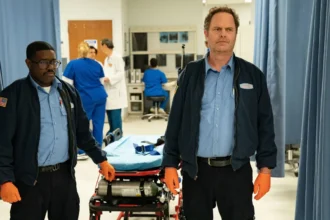
Actor Charlie Hunnam, known for his roles in "Sons of Anarchy" and "King Arthur," recently revealed that adopting two kittens served as a crucial coping mechanism while immersing himself in the disturbing psyche of serial killer Ed Gein for Ryan Murphy’s Netflix series, Monster: The Ed Gein Story. Hunnam described the role as confronting the "darkest realm" of human experience, a journey that demanded intense psychological and physical commitment, necessitating a unique form of decompression to maintain his mental well-being during production.
Hunnam’s initial agreement to portray the infamous serial killer Ed Gein came before he had fully grasped the horrifying details of Gein’s crimes. The actor, who previously confessed to a limited knowledge of the "serial killer subgenre" of true crime, was initially captivated by showrunner Ryan Murphy’s vision during an extended discussion facilitated by mutual friend and director Max Winkler. Hunnam, impressed by Murphy’s storytelling philosophy, accepted the challenge, unaware of the profound psychological impact it would soon have.
Confronting the Darkness of Ed Gein
The true weight of the role began to manifest as Hunnam delved into his research. Accessing historical texts and crime scene images depicting Gein’s gruesome acts—which included grave robbing, necrophilia, and the creation of artifacts from human remains—triggered a deep sense of dread. Hunnam admitted to experiencing fear and doubt, waking in the middle of the night, anticipating the entire filming process to be "pitch black." This period marked the actor’s most significant hesitation, questioning whether he had made a mistake by committing to such a profoundly dark character.
A pivotal turning point in Hunnam’s preparation arrived when he gained access to Ed Gein’s medical records. These documents, transcribed from biannual reviews during Gein’s 30-year incarceration in a mental health facility, offered a perspective distinct from the sensationalized accounts prevalent in true crime literature. Instead of reveling in depravity, the records presented Gein as a human being grappling with regret and attempting to comprehend the roots of his actions, particularly his complex relationship with his domineering mother, Augusta Gein, portrayed by Laurie Metcalf in the series. This insight reconnected Hunnam with Murphy’s original intent: to explore "what makes a human being into a monster," focusing on the psychological unraveling rather than mere sensationalism.
Physical and Vocal Transformation

The portrayal of Ed Gein demanded a rigorous physical transformation from Hunnam. Just weeks before filming commenced, a costume fitting revealed a stark contrast between Hunnam’s naturally robust physique and Gein’s emaciated frame. This realization spurred an urgent effort to shed weight, with Hunnam losing 30 pounds in approximately three and a half weeks. This drastic change was crucial for embodying Gein’s gaunt appearance, a consequence of his isolated and often deprived existence.
Beyond weight loss, Hunnam collaborated closely with the makeup department to achieve specific physical nuances. A key element was a prosthetic eyelid, designed to replicate a "flabby lid" described in historical accounts of Gein, which contributed to his tragic yet sometimes sinister gaze. This detail, initially met with skepticism by Murphy due to potential post-production challenges, was meticulously perfected by makeup artist Corey Castellano, eventually convincing the showrunner of its artistic value. Daily, Hunnam spent up to an hour and a half in the makeup chair, a time that eventually streamlined to around 45 minutes, complemented by daily haircuts to maintain Gein’s specific look.
The vocal embodiment of Ed Gein presented another unique challenge. Initially, Hunnam had no audio recordings of Gein’s actual voice, leading him to invent a higher vocal octave. This creative choice was rooted in his understanding of Gein’s deep isolation, lack of social interaction, and his mother’s constant denigration, particularly her desire for a daughter instead of a son. Hunnam theorized that Gein might have unconsciously adopted a higher register as an attempt to embody the daughter his mother desired. However, a week before shooting, actual recordings of Gein’s voice surfaced, revealing a much deeper, folksy rhythm. Despite this discovery, Hunnam, already deeply committed to his developed vocalization, decided to proceed with his interpretation, having intuited some of Gein’s unique intonations and range.
Method Acting and Decompression
The immersive nature of playing Ed Gein meant that the character often lingered with Hunnam even off-set. His partner noted that he would speak in Gein’s voice at home, highlighting the deep psychological penetration of the role. Such intense method acting, while yielding powerful performances, often necessitates deliberate strategies for actors to disengage and protect their mental health. For Hunnam, this crucial decompression came in an unexpected, heartwarming form: adopting two stray kittens.
During the latter half of filming in Chicago, Hunnam, staying at the luxurious Four Seasons Hotel, took in two kittens. He recounted approaching the hotel staff with his "wild card" request, which was met with surprising hospitality. Committed to their care, he even hired a cat sitter to look after them for eight hours a day while he was on set, describing their transition from "the streets to really coming up in life and living that Four Seasons life." Hunnam explained, "I would go home from the darkest realm and just literally play with kittens for three hours." This simple act of nurturing and playful interaction offered a vital counterpoint to the psychological horror he was portraying, providing a much-needed emotional release and a connection to pure, unadulterated innocence.
Broader Implications: True Crime and Mental Health

Hunnam’s portrayal of Ed Gein, and the Monster series as a whole, inevitably touches upon the ongoing debate surrounding the true-crime genre and its potential for sensationalism. While acknowledging that Ryan Murphy often faces this critique, Hunnam articulated his personal philosophy: the artist’s task is to "find the truth of the human condition." He emphasized his obsessive commitment to thorough research, reading every available court document, medical history, book, and watching all relevant films about Gein. His goal was to find the truth of the man, presenting it with as little judgment as possible, allowing the audience to form their own conclusions rather than tipping into sensationalism.
The series also delves into the complex interplay of nature versus nurture in the development of a serial killer. Hunnam, though not a scientist, explored the concept of epigenetics, suggesting that while predispositions to certain conditions may exist, they often require environmental triggers like trauma or abuse to manifest. He posited that Gein likely suffered from congenital schizophrenia and later developed dissociative personality disorder due to trauma, isolation, and abuse. Furthermore, Hunnam speculated about Gein possibly having the mental age of a 12-to-14-year-old, a form of psychological stunting that could have been congenital or a consequence of arrested development following significant life trauma. This exploration aligns with Murphy’s intent to examine the factors that contribute to the formation of a "monster," moving beyond simplistic portrayals of evil.
Critical Acclaim and Artistic Satisfaction
Hunnam’s profound dedication to the role resonated with critics and industry peers, earning him his first Emmy nomination for his performance in Monster: The Ed Gein Story, following previous Golden Globe and Critics Choice Award nods for other projects. The Netflix limited series itself garnered a total of seven Emmy nominations, including two for makeup and prosthetics, underscoring the collective effort to authentically portray Gein’s world.
For Hunnam, one of the most challenging and pivotal scenes was in episode seven, where Gein receives his diagnosis. He viewed this as the show’s "thesis statement," an opportunity to articulate his deepest understanding of the character. Despite immense fear of "fucking it up," Hunnam relied on his extensive preparation, delivering a powerful performance in just two takes, with director Max Winkler utilizing only the first.
Ryan Murphy had granted Hunnam significant creative latitude, even offering him an executive producer credit—not merely as a "vanity credit," but with genuine producorial responsibility. While the dialogue was strong enough to require little improvisation, Hunnam found immense artistic satisfaction and a sense of liberation in inhabiting the character. Despite the awareness of the real-life horrors and consequences associated with Gein, the actor found joy in the creative process of fully surrendering to the role, finding himself so far removed from his own identity that he could get lost in Gein’s world, allowing for improvisation within the established material.
Hunnam’s experience with Monster: The Ed Gein Story stands as a testament to the profound demands of method acting and the personal sacrifices required to authentically portray humanity’s darkest corners. His unique coping mechanism, embracing the innocence and companionship of adopted kittens, offers a poignant glimpse into the psychological toll of such intense roles and the unexpected ways actors find solace amidst the "darkest realm" of their craft.