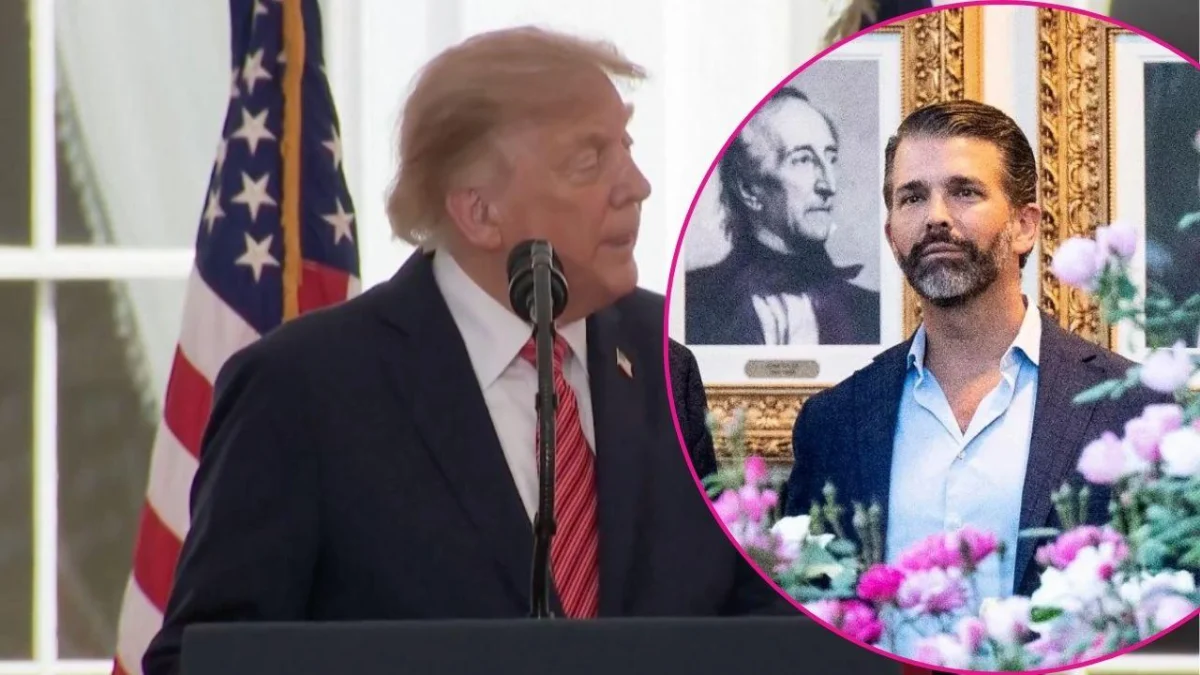
During a recent address in Dublin, Ireland, former President Donald Trump offered a notably personal observation regarding his eldest son, Donald Trump Jr., remarking that Don Jr. has "calmed down so much" and appears "like a different human being" following his recent marriage. The former president’s comments provided a rare public glimpse into his perspective on his son’s personal evolution and recent life changes.
Donald Trump’s Observations on His Eldest Son’s Temperament
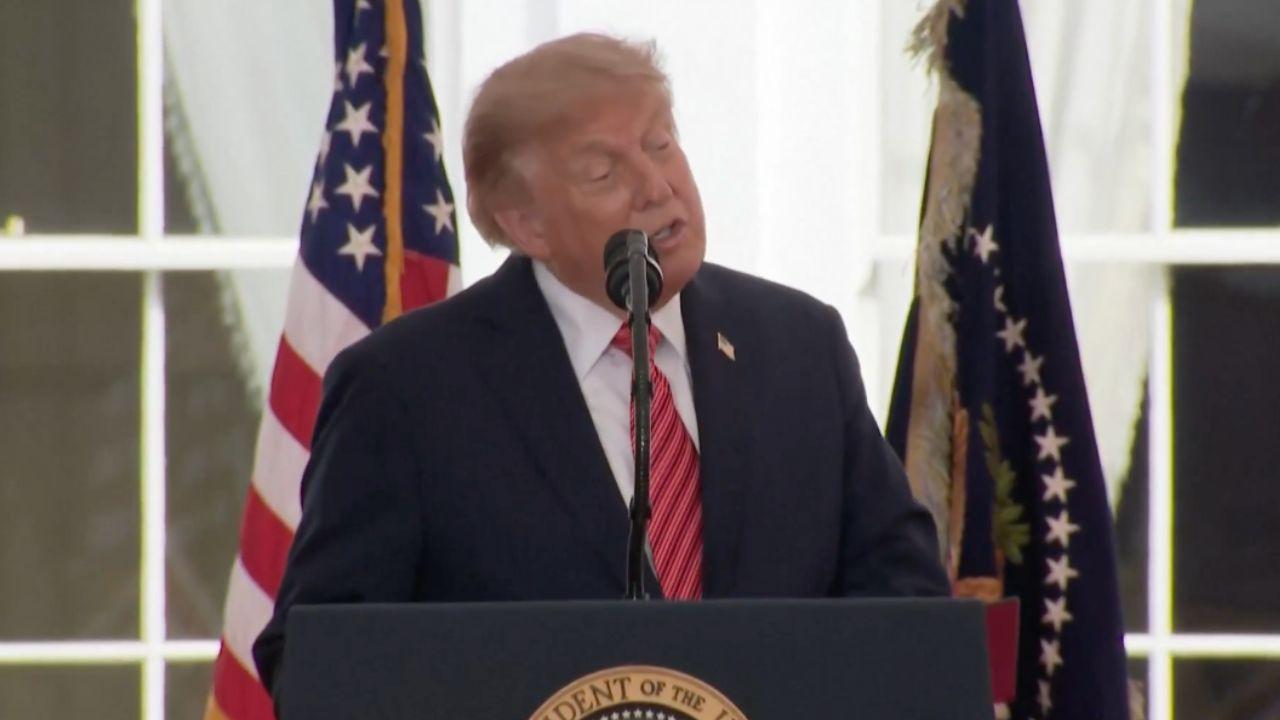
The remarks came as part of a broader speech delivered by Donald Trump, where he acknowledged his son’s presence among a "whole group of family" in the audience. Trump highlighted Donald Trump Jr.’s marital status, stating, "He just got married, he’s happily married, which is nice." This seemingly straightforward acknowledgment quickly transitioned into a more reflective assessment of his son’s demeanor.
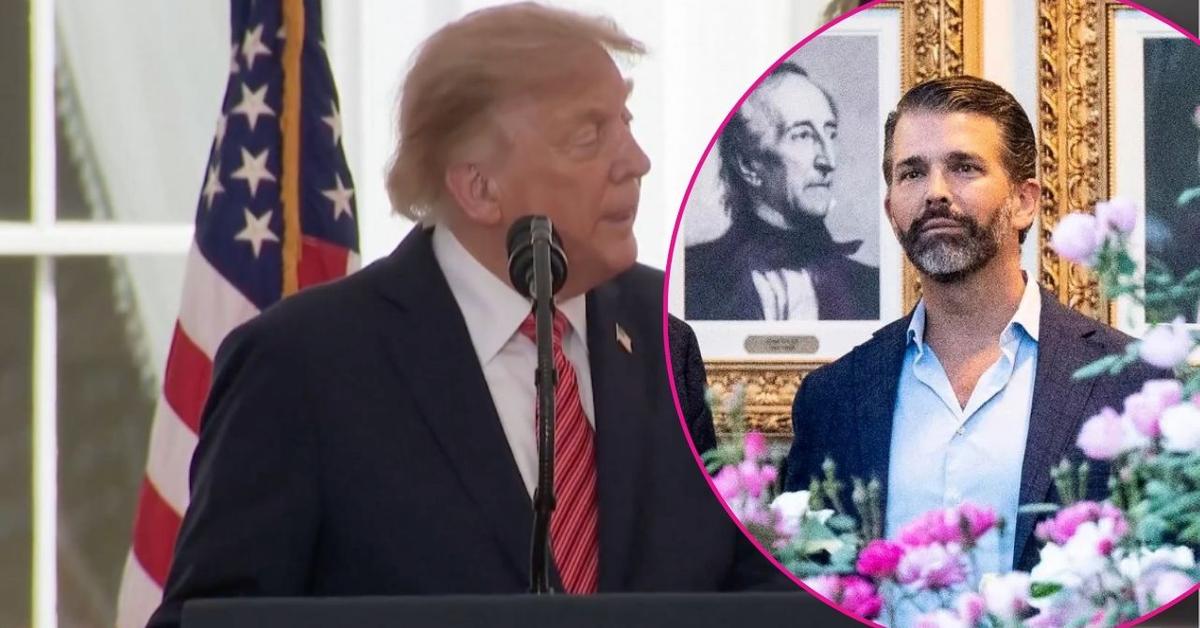
"He’s calmed down so much. That’s like a good sign," the former president asserted, continuing, "He’s like a different human being." Trump elaborated on his perception of a shift in his son’s energy levels, noting, "He had a lot of energy. Now he has a little less energy." These comments, delivered publicly, suggest a perceived transformation in Donald Trump Jr.’s public and perhaps private persona, linking it directly to his recent nuptials.
The Nuptials of Donald Trump Jr. and Bettina Anderson
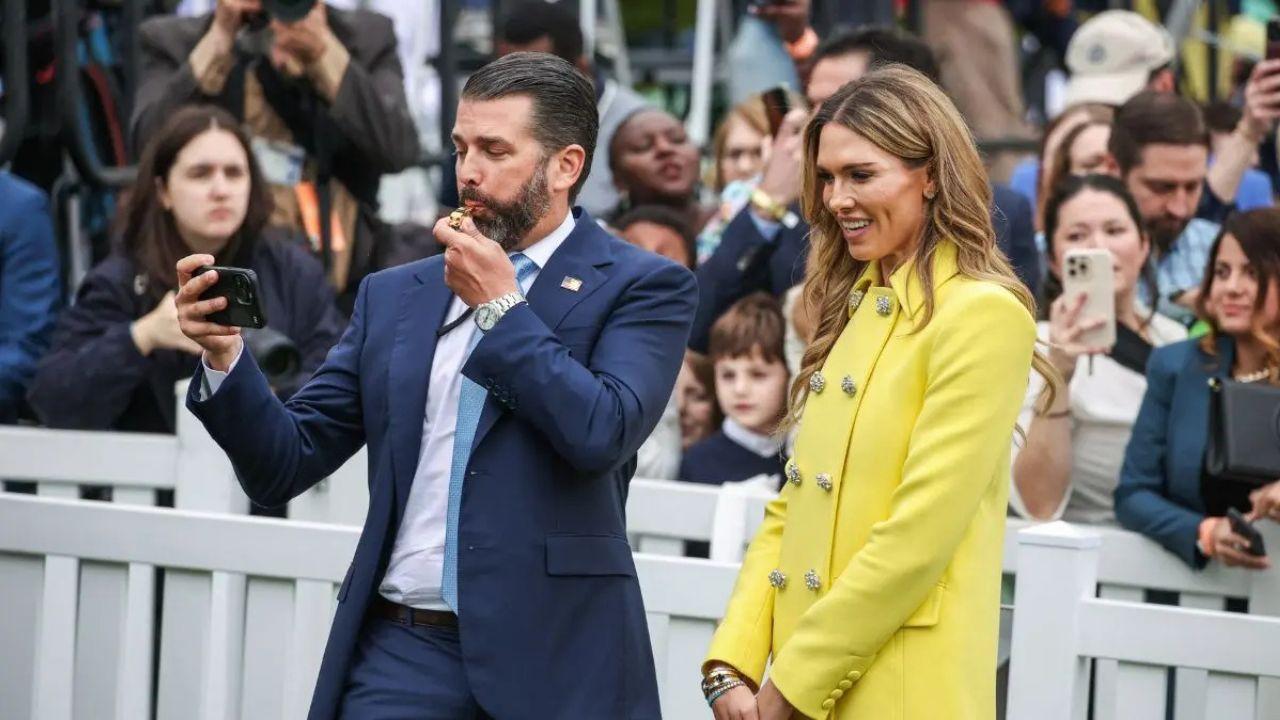
Donald Trump Jr., 48, exchanged vows with Bettina Anderson, 39, in a private ceremony held in the Bahamas earlier this year, in May 2026. The wedding marked a significant personal milestone for the couple, who had announced their engagement in December of the previous year, 2025. Their relationship reportedly began in 2024, culminating in their decision to marry in a relatively short timeframe, particularly for such high-profile figures.
Bettina Anderson, often described as a socialite and a fixture in certain high-society circles, brought a fresh dynamic to the Trump family’s public narrative. The choice of the Bahamas for their wedding underscored a desire for a more intimate and secluded celebration, away from the intense media glare that typically accompanies events involving the prominent political family.
President Trump’s Absence and Geopolitical Pressures
Notably, former President Donald Trump did not attend his eldest son’s tropical wedding. He publicly addressed his absence during a press conference at the White House on May 21, 2026, citing pressing international concerns. Trump explained that his focus was "in the midst" of an "ongoing crisis with Iran and other things."
He articulated the difficult position he faced, stating, "He’d like me to go. But it’s going to be just a small, little private affair, and I’m going to try and make it. I’m in the midst — I said, you know, this is not good timing for me. I have a thing called Iran and other things. That’s one I can’t win on." The former president suggested that attending the wedding amidst escalating diplomatic tensions in the Middle East would draw criticism, as would his absence, highlighting the intense scrutiny political leaders face when balancing personal and official duties.
At the time, the "Iran crisis" involved heightened tensions surrounding international shipping lanes in the Strait of Hormuz and ongoing negotiations regarding nuclear safeguards, creating a volatile geopolitical landscape that demanded the attention of global leaders. Trump’s decision underscored the perceived gravity of the situation, prioritizing national security concerns over a significant family event. Despite his absence, he expressed optimism for the couple’s future, remarking, "Hopefully they’re going to have a great marriage."

Donald Trump Jr.’s Evolving Public Persona
The former president’s characterization of Donald Trump Jr. as having "calmed down" and exhibiting "less energy" invites speculation about his son’s public evolution. Donald Trump Jr. has long been known for his outspoken, often confrontational, and highly energetic political commentary, particularly on social media and at rallies. His previous public persona was frequently characterized by passionate defense of his father’s policies and sharp criticism of political opponents.
This perceived shift could be interpreted in several ways. Some observers might view it as a natural maturation process, while others could see it as a deliberate tempering of his public image, perhaps influenced by his new marital status or a strategic decision to adopt a more measured tone as the political landscape continues to evolve. A "calmer" demeanor might suggest a greater focus on stability and personal well-being, or it could be a strategic move to broaden his appeal beyond his established base.
Previous Marriage and Complex Family Dynamics
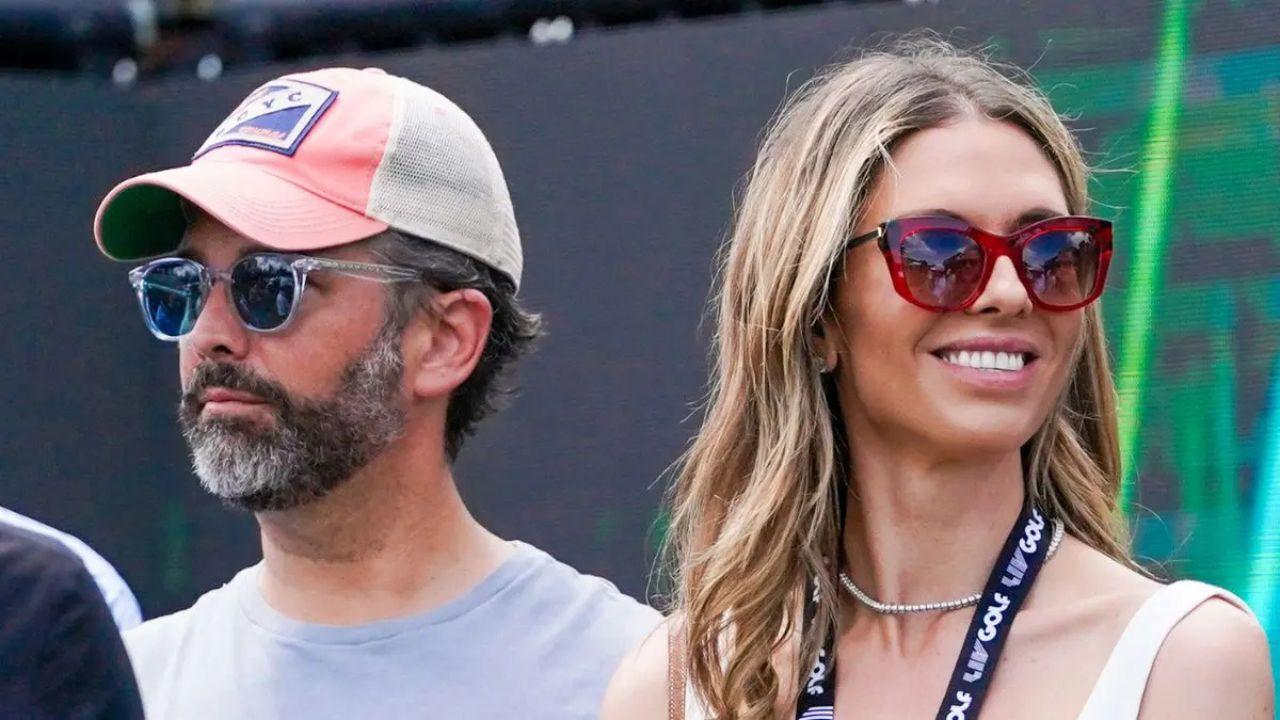
Before his marriage to Bettina Anderson, Donald Trump Jr. was married to Vanessa Trump (née Haydon) from 2005 to 2018. Their thirteen-year marriage resulted in five children: Kai, 19; Donald III, 17; Tristan, 14; Spencer, 13; and Chloe, 11. The dissolution of their marriage in 2018 marked a significant personal change for the Trump family, impacting the former president’s grandchildren.
The introduction of a new stepmother into such a high-profile family often brings its own set of challenges and adjustments, particularly for the children involved. Reports from June 2026 indicated that Vanessa Trump, 48, was reportedly experiencing "anxiety" over Bettina Anderson’s presence in her children’s lives. An insider conveyed to Star Magazine that while Vanessa was "being mature" and "doesn’t deprive Don Jr. of the right to be happy," the change was still emotionally impactful.
"It still hurts that the kids now have this new stepmom," the source noted, adding, "Vanessa’s being mature, but that doesn’t take away her anxiety." These insights highlight the intricate emotional landscape of blended families, especially when navigating the public spotlight that relentlessly follows the Trump family. Co-parenting in such circumstances requires careful consideration of children’s emotional well-being and maintaining respectful boundaries.
The Trump Family in the Public Eye
The Trump family’s personal lives have consistently been a subject of intense public and media scrutiny, intertwined with their political and business endeavors. From high-profile weddings and divorces to public appearances and social media activity, every aspect of their lives often becomes fodder for discussion and analysis. This constant spotlight means that personal milestones, such as a marriage or a perceived change in temperament, carry broader implications for their public image and political narratives.
For Donald Trump, comments about his children often serve to humanize his public persona or to convey specific messages about his family’s values and trajectory. His observations on Donald Trump Jr.’s "calmed down" state could be interpreted as an endorsement of stability and maturity, attributes that can resonate with different segments of the electorate. The interplay between personal events and political aspirations remains a defining characteristic of the Trump family’s presence on the national and international stage.
Broader Implications for Political Figures
The former president’s candid remarks about his son’s personal life underscore a broader phenomenon in contemporary politics: the blurring lines between public and private personas for prominent figures. For a political leader like Donald Trump, family members are often seen as extensions of their brand and influence. Public commentary on their personal lives, even seemingly innocuous observations, can shape public perception, reinforce narratives, or even subtly signal shifts in family dynamics or political strategy.
Such pronouncements also reflect the unique challenges faced by the children of high-profile political figures, whose personal journeys are often magnified and scrutinized by the public. Donald Trump Jr.’s journey from an energetic political advocate to a "calmed down" newlywed, as described by his father, adds another layer to the complex public narrative of one of America’s most recognizable political families. The ongoing evolution of their personal lives will undoubtedly continue to draw interest and intertwine with their future public roles.