A carefully orchestrated White House event on Monday, April 13, 2026, intended to showcase President Donald Trump’s "no tax on tips" policy, instead drew widespread attention to the visible layer of makeup on the back of his right hand, reigniting public speculation about his health. The cosmetic application appeared to be an attempt to conceal a recurring bruise, an issue that has frequently surfaced during his second term and become a subject of intense media scrutiny and public curiosity.
A Staged Delivery and a Familiar Sight
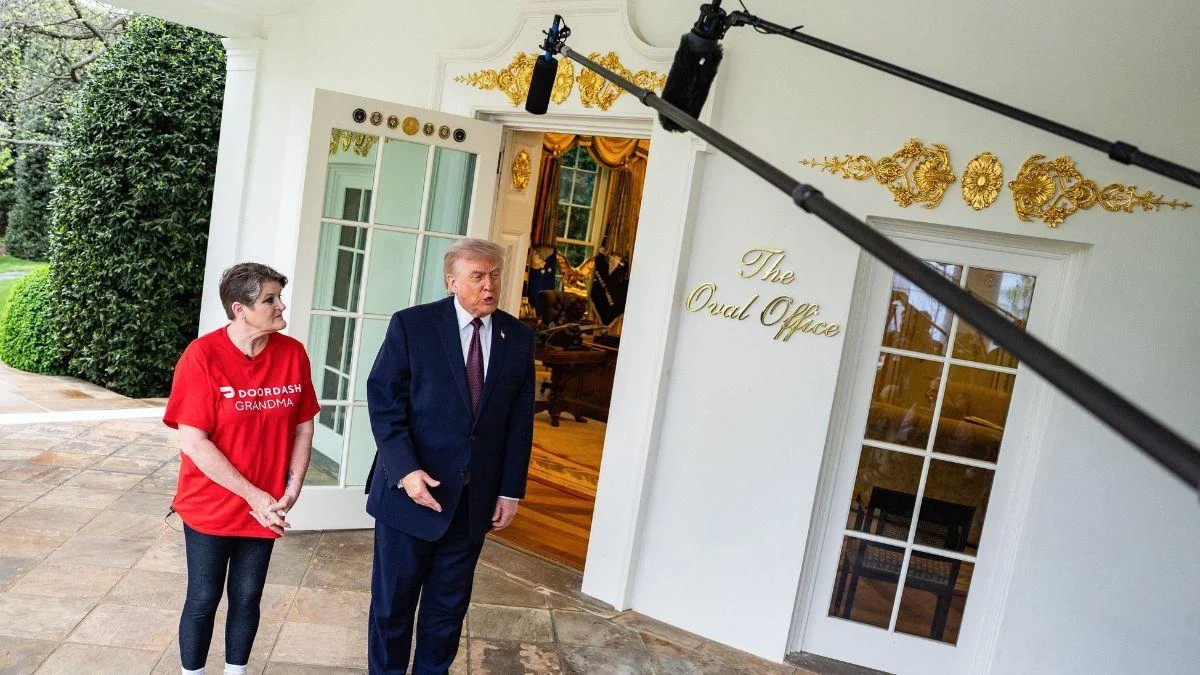
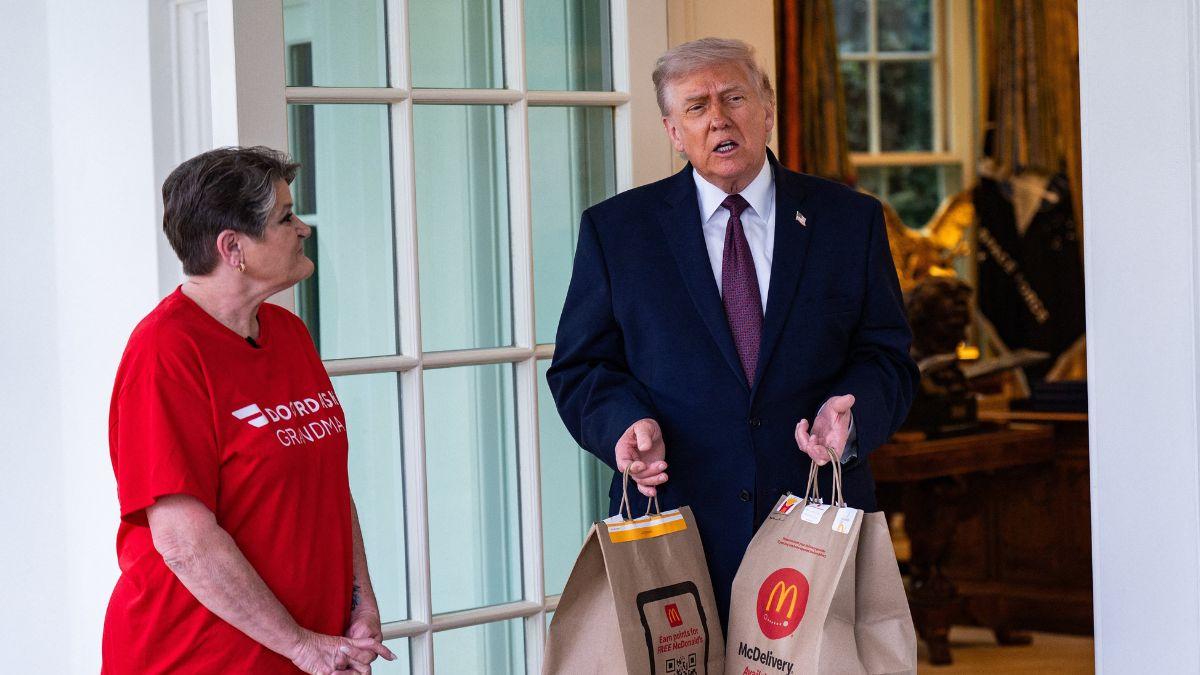
The event, which involved President Trump personally receiving a McDonald’s delivery at the White House, was designed as a public relations opportunity to promote his "One Big Beautiful Bill Act," signed in July 2025, which includes a key provision eliminating taxes on tips. Trump himself acknowledged the choreographed nature of the moment, playfully asking the delivery driver, "This doesn’t look staged, does it?" The lighthearted remark, however, did little to divert attention from the more pressing observation made by journalists and social media users alike: the tell-tale discoloration and heavy foundation on his hand.
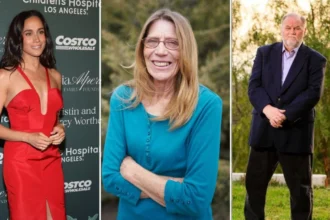
The individual delivering the two bags of McDonald’s was identified as Sharon Simmons, an Arkansas grandmother of ten, widely known as the "DoorDash Grandma" for her more than 14,000 completed deliveries. Simmons was not a stranger to the White House’s policy initiatives; she had previously testified before Congress in July 2025 in support of the very tax initiative the event was promoting. Her presence further solidified the perception that the "spontaneous" delivery was, in fact, a prearranged publicity stunt, raising questions about the authenticity of the engagement.
Persistent Bruising and Cosmetic Cover-Ups
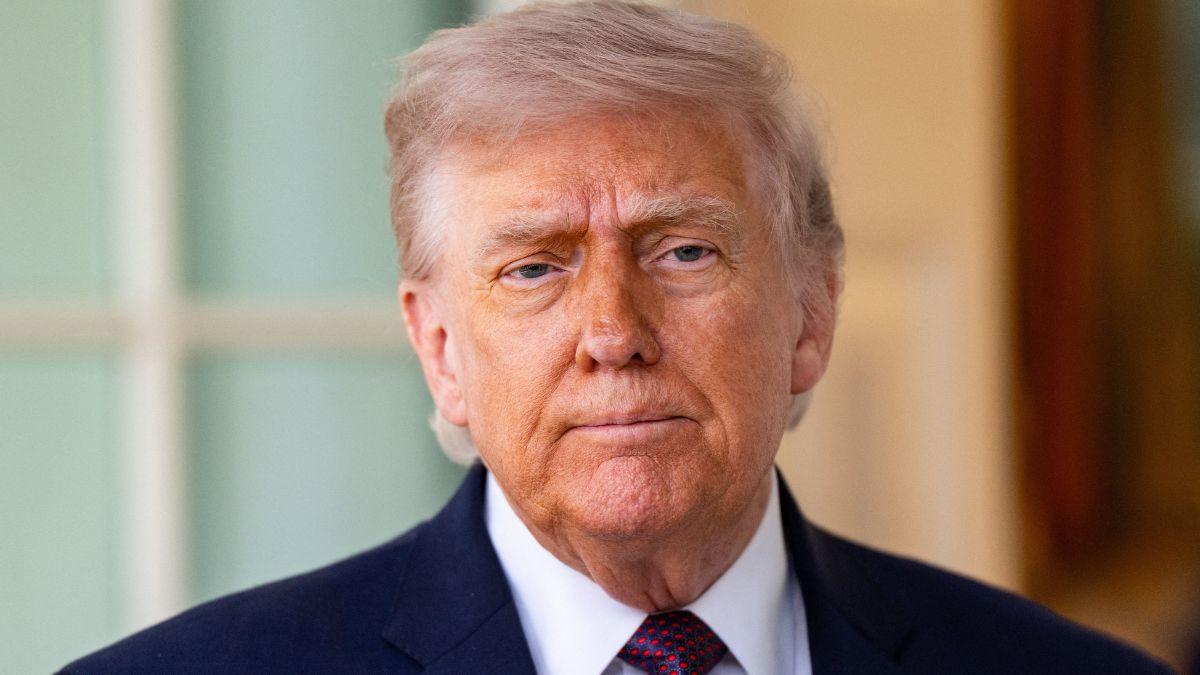
The visible makeup and the bruise it attempted to mask have become a recurring motif in public appearances by the 79-year-old President. Observant media outlets, including The Daily Beast, noted the distinct application of concealer. Following the exchange with Simmons, as Trump placed the fast-food bags down in the doorway and began discussing the policy, the back of his right hand was clearly exposed, revealing the heavily caked-on cosmetic. This detail quickly circulated across social media platforms, sparking fresh rounds of discussion and concern regarding the President’s physical well-being.
The use of concealer to obscure the bruising is not a new revelation. President Trump has openly admitted to applying his own makeup, describing it as "easy to put on" and claiming it takes "only about 10 seconds." This admission, coupled with the persistent nature of the bruising, has fueled a continuous narrative of health speculation surrounding the commander-in-chief, a common theme for elderly political figures in high-pressure roles.
The Official Explanations and Medical Context
The White House and President Trump have offered various explanations for the recurring bruising and the need for cosmetic cover-ups. One primary reason cited by Trump is his daily regimen of 325 mg of aspirin, a high dose he states he takes because he is "superstitious" about wanting "thin blood." Aspirin is a well-known anticoagulant, or blood thinner, which can indeed increase an individual’s propensity for bruising, particularly in older adults whose skin may be more fragile.

Beyond Trump’s personal explanation, his loyalists have often attributed the marks to "minor soft tissue irritation" resulting from his frequent and vigorous handshaking as a "man of the people." While repetitive hand movements can cause minor trauma, the consistent nature and location of the bruising have led some medical observers to suggest more systemic causes.
A significant piece of context emerged in July 2025 when President Trump was reportedly diagnosed with chronic venous insufficiency. This medical condition, common in older adults, occurs when the veins in the legs and sometimes the hands struggle to send blood back to the heart, leading to blood pooling. Symptoms can include swelling, pain, skin discoloration (often a reddish-brown hue), and increased susceptibility to bruising in the affected extremities. This diagnosis provides a plausible medical explanation for the persistent bruising and discoloration observed on his hands, adding a layer of clinical understanding to the public’s observations.
Historical Precedent of Presidential Health Scrutiny
The intense focus on President Trump’s health and physical appearance is not unprecedented in American political history. The health of presidents has long been a subject of public concern and scrutiny, particularly in an era where media coverage is constant and pervasive. Historical examples abound, from Franklin D. Roosevelt’s polio being largely concealed from the public, to Dwight D. Eisenhower’s heart attacks and strokes, and John F. Kennedy’s myriad undisclosed ailments.
In the modern era, with 24/7 news cycles and instant social media analysis, presidential health transparency is often demanded, even as political strategists work to present an image of vigor and fitness. The public’s right to know about a leader’s capacity to perform the duties of the highest office is a perennial debate, balancing privacy concerns with the immense responsibilities of the presidency.
Political Optics and Campaign Messaging
The White House McDonald’s event itself, with its deliberate promotion of the "no tax on tips" policy, underscores the intersection of policy, personal image, and political strategy. The policy, a key feature of the "One Big Beautiful Bill Act," aims to appeal to a broad demographic of service industry workers, a crucial voting bloc. By having the President personally receive a DoorDash delivery from a relatable figure like the "DoorDash Grandma," the administration sought to humanize the policy and connect directly with everyday Americans.
However, the distraction caused by President Trump’s makeup-slathered hand inadvertently shifted the narrative from policy promotion to personal health, a sensitive area for any candidate, especially one approaching 80 years old. The White House’s official response to inquiries about Trump’s health, offered by Davis Ingle, was consistently upbeat. Ingle asserted that Trump is "the sharpest, most accessible, and energetic president in American history," a statement aimed at reassuring the public and counteracting any negative perceptions.
Public Perception and Cognitive Concerns
Despite official reassurances, public opinion polls suggest a growing unease regarding the President’s fitness. A recent YouGov survey revealed that 63 percent of Americans believe President Trump’s health and age are impacting his job performance. More strikingly, approximately half of those surveyed indicated a belief that the President is experiencing cognitive decline. These figures highlight a significant gap between the administration’s public portrayal of Trump’s vitality and the public’s perception of his mental acuity.
The concerns extend beyond general public sentiment, reaching into the medical community. Dr. Vin Gupta, a chief medical analyst for MS NOW, articulated a stark assessment on X (formerly Twitter) on April 5, 2026. He wrote, "Erratic. Can’t finish sentences. Often confused. Illogical train of thought – word-finding difficulties. Developing and worsening gradually over time. The President is exhibiting all the signs of dementia." Such direct medical commentary, even from a media analyst, adds a serious dimension to the ongoing health debate, prompting further discussion about the President’s cognitive function and its potential implications for national and international affairs.
The Ongoing Debate on Fitness for Office
The recurring visibility of President Trump’s makeup-covered hand during a public event, coupled with the medical explanations and the stark assessments of cognitive decline, solidifies the ongoing public and political debate surrounding his health and fitness for office. The White House’s attempts to project an image of robust energy are increasingly met with skepticism, fueled by visible physical signs and expert commentary.
As President Trump continues his second term, the scrutiny over his physical and mental well-being is unlikely to abate. Every public appearance, every policy announcement, and every interaction will be analyzed not only for its political content but also for subtle clues about his health. This persistent focus underscores the inherent tension between the personal health of a leader and the public’s demand for transparency and assurance regarding the nation’s highest office. The implications of this ongoing narrative extend far beyond individual health, touching upon voter confidence, the stability of leadership, and the future trajectory of American governance.