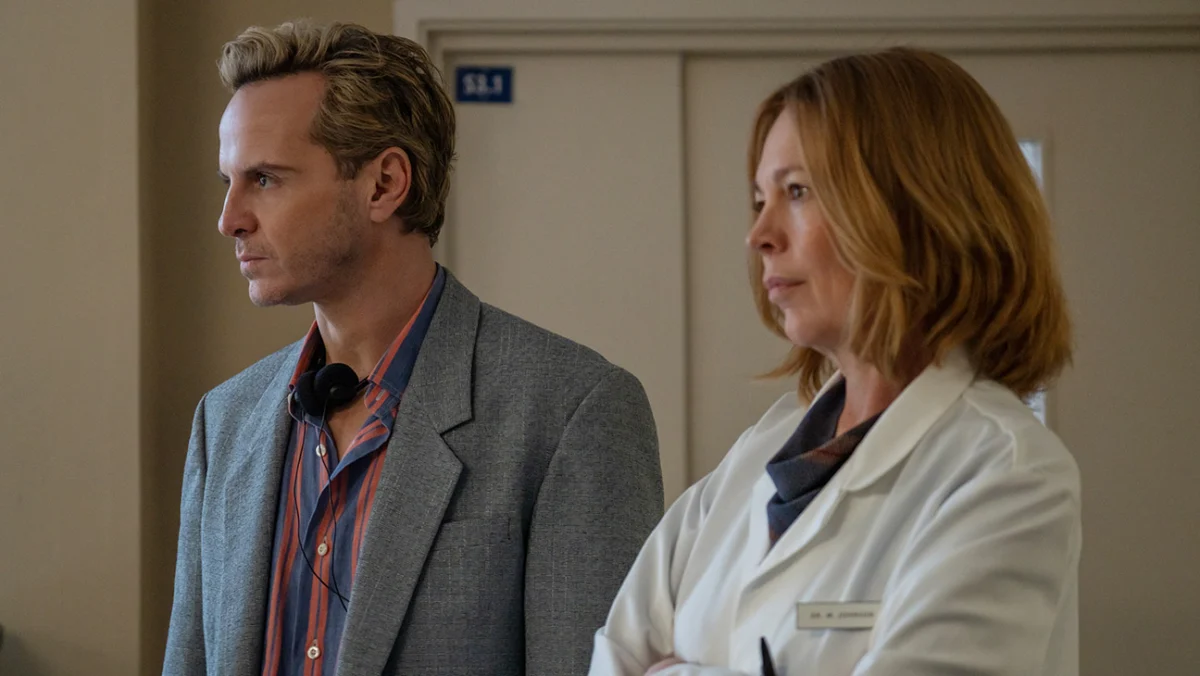
Simon Stone’s new film, Elsinore, delivers a profoundly moving account of the final year in the life of British stage and screen actor Ian Charleson, anchored by Andrew Scott’s searing dual performance. Scott portrays Charleson with raw determination and overwhelming depth of feeling, capturing the actor’s journey as he throws himself into playing Hamlet at the National Theatre while secretly battling AIDS in late 1980s London. The film, which premiered at the Telluride Film Festival, is a powerful tribute to the resilience of the human spirit and the enduring solace of art amidst impending tragedy.
A Legacy Beyond Chariots of Fire
Ian Charleson, who tragically died of AIDS-related complications in 1990 at the age of 40, is perhaps most widely remembered for his iconic role as Eric Liddell in the 1981 Oscar-winning film Chariots of Fire. However, as Elsinore powerfully illustrates, this international cinematic recognition often overshadowed his profound dedication to the stage, an attachment that Charleson himself felt keenly. The film opens a window into an actor grappling with his legacy, famously quipping to his agent that despite starring in one of the most celebrated films of all time, "all anybody can remember about it is the theme music."
Charleson had already established himself as a formidable stage presence before his breakout film roles, including a critically acclaimed performance as Sky Masterson in the National Theatre’s 1982 revival of Guys and Dolls. Despite subsequent roles in back-to-back Best Picture Oscar winners, Chariots of Fire and Gandhi, Charleson struggled to maintain consistent momentum in his screen career. Growing increasingly disillusioned with the lengthy waits and often unrewarding projects inherent in filmmaking, he yearned to return to the immediate and visceral world of live theater, a desire intensified by his HIV-positive diagnosis and the grim reality of a ticking clock.
The AIDS Crisis in London
Elsinore vividly depicts London at the harrowing height of the AIDS crisis, a period marked by widespread fear, misinformation, and profound stigma. The film contextualizes Charleson’s personal battle within the broader societal panic, particularly within the queer community. Clinics became reluctant gathering places where gay men frequently encountered friends and former lovers, each at various stages of an illness that sparked terror with its rapid and visible decline. This era forced many, especially public figures like actors, to navigate the agonizing choice between secrecy—to protect careers and personal lives—and openness, which could destigmatize the disease and offer solidarity to countless others suffering in silence.
The narrative skillfully weaves in elements of gay history and the vibrant, yet vulnerable, queer community of the time. The film highlights the pervasive nature of gay slang and camaraderie within the theater world, creating a unique and often humorous cultural milieu that transcends sexual orientation. It also explores the burgeoning activism of the period, albeit with some creative license, such as a tender scene on Hampstead Heath involving the Sisters of Perpetual Indulgence. While historically the London chapter of this drag nun advocacy group emerged slightly later, its inclusion serves to underscore the desperate search for community, support, and AIDS awareness that characterized the late 1980s.
Charleson’s Unforgettable Hamlet
The central dramatic pivot of Elsinore is Charleson’s unexpected opportunity to play Hamlet at the National Theatre in Richard Eyre’s 1989 production. This role became both the ultimate professional challenge and fulfillment for the Scottish actor. The opportunity arises when the then-rising star Daniel Day-Lewis abruptly departs the production during Act I, unsettling the cast and crew. While the film doesn’t delve deeply into Day-Lewis’s specific reasons, historical accounts attribute his exit to an unsettling connection to his own father’s absence, though widely publicized as exhaustion.
For Charleson, who had previously played Hamlet but never believed he possessed the necessary fame or "poshness" for the National, this was a lifeline. Approached by Eyre, identified in the film simply as Richard (played by Johnny Flynn), Charleson feels a duty to disclose his medical condition. The appearance of a Kaposi’s sarcoma lesion on his forehead—a grim milestone marking his progression to full-blown AIDS—initially leads Richard to assume the demanding role would be impossible. However, Charleson’s burning passion and unwavering drive ultimately convince Eyre, with both men agreeing to keep the illness a closely guarded secret within the theater company.
Crafting a Performance Amidst Crisis
Andrew Scott’s performance as Charleson is a tour de force, embodying the actor’s dedication to his craft with a profound blend of self-sacrifice and artistic hubris. As Charleson digs into Hamlet rehearsals, insisting on working late despite his physical deterioration, Scott conveys the intense commitment required. The film draws compelling intersections between the Shakespearean role—a prince grappling with mortality, betrayal, and existential dread—and Charleson’s own desperate fight for life and legacy. Richard Eyre’s observation that Hamlet "is about being alive and becoming dead" resonates deeply with Charleson’s real-life struggle.
The screenplay by Stephen Beresford (known for Pride) lives and breathes the vibrant stage community. It portrays the cozy, familial camaraderie that extends from actors and directors to wardrobe, makeup, and tech personnel, all affectionately addressing one another as "darling." This intimate portrayal of backstage life offers an amusing and authentic glimpse into a world that, for all its theatricality, becomes a genuine lifeline for Charleson. Memorable characters, such as Monica Dolan’s marvelous Linda Tolhurst, the National’s 50-year veteran stage door supervisor, provide moments of sharp humor and warmth, like her dry greeting to Charleson: "’Ere she is, Takeover Tina!"
A Tapestry of Supporting Characters
The film benefits from a stellar ensemble cast that enriches Charleson’s story. Olivia Colman shines as Dr. Margaret Johnson, a U.K. pioneer in HIV and AIDS treatment. Colman’s clipped, professional manner masterfully contrasts with the medic’s underlying compassion, her anger at Charleson’s high-pressure situation a stark reminder of the medical realities. Billie Piper, who previously garnered acclaim under Simon Stone’s direction in Yerma, portrays Charleson’s best friend, casting director Patsy Pollock, as a cherished female confidante—a sustaining force in the lives of many gay men during the crisis. Johnny Flynn’s portrayal of Richard Eyre highlights the director as a nurturer and protector.
Other standout performances include Luke Thompson as Georgie, a composite character representing Charleson’s past relationships, and Juliet Stevenson as Sylvia Sims, a grand dame of British theater playing Gertrude. Matthew Beard plays Sean, Charleson’s constant companion, based on Sean Mathias, whose selfless devotion to Charleson’s care mirrors Patsy’s. Joe Locke from Heartstopper appears as an admiring young actor, befriended by Charleson at the clinic, eager for mentorship.
Portraying the Queer Community and AIDS Activism
One of the most fascinating insights into queer history comes through the appearances of iconoclastic director Derek Jarman (David Dawson), a longtime friend for whom Charleson had acted in Jubilee. As Jarman himself battles advancing illness (he would later go blind, influencing his experimental film Blue), he urges Charleson to go public with his health, believing it crucial to destigmatize AIDS and force British society outside LGBTQ+ circles to confront the reality of the plague. "You have a responsibility to the dead, to the dying," Derek tells him. This creates a compelling tension, as Charleson reflects on the professional risks for gay actors in coming out, especially for on-camera work, contrasting it with the relative acceptance within the theater world: "Of course, in the theater no one gives a fuck."
The most devastating scenes involve Charleson’s working-class Scottish parents, Jean (Georgie Glen) and Jack (Peter Mullan), who are confronted with the double shock of their son being both gay and dying. Both actors deliver powerful performances, with Jean’s anguish immediately palpable and Jack’s grief sputtering to the surface in a delayed, raw reaction. The film also includes touching nods to Charleson’s wider community, with cameos from Chariots of Fire castmate Nigel Havers as an AIDS clinic donor and longtime friend Hilton McRae, adding a "friends and family" authenticity to the narrative.
The Intersection of Art and Mortality
While Simon Stone’s direction occasionally leans on Stefan Gregory’s lush orchestral score to heighten emotion, the film makes immense gains in intimacy and authenticity by offering an unquestionably personal perspective on the parallel queer, theatrical, medical, and outpatient communities. A scene where Charleson, hospitalized during previews, gathers the entire cast to honestly account for his condition is both heartwarming and wrenching, a testament to the power of truth and collective empathy.
Ultimately, Elsinore is a film that will profoundly affect many. The entire second half of the movie, particularly the final scenes, is a masterclass in emotional storytelling. Editor Valerio Bonelli masterfully crosscuts between the intensity of Charleson’s stage performance of Hamlet and the quiet tragedy of his fading life in his bedroom, comforted by Patsy. The raw emotional impact culminates as Laertes delivers the fateful line, "Hamlet, thou art slain," leaving audiences profoundly moved. The film uses an unexpected yet joyously tender moment with The Ethel Merman Disco Album—a beloved piece of queer pop cultural kitsch—to bridge the seemingly vast divide between brassy disco and Shakespearean tragedy, folding these extremes together with loving care.
Critical Acclaim and Emotional Resonance
The fire at the core of Elsinore is undeniably Andrew Scott’s, whose physical, psychological, and emotional performance leaves nothing on the table. He inhabits Charleson with a consuming intensity that is truly shattering, solidifying the film as a powerful ode to a remarkable actor and a poignant chapter in queer history. Despite any minor weaknesses in direction or script, the film resonates as a stirring gesture of gratitude to art, specifically theater, as a lifeline even when death looms large. Elsinore stands as a hymn to the theater, powered by a towering lead performance that serves as a vital reminder of resilience, the fight against stigma, and the enduring human spirit in the face of insurmountable odds.