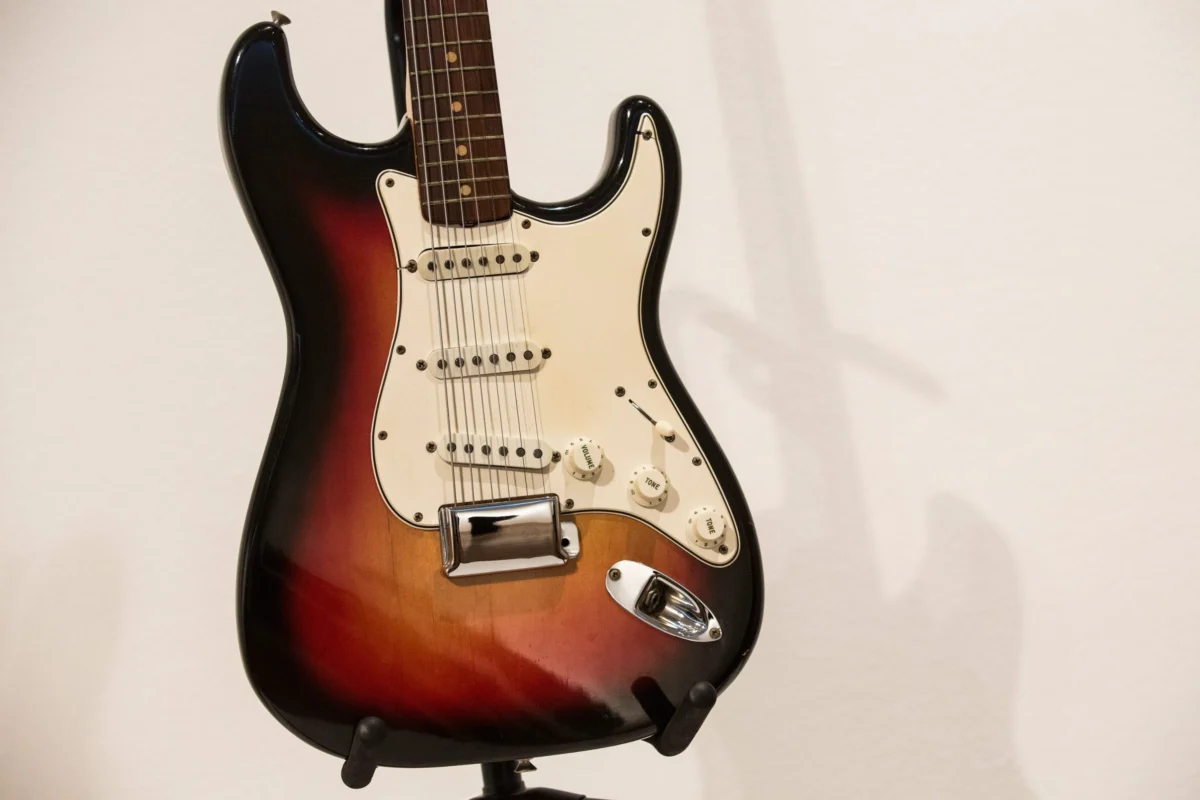
A legal battle ignited by Fender Musical Instruments over the iconic Stratocaster guitar design has sent shockwaves through the global music industry, pitting the legendary American manufacturer against a host of competitors and threatening to reshape intellectual property enforcement in the instrument market. In May, numerous international musical instrument companies, including giants like Yamaha and PRS Guitars, received cease-and-desist letters from German lawyers representing Fender. These letters asserted that Fender had secured new copyright protection for the Stratocaster’s distinctive body shape and demanded that all non-Fender guitars resembling the design be immediately removed from the European market.
The implications of these aggressive legal actions have been swift and far-reaching. While some guitar makers have opted to comply with Fender’s demands, altering their designs to avoid potential litigation, others have mounted a vigorous defense, engaging their own legal counsel and initiating counter-litigation. This escalating conflict is poised to become a landmark case, testing the boundaries of intellectual property rights for highly recognizable product designs in the competitive landscape of musical instrument manufacturing.
Opponents of Fender’s claims argue that the Stratocaster’s ubiquitous design has become a de facto industry standard, free for all to use. An attorney representing several of Fender’s adversaries stated, "Our client has every right to continue to sell its guitars with Strat-style guitar bodies, whenever and wherever it so chooses, as does the entire [musical instrument] industry on a worldwide basis." This response characterized Fender’s actions as "anti-competitive" and an attempt to "bully competitors based on misrepresentations and overstatements."
To understand the roots of this escalating legal war, one must delve into a history of prior legal proceedings spanning nearly two decades. Fender has long been embroiled in disputes with the broader music instrument industry over the Stratocaster’s distinctive silhouette. This battle has traversed from U.S. trademark tribunals to the courtrooms of Germany, highlighting a protracted struggle for control over one of the most recognizable guitar designs in history.

A Decades-Long Battle Over the Stratocaster Shape
The Fender Stratocaster, characterized by its double-cutaway, S-shaped body, first entered the market in the 1950s. Its revolutionary design and sound quickly propelled it to immense popularity, inspiring countless other guitar manufacturers to produce instruments that emulated its aesthetic. Fender’s initial attempt to legally secure exclusive rights to this iconic shape came in 2003, when the company filed for federal trademark protection of the Stratocaster body in the United States.
This move was met with significant opposition, as seventeen guitar manufacturers and distributors collectively challenged Fender’s application. The ensuing litigation dragged on for years, culminating in a decisive ruling against Fender in 2009. The U.S. Trademark Trial and Appeal Board (TTAB) rejected Fender’s bid for trademark registration, citing a critical lapse in enforcement.
The TTAB’s 2009 decision found that Fender had effectively forfeited its right to claim trademark protection over the Stratocaster’s shape by waiting half a century to address what it perceived as infringements. The board concluded that, over such an extended period, the Stratocaster’s design had become so deeply ingrained in the public consciousness and so prevalent across the industry that consumers no longer associated it exclusively with Fender. This widespread adoption rendered the shape "generic" and "non-distinctive" in the eyes of U.S. trademark law, rendering it ineligible for protection.
Evidence presented to the TTAB underscored the ubiquity of the design. The ruling pointed to prominent musicians like Paul Simon and Bruce Springsteen playing Sadowsky Strat guitars, a Tom Anderson Guitarworks Strat featured on the television show The Simpsons, and even the inclusion of a Stratocaster shape in a 1987 edition of the Random House Dictionary to illustrate the definition of "guitar." The TTAB’s decision stated, "The evidence overwhelmingly demonstrates that these configurations are so common in the industry that they cannot identify source."
Following the TTAB’s ruling, a period of relative legal quiet ensued. For over fifteen years, Fender and its competitors continued to produce and sell guitars featuring the Stratocaster’s distinctive shape without significant legal challenges from either side.

A New Legal Front Opens in Germany
The legal landscape shifted dramatically in 2025 when Fender initiated a new intellectual property lawsuit, this time targeting a Chinese guitar seller named Yiwu Philharmonic Musical Instruments. The case was filed in Germany’s Düsseldorf Regional Court, and crucially, Fender pursued it under the basis of copyright infringement rather than trademark infringement.
Yiwu Philharmonic Musical Instruments, accused of selling counterfeit Fender Stratocasters on the e-commerce platform AliExpress, did not contest the lawsuit. Consequently, the Düsseldorf court entered a default judgment in Fender’s favor in December 2025. This ruling, leveraging recent German legal precedents regarding the copyrightability of functional objects like guitars, declared that the shape originally conceived by Leo Fender was entitled to protection as an "outstanding intellectual creation that reflects his personality."
The German court’s December 2025 ruling elaborated on the design’s artistic merit, describing the Stratocaster’s "body without edges" and "soft curves that evoke associations with a female torso consisting of hips, waist and arms." It further characterized the design as "futuristic, elegant and timeless," with a fretboard accentuating its "asymmetrically curved shape," representing "something fundamentally new at the time of the ‘Stratocaster’s’ conception and release."
Fender’s Broad Assertions and Industry Pushback
Fender was quick to capitalize on the Düsseldorf court’s decision, not only securing an injunction against Yiwu but also publicly announcing that the ruling established "broad legal protection" for the Stratocaster design. The company asserted that it had obtained an enforceable copyright that could be used to prevent the manufacture and importation of third-party Strat-shaped guitars into the European Union, regardless of the seller’s country of origin.
This assertion of expansive rights led Fender to issue a wave of cease-and-desist letters on May 11th to numerous instrument makers selling their own interpretations of the Stratocaster. The targeted companies included German retailer Thomann, U.S.-based PRS Guitars, and Japanese conglomerate Yamaha, among others. These letters, citing the German default judgment, demanded that the recipients "immediately stop manufacturing, selling, marketing or producing such infringing products."

Richard Dissmann, a German attorney from the international law firm Bird & Bird representing Fender, stated in one of the letters, "We appreciate that copies of our client’s famous ‘Stratocaster’ have been in the market before. However, with the judgment of the Court of Düsseldorf, it is now clear that our client has a copyright to the shape of the ‘Stratocaster’ guitar body, and that copies of these guitar body constitute copyright infringement."
In response to these aggressive demands, many of the affected musical instrument companies retained legal counsel. A significant number engaged Ronald Bienstock, a New Jersey-based attorney with the firm Fox Rothschild, who specializes in music intellectual property issues and had previously represented Fender’s opponents in the pivotal 2009 trademark case.
Bienstock dispatched a series of response letters on May 21st, challenging the breadth of Fender’s claimed copyright protection. He argued that Fender’s reliance on the Düsseldorf default judgment was flawed, asserting that the ruling was based on an undeveloped record due to Yiwu’s non-participation and therefore could not be enforced against third parties.
Bienstock further contended that if Fender’s claims were fully litigated in Germany, the German courts would likely deny copyright protection for the Stratocaster. His arguments cited potential issues with the chain of title for Leo Fender’s original design, evidence suggesting multiple creators focused more on functionality than artistic intent, and the prior TTAB findings that the shape had become generic.
"We are certain that any court would agree, if provided all relevant facts, that [Fender] cannot be granted a copyright in a guitar body design that your client can use to prevent the sale of competitor guitars with the same body shape, when that body shape has already been judged to be generic, and numerous other parties have made and sold guitars with that body shape throughout the world for several decades," Bienstock wrote.

Escalation and Counter-Litigation
The conflict intensified in June when Thomann, one of the companies targeted by Fender’s cease-and-desist letters, filed its own lawsuit against Fender in Germany. Thomann sought a declaratory judgment that its Harley Benton guitar, which features a Strat-style body, does not infringe upon Fender’s copyrights.
Hans Thomann, CEO of Thomann, articulated the company’s motivation: "Many of those affected do not have the financial and legal means to conduct such a legal dispute. We therefore see it as our responsibility to have this matter clarified in court not only for our own company, but for all parties involved."
Fender responded to Thomann’s lawsuit by filing a German countersuit, reinforcing its copyright claims. This legal maneuver has placed the question of whether the Stratocaster design warrants copyright protection under German law before a German judge, who will now examine the case with more extensive arguments and evidence than was presented in the default judgment against Yiwu. This process is expected to be lengthy, characteristic of complex international litigation.
Bienstock commented on the ongoing proceedings, stating, "The facts from 1954 on have not changed."
A Divided Industry and Fender’s Stance
While the legal battle rages, not all companies have chosen to fight. In late May, Fender reported that many of the recipients of its initial cease-and-desist letters had entered into settlement discussions and agreed to withdraw their Strat-shaped guitars from the market. Dissmann noted, "[These companies] have entered into reasonable settlement discussions on the premise that they will discontinue making and/or selling the ‘Stratocaster’ clones." He interpreted this as evidence of "understanding for our client" rather than unanimous refusal.

Fender’s CEO, Edward "Bud" Cole, issued a statement emphasizing the company’s respect for the guitar community while affirming its responsibility to protect its iconic designs. "We believe competition and innovation are healthy for the industry, and we encourage the creation of new and original designs that push guitar innovation forward rather than relying on direct copies of Leo Fender’s pioneering work," Cole said. He added that protecting these designs is "part of Fender’s responsibility as a steward of the brand and its legacy—not just for Fender, but for the players and the broader music community who rely on the authenticity and integrity of these instruments." Cole concluded by stating Fender’s openness to constructive engagement and its goal to protect the legacy while supporting a vibrant future for guitar making.
The outcome of the legal challenges in Germany will have significant implications for the future of guitar design and intellectual property enforcement within the global music instrument industry. The battle over the Stratocaster’s shape represents a critical juncture, forcing a re-evaluation of how iconic designs are protected and whether long-established industry norms can be overridden by assertions of copyright.