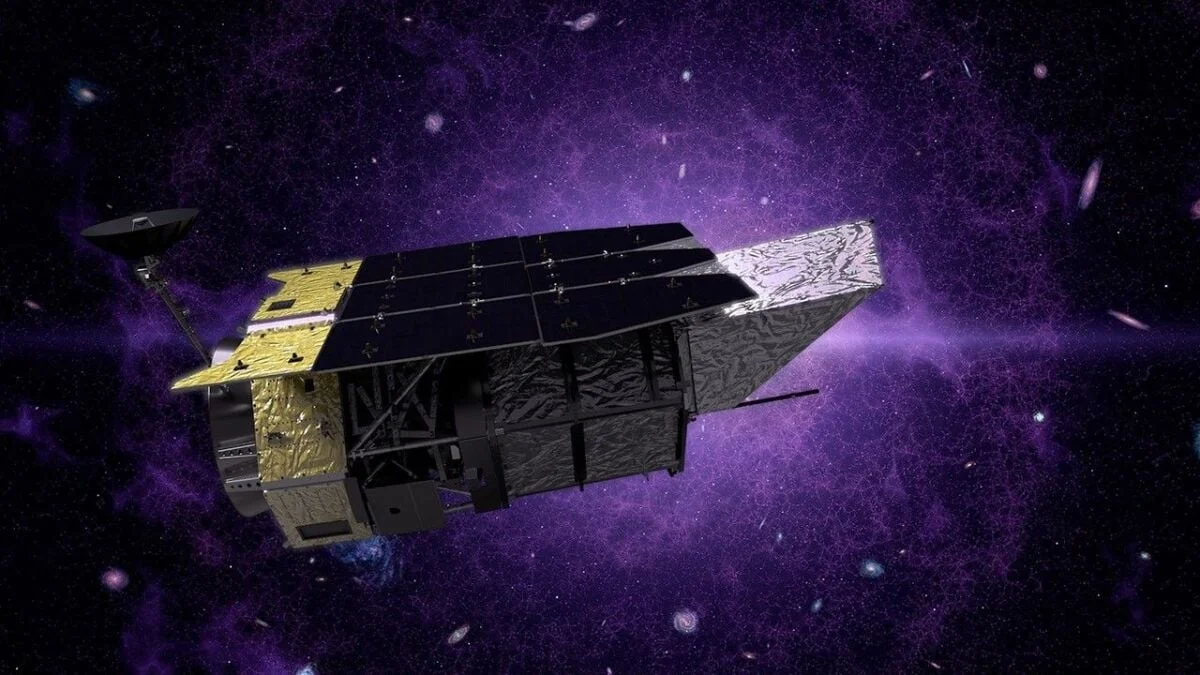
The Nancy Grace Roman Space Telescope has successfully transitioned into its transit phase toward deep space, allowing the public to monitor its progress through a sophisticated digital interface provided by the National Aeronautics and Space Administration. Following its successful deployment from a SpaceX Falcon Heavy rocket on Sunday, Aug. 30, the observatory is currently navigating toward the second Sun-Earth Lagrange point (L2), located approximately one million miles from Earth. This three-month voyage represents the critical first step in a mission designed to unravel the mysteries of dark energy, dark matter, and the distribution of galaxies across the infrared universe.
As the spacecraft distances itself from its home planet, mission controllers at the Goddard Space Flight Center in Greenbelt, Maryland, are providing a high-fidelity window into the mission’s status. The ability to follow the Roman Space Telescope’s journey with NASA’s online tracker gives enthusiasts, students, and scientists a near-real-time visualization of the observatory’s velocity, distance from Earth, and current trajectory relative to the planets of the inner solar system. The tracker utilizes the "Eyes on the Solar System" platform, an interactive 3D environment that maps the position of NASA spacecraft using telemetry data.
The launch from Kennedy Space Center’s Launch Complex 39A in Florida marked a significant milestone for NASA’s Astrophysics Division. The SpaceX Falcon Heavy, one of the world’s most powerful operational launch vehicles, provided the necessary thrust to escape Earth’s gravity and place the Roman observatory on a precise path toward L2. This specific orbital destination is a gravitationally stable point in space where the pull of the Sun and Earth balances the centripetal force required for a small object to move with them. By "parking" at L2, the Roman Space Telescope can maintain a fixed orientation relative to the Sun and Earth, allowing for long-duration, unobstructed observations of the cosmos.
Navigating Deep Space: Follow the Roman Space Telescope’s Journey with NASA’s Online Tracker
Shortly after separating from the Falcon Heavy’s second stage, the Roman Space Telescope began its complex series of deployment maneuvers. On Monday, Aug. 31, mission operators confirmed the successful completion of the first mid-course correction burn. This three-minute engine firing was essential for refining the spacecraft’s trajectory, ensuring it reaches the L2 point with maximum precision. Flight planners intentionally built several opportunities for these "nudges" into the early flight schedule to account for any minor deviations during the launch sequence.
The efficiency of these early maneuvers has long-term implications for the mission’s scientific output. Every kilogram of propellant saved during the transit phase can eventually be used for station-keeping maneuvers once the telescope arrives at L2. Because the L2 orbit is inherently unstable, the spacecraft must fire its thrusters approximately every 28 days to maintain its position. By conserving fuel during the initial journey, NASA may be able to extend the telescope’s operational lifespan beyond its five-year primary mission, potentially providing years of additional data for the global scientific community.
The public can follow the Roman Space Telescope’s journey with NASA’s online tracker to see exactly how these maneuvers affect the spacecraft’s path. The tracker provides a graphic visualization that updates as the telescope cruises outward, passing the orbit of the moon and venturing into the deep-space environment. This level of transparency is part of NASA’s broader effort to engage the public in high-stakes space exploration, turning a complex engineering feat into an accessible educational experience.
The Strategic Importance of the L2 Orbit
The choice of the L2 point as a home for the Roman Space Telescope is a strategic decision shared by other premier observatories, such as the James Webb Space Telescope (JWST). At this location, the telescope stays in line with Earth as it orbits the Sun, which allows its large sunshield to protect the sensitive infrared instruments from the heat and light of both celestial bodies. For Roman to achieve its goal of detecting faint signals from distant galaxies, its internal components must remain extremely cold and stable.
Unlike ground-based telescopes, which must contend with the blurring effects of Earth’s atmosphere, Roman will operate in the pristine vacuum of space. This positioning allows for a level of clarity and "sharpness" that is impossible to achieve from the surface. Furthermore, the L2 orbit provides a wide field of view, enabling the telescope to sweep across large patches of the sky without the Earth periodically blocking its line of sight. This is essential for the large-scale surveys that Roman is designed to conduct, mapping the structure of the universe in ways that previous missions could not.
Mastering the Commissioning Process
The three-month transit to L2 is not merely a passive cruise; it is a period of intense activity known as the commissioning phase. During this time, engineers and scientists perform a systematic "checkout" of every component on the spacecraft. This includes powering on the flight computers, testing communication arrays, and slowly deploying the telescope’s sunshield and aperture cover. Each step is carefully sequenced to prevent damage to the delicate optics and instruments.
The commissioning process is highly dynamic and depends entirely on the spacecraft’s behavior in the harsh environment of space. Engineers monitor temperature gradients, power consumption, and structural integrity as the telescope adjusts to the vacuum. The team must calibrate the Wide Field Instrument (WFI) and the Coronagraph Instrument (CGI), ensuring that the sensors are tuned to the precise specifications required for deep-space science. As these systems come online, updates are often reflected in the mission’s public communications, allowing those who follow the Roman Space Telescope’s journey with NASA’s online tracker to stay informed of the mission’s health.
A Wide-Angle Lens on the Universe
The primary scientific objective of the Nancy Grace Roman Space Telescope is to perform expansive surveys of the infrared sky. While the Hubble Space Telescope is known for its deep, narrow looks at specific objects, Roman is designed to see the "big picture." Its Wide Field Instrument has a field of view that is 100 times larger than Hubble’s infrared camera, while maintaining the same high resolution. This capability has led many astronomers to describe Roman as "Hubble’s wide-angle lens."
This massive field of view will allow Roman to map billions of galaxies and thousands of star clusters in a fraction of the time it would take other telescopes. By observing such a vast area, Roman will help scientists understand the large-scale structure of the universe and how it has evolved over billions of years. The telescope’s ability to capture high-resolution images of large sky areas is expected to lead to the discovery of rare cosmic phenomena that narrow-field telescopes might miss by chance.
Dark Energy and the Hunt for Exoplanets
One of the most profound mysteries Roman aims to solve is the nature of dark energy—the mysterious force causing the expansion of the universe to accelerate. By measuring the distances to thousands of Type Ia supernovae and mapping the distribution of galaxies, Roman will provide data that could confirm or challenge current theories of cosmology. This research is vital for understanding the ultimate fate of the universe and whether the current "Standard Model" of physics requires a fundamental revision.
In addition to its cosmological goals, Roman will be a powerhouse for exoplanet research. Using a technique called gravitational microlensing, the telescope will search for planets orbiting stars in the center of our galaxy. This method is particularly effective at finding planets that are far from their host stars, as well as "rogue" planets that wander through space without a parent star. Simultaneously, the telescope’s Coronagraph Instrument will test new technologies for blocking out starlight, which is a necessary step for directly imaging Earth-like planets in the future.
Data Management and Open Science
The sheer volume of information Roman will generate is unprecedented for a NASA astrophysics mission. The observatory is expected to transmit approximately 1.4 terabytes of data back to Earth every single day. For context, this is a significantly higher data rate than that of the James Webb Space Telescope. To handle this influx, NASA has developed advanced data processing pipelines and will utilize the Mikulski Archive for Space Telescopes (MAST) to store and distribute the information.
In a departure from some previous mission protocols, NASA intends to release Roman’s data to the public and the scientific community without any proprietary period. This "open science" approach means that as soon as the data is processed and calibrated, it will be available for anyone to analyze. This policy is designed to maximize the scientific return of the mission, encouraging global collaboration and allowing researchers from small institutions to compete on equal footing with those at major universities.
Honoring the Legacy of Nancy Grace Roman
The telescope is named in honor of Dr. Nancy Grace Roman, NASA’s first Chief of Astronomy and a visionary leader often referred to as the "Mother of Hubble." Dr. Roman was instrumental in advocating for space-based observatories, recognizing that the only way to truly understand the universe was to get above the interference of Earth’s atmosphere. Her leadership in the 1960s and 70s laid the groundwork for the Great Observatories program, which revolutionized our understanding of space.
Naming this next-generation wide-field telescope after Dr. Roman serves as a tribute to her persistence and her belief in the power of public science. Just as she paved the way for Hubble, the Roman Space Telescope will pave the way for future missions that will search for signs of life on other worlds. The mission represents the culmination of decades of progress in optical engineering and space exploration.
Future Milestones and Mission Timeline
As the public continues to follow the Roman Space Telescope’s journey with NASA’s online tracker, the focus will soon shift from transit to operations. Once the telescope settles into its looping orbit around L2 in late 2025, the final phases of instrument calibration will begin. NASA expects to release the first "early release" images by December 2026, providing a glimpse of the telescope’s capabilities before the formal start of science surveys in January 2027.
The five-year primary mission is just the beginning. Given the robust design of the spacecraft and the efficiency of the SpaceX Falcon Heavy launch, there is high optimism that Roman will continue to operate well into the 2030s. Each day the telescope spends at L2 will result in new discoveries, from the smallest asteroids in our solar system to the most distant structures in the observable universe. For now, the journey continues, one mile at a time, across the dark expanse toward its new home among the stars.