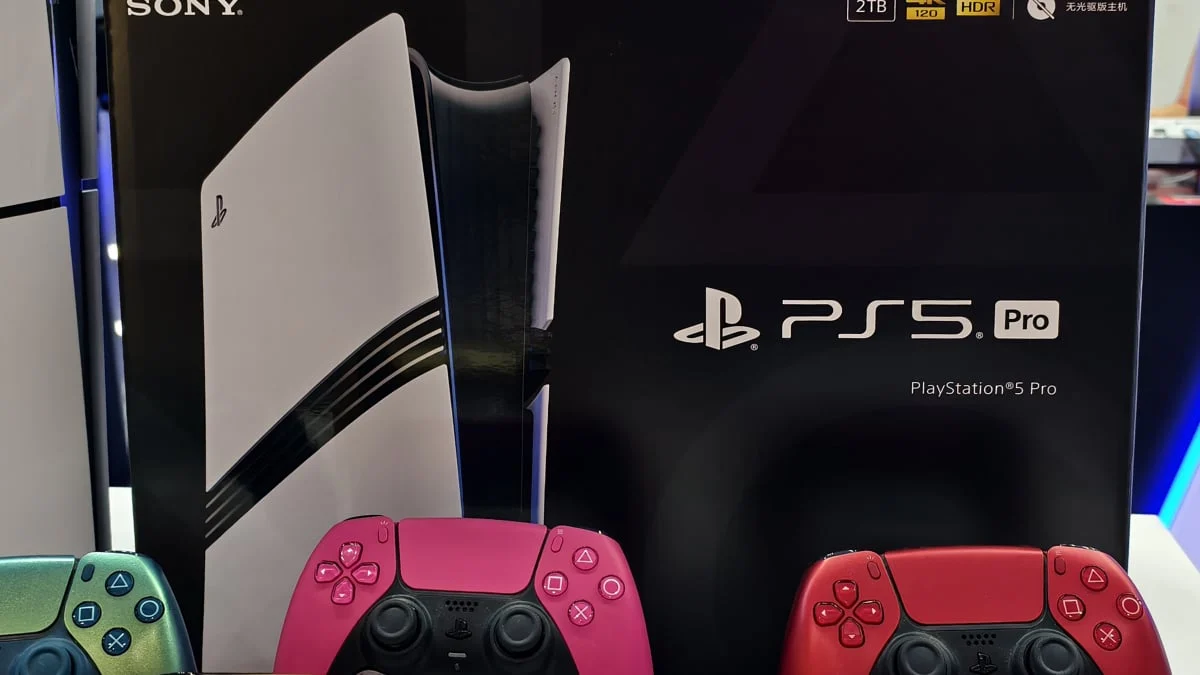
The impending release of Grand Theft Auto VI is already triggering significant PS5 Pro shortages across Japan, prompting Sony Interactive Entertainment to implement a radical "gamer verification" system to manage dwindling inventory. As enthusiasts scramble to secure the most powerful hardware available to run Rockstar Games’ upcoming open-world epic, the Tokyo-based electronics giant has shifted to a lottery-based distribution model. This strategy aims to ensure that the limited supply of the PlayStation 5 Pro reaches dedicated players rather than automated scalping bots or resellers looking to capitalize on the high demand.
The surge in pre-order interest is directly linked to the technical requirements of Grand Theft Auto VI, a title widely expected to push current-generation console hardware to its absolute limits. While the game will be available on standard consoles, the promise of enhanced ray tracing, higher frame rates, and superior resolution on the PS5 Pro has made the mid-generation refresh a "must-have" for the franchise’s massive fanbase. This localized supply crunch in Japan serves as a bellwether for potential global inventory challenges as the holiday shopping season approaches.
The Intersection of GTA 6 and PS5 Pro Shortages
The gaming industry is currently witnessing a rare alignment of software anticipation and hardware innovation. Grand Theft Auto VI represents the first new entry in the record-breaking series in over a decade, and its release is being treated as a generational event. Industry analysts suggest that a significant portion of the PlayStation install base views the PS5 Pro not merely as an optional upgrade, but as the baseline requirement for the "ultimate" experience in Vice City.
Sony’s PlayStation 5 Pro, which boasts an upgraded GPU and advanced AI-driven upscaling technology known as PlayStation Spectral Super Resolution (PSSR), was designed for this exact scenario. However, the sheer volume of consumers attempting to upgrade simultaneously has outpaced initial production runs. In Japan, where retail space is premium and consumer electronics trends often move faster than in Western markets, the PS5 Pro shortages have reached a critical point weeks before the software even hits shelves.
Implementing a "Gamer Verification" Purchase System
To combat the PS5 Pro shortages and the persistent threat of secondary market exploitation, Sony has introduced a mandatory "playtime" requirement for its Japanese lottery. This move is designed to filter out professional resellers who do not actually use the products they purchase. Under the new rules, simply having the funds to buy the $699 console is no longer sufficient to guarantee a unit.
Prospective buyers must now prove their engagement with the PlayStation ecosystem. To enter the Sony Store lottery in Japan, consumers are required to use a Sony account that demonstrates a minimum of 60 hours of confirmed playtime on either a PlayStation 4 or PlayStation 5 console. This metric serves as a digital "proof of life" for gamers, effectively barring brand-new accounts created by scalpers specifically to game the lottery system.
The verification window is remarkably specific, requiring that the 60 hours of activity occur between September 27, 2024, and September 27, 2026. By tying the ability to purchase hardware to historical and ongoing engagement, Sony is attempting to reward its most loyal customers while simultaneously cooling the frantic, bot-driven atmosphere that plagued the original PlayStation 5 launch in 2020.
Timeline of the PS5 Pro Lottery and GTA 6 Release
The window for eligible gamers to apply for the purchase lottery is narrow, reflecting the urgency of the supply situation. Consumers who meet the 60-hour playtime threshold have until October 7 to submit their applications through the official Sony Store portal. This deadline is intended to give the manufacturer enough time to verify account data and cross-reference playtime statistics before the final selection process begins.
Following the application period, Sony will begin the process of notifying the selected winners. Lottery winners are scheduled to be informed by October 26, at which point they will be granted a specific timeframe to complete their purchase. This staggered approach allows Sony to manage payment processing and logistics more effectively than a traditional "first-come, first-served" digital queue, which is often susceptible to server crashes and bot interference.
Successful applicants can expect to receive their consoles during the first half of November. This timing is critical, as it places the hardware in the hands of consumers just days before the scheduled launch of Grand Theft Auto VI on November 19. The tight turnaround highlights Sony’s effort to maximize the number of PS5 Pro units in the wild specifically for the year’s most anticipated software release.
Technical Demands of the Next Generation
The drive behind the PS5 Pro shortages is rooted in the evolving technical landscape of modern gaming. Grand Theft Auto VI is expected to feature unprecedented levels of environmental detail, complex AI populations, and sophisticated lighting effects that tax the standard PS5 hardware. For many players, the standard console’s "Performance Mode," which often lowers resolution to maintain 60 frames per second, is seen as a compromise they are unwilling to make for a once-in-a-decade title.
The PS5 Pro offers a 67% increase in Compute Units over the standard model and 28% faster memory. These specifications are tailor-made for high-fidelity open-world games. By utilizing AI-driven upscaling, the Pro can theoretically deliver the sharpness of 4K imagery with the smoothness of high frame rates, a combination that has been elusive on the base hardware. As trailers for GTA 6 showcased hyper-realistic water physics and dense urban crowds, the consumer consensus quickly shifted toward the necessity of the Pro upgrade.
Combatting the Global Scalping Phenomenon
Sony’s decision to implement a "real gamer" test is a direct response to the "scalper era" that defined the early 2020s. During the COVID-19 pandemic, the launch of the original PS5 was marred by supply chain disruptions and the rise of sophisticated "cook groups" that used automated software to buy up entire inventories of consoles in milliseconds. These units were then resold on platforms like eBay and StockX for double or triple their retail value.
By requiring 60 hours of playtime, Sony is leveraging its own ecosystem data to create a barrier to entry that is difficult for bots to bypass. While a human could theoretically leave a console running to rack up hours, the requirement of an established account with a history of activity makes it significantly more expensive and time-consuming for resellers to operate at scale. This move has been largely praised by the gaming community, though some express concern about the privacy implications of Sony monitoring specific playtime metrics for commercial eligibility.
The Strategic Significance of the Japanese Market
While the lottery is currently focused on Japan, the implications are global. Japan has traditionally been a stronghold for Sony, but the rise of mobile gaming and the dominance of the Nintendo Switch have challenged PlayStation’s market share in its home country. Ensuring that Japanese gamers can actually buy the PS5 Pro is a vital move for Sony to maintain its brand loyalty in a competitive region.
Furthermore, the Japanese market often serves as a testing ground for Sony’s more experimental retail strategies. If the "gamer verification" lottery successfully mitigates the impact of PS5 Pro shortages and results in higher software attach rates, it is highly likely that similar systems could be deployed in North America and Europe. Western retailers have experimented with "invite-only" systems in the past, but none have been as strictly tied to in-game telemetry as this current Japanese initiative.
Consumer Reaction and Industry Precedent
The reaction from the Japanese gaming public has been a mix of relief and frustration. Long-time PlayStation fans who easily meet the 60-hour requirement view the lottery as a fair way to cut through the noise of resellers. However, "lapsed" gamers or those looking to switch from other platforms specifically for GTA 6 find themselves in a difficult position, as they may not have the necessary hours logged on a PS4 or PS5 to qualify for the initial wave of hardware.
Industry analysts note that this sets a significant precedent for the future of consumer electronics. We are entering an era where digital identity and past behavior determine future purchasing power. This "loyalty-based commerce" could eventually extend beyond gaming into other high-demand sectors, such as limited-edition footwear or luxury automobiles, where brands are increasingly desperate to ensure their products end up with genuine enthusiasts rather than profit-seeking middlemen.
Looking Ahead to the Holiday Season
As the November 19 release date for Grand Theft Auto VI approaches, the pressure on Sony’s supply chain will only intensify. The PS5 Pro shortages currently observed in Japan are expected to mirror trends in other territories, particularly as Rockstar Games ramps up its marketing campaign. The success of the "gamer verification" lottery will be measured not just by how many units are sold, but by how many of those units are actively used to play the new GTA title on launch day.
Sony’s aggressive stance against scalpers and its focus on rewarding active users represent a maturing of the console market. In a world where demand for high-end silicon frequently outstrips supply, the data stored in a user’s trophy list and playtime log has become a new form of currency. For now, the path to the definitive GTA 6 experience requires more than just a credit card; it requires a proven history in the digital trenches of the PlayStation ecosystem.