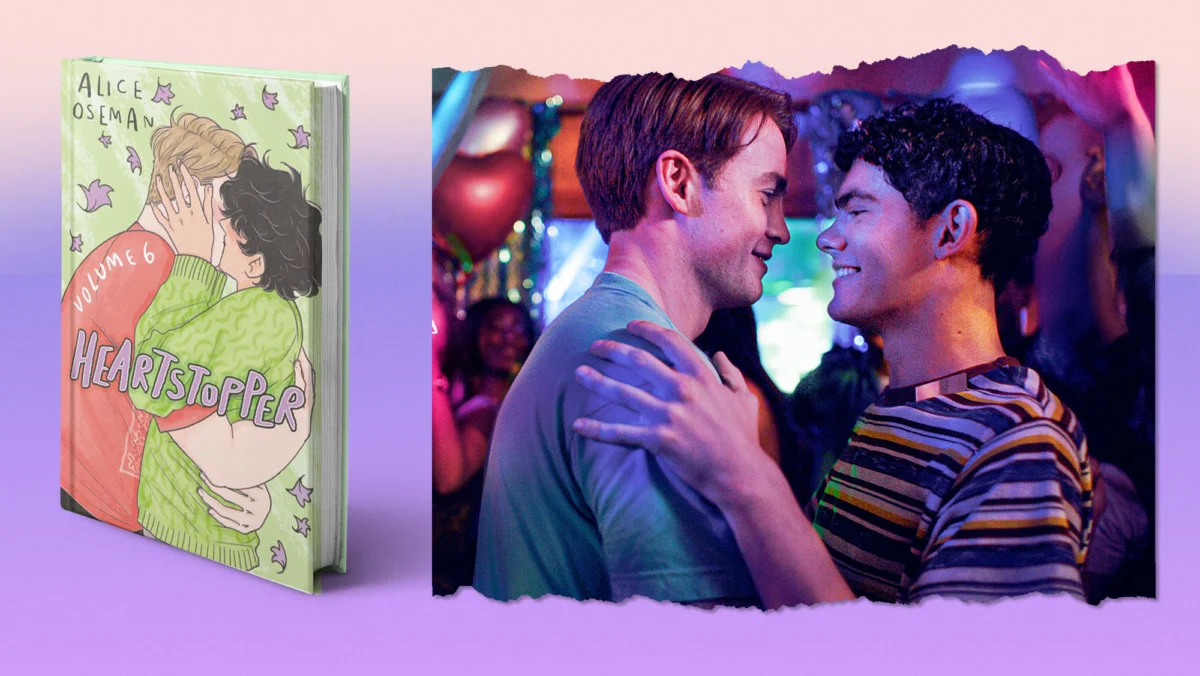
The highly anticipated film conclusion, Heartstopper Forever, premiered on Netflix, marking the emotional culmination of the beloved coming-of-age narrative. Director Wash Westmoreland, creator Alice Oseman, and stars Joe Locke (Charlie Spring) and Kit Connor (Nick Nelson) offered insights into the adaptation challenges and profound thematic developments of the movie, emphasizing its role in unifying the ensemble as they navigate pivotal life transitions. This feature-length installment concludes a journey that captivated audiences globally, evolving from a popular webcomic and graphic novel series into a cultural phenomenon for its authentic and heartfelt portrayal of LGBTQ+ youth.
Alice Oseman, the creative force behind the Heartstopper universe, experienced a unique series of goodbyes to her cherished characters over the past year. This included the July release of the final graphic novel, Heartstopper Volume Six, and the April publication of the webcomics’ concluding pages. However, the first farewell occurred out of sequence for an adaptation, with filming wrapping on Heartstopper Forever nine months prior to its release. This unconventional timeline presented significant creative hurdles for Oseman and the production team.
The film picks up with newly elected and confident Truham Grammar School head boy, Charlie, grappling with an increasingly withdrawn boyfriend, Nick. As university decisions loom, Nick battles anxiety and uncertainty about his future, questioning whether his next steps will include Charlie. Their close-knit friend group confronts similar dilemmas while navigating milestones such as prom, Pride celebrations, and graduation. An unexpected breakup further complicates matters for some. This concluding chapter propels its teen ensemble into new territories while reverently acknowledging the foundational moments that defined their shared journey—from their initial snowball fights and seaside trips to the room where Nick and Charlie first shared a kiss.
Transitioning from an eight-episode television series format to a feature film allowed Heartstopper Forever to embrace a more cinematic scope, a prospect that deeply excited Oseman. Director Wash Westmoreland noted that this shift was intended to be evident from the outset. However, the adaptation presented an unprecedented challenge: the source material, Heartstopper Volume Six, was still being written as filming commenced. Oseman recalled the daunting experience of shooting scenes for which she had no visual references, stating that the book was not complete before production began.

Condensing the final volume into a two-hour film also necessitated rigorous narrative choices. Oseman explained that the reduced screen time demanded precise storytelling, forcing the team to eliminate non-essential elements. This focus allowed for extended periods with the main characters, creating a distinct experience compared to the episodic nature of the TV series. While some concessions were made, such as a montage of Nick and Charlie’s Christmas celebrations, the script remained predominantly centered on the central couple. Westmoreland, in his only interview for the film at the time of publication, affirmed that this deep dive into the complexities of Nick and Charlie’s relationship felt appropriate for the story’s conclusion.
The visual language of Heartstopper Forever was meticulously crafted to evolve alongside its characters. Westmoreland highlighted an early scene where Charlie plays with dogs amidst both practical autumn leaves and the animated leaves synonymous with the series. He explained that this moment quietly signals the film’s intent: to honor the established visual identity while grounding it in a more realistic world. As the characters approach adulthood, the filmmaking style matures, with performances deepening to reflect their increasing emotional complexity. This intentional shift aimed to visually articulate the characters’ growth and the story’s more profound themes.
Nick and Charlie’s Emotional and Physical Relationship Matures in ‘Heartstopper Forever’
Throughout its run, Heartstopper has been praised for its earnestness, though some critics have questioned its realistic portrayal of teen life. Oseman, however, steadfastly embraces this sincerity, even when addressing sensitive subjects. She noted that while some might shy away from such open emotionality, she finds it a strength of the series. Heartstopper Forever maintains this earnestness while venturing into new territory for its central romantic duo, exploring their physical relationship more deeply following the events of season three. With both boys now in young adulthood, the film utilizes intimacy to depict the natural evolution of their bond, offering a healthy and realistic representation of teen sexuality.
Director Westmoreland elaborated on the four main scenes of physical intimacy in the film, emphasizing that each serves a specific narrative purpose. He stated that none of these scenes exist merely for their own sake; instead, they propel the story forward and reflect the characters’ emotional state at that particular moment. Collectively, these sequences portray healthy, sex-positive experiences, individually illustrating an equal partnership that challenges stereotypes around roles in queer relationships and celebrates emotional engagement in men.

Oseman was clear about Nick and Charlie’s sexual versatility, a nuance Westmoreland sought to honor. Given the series’ broad audience, which includes young teens, explicitness was never the goal. The focus remained on the emotional truth of the scenes, using physical intimacy to express what characters, particularly Nick, struggled to articulate verbally. These moments often highlighted Nick’s use of physical closeness to avoid difficult conversations. The sequences cap off a half-decade romantic journey, serving as a counter-narrative to some of Heartstopper‘s detractors. Westmoreland praised Joe Locke and Kit Connor’s professionalism and thoughtfulness, alongside intimacy coordinator Robbie Taylor Hunt, in approaching these scenes. He acknowledged that audience reception to the portrayal of intimacy would vary, aiming for a balance that feels "just right."
A Relationship Hurdle and Role Reversal for the Leading Duo
As Nick and Charlie’s sexual experiences deepen onscreen, their emotional and relationship dynamics also evolve, leading to a dramatic role reversal and a temporary breakup. This pivotal plot point, according to Oseman, is not directly from Volume Six but rather adapted from her 2015 short story, Nick and Charlie, which predates the main graphic novel series. Oseman felt that while the scenario didn’t fit Volume Six, it served the film’s objective of heightening tension and angst.
The breakup is partly fueled by Charlie’s significant transformation. Previously depicted as an underdog who endured bullying and mental health struggles, Charlie emerges in Heartstopper Forever as a resilient figure to be admired. Kit Connor noted that Charlie has triumphed over adversity, taking decisive steps toward the life he desires. Conversely, Nick, who has often been portrayed as strong, wise, and emotionally intelligent, becomes closed off in the film, struggling to articulate his inner turmoil.
The scene of Nick and Charlie’s split was deliberately set at Harry Greene’s party, a location Westmoreland described as representing the more toxic aspects of their teenage world. The director detailed creating a "teenage manosphere" environment with pounding dubstep, vivid lighting, and shark projections to amplify the hostile atmosphere. This setting provided a powerful backdrop for Locke and Connor to deliver what Westmoreland called "two extraordinary performances." He emphasized the heartbreak of the scene, where both characters still love each other and attempt to communicate, but their usual "superpower" of clear communication suddenly fails them.

Oseman acknowledged that while the core idea came from the novella, she significantly altered the argument and breakup specifics to better suit the onscreen versions of Nick and Charlie. She explained that their anxieties about the future, coupled with their deep love, lead them to talk themselves into believing the other person would be better off without them—a distinctly "Nick and Charlie" argument. Connor added that this plot point reminds audiences of the characters’ humanity. It demonstrates that the seemingly sorted character (Nick) can struggle, while the one who struggled (Charlie) can overcome challenges and achieve great things. This nuance adds depth and relatability to both characters.
‘Heartstopper Forever’ Celebrates and Defends the LGBTQ+ Experience
Heartstopper has consistently championed LGBTQ+ rights with an earnest tone, a commitment that intensifies in Heartstopper Forever. Following season three’s exploration of Elle’s experience with transphobia, the film continues this thread. Elle leads a Pride parade float, surrounded by trans community members and allies, delivering a poignant reminder that LGBTQ+ teens often face challenges far beyond typical adolescent heartbreak.
Westmoreland and Oseman collaborated to expand Elle’s storyline, aiming to reflect the realities confronting trans young people today. Oseman penned an incredibly moving scene where Elle articulates her profound struggles, a moment Yasmin Finney delivered with powerful authenticity. Oseman emphasized the significance of Elle’s speech in Charlie’s bedroom, where she vocalizes her fears and the constant weight of societal issues, providing a crucial outlet for the character. The dialogue for this scene was a collaborative effort between Oseman and Finney, ensuring its authenticity.
Filming the vibrant Pride parade sequence presented one of the film’s biggest logistical challenges. Instead of joining an existing event like Brighton Pride, the production secured Burnham Town Council’s permission to transform their High Street. The council’s support extended to allowing banners and Pride bunting, while the art department constructed the floats. The sequence required approximately 600 supporting artists, recruited through an Instagram call from Oseman that garnered over 5,000 applications within an hour. The director noted the genuine sense of celebration on what was also the final day of shooting, with cast, crew, and hundreds of Heartstopper fans contributing to the moment’s vibrant energy. Westmoreland proudly declared it "genuinely queer, genuinely wonderful, and genuinely something AI cannot replicate."

Elle’s narrative is one of many examples of Heartstopper Forever‘s commitment to authentic LGBTQ+ experiences. Characters like Nick’s friend Imogen (Rhea Norwood), Charlie’s friend Isaac (Tobie Donovan), and Charlie’s sister Tori (Jenny Walser) further illustrate the show’s celebration of discovering and embracing one’s sexuality. Tori’s conversation with Charlie about her asexuality is a particularly affirming moment, highlighting the diversity of LGBTQ+ identities without pressuring characters to adopt specific labels. Oseman stated that while many characters identify with labels, others are simply queer without needing to explain or specify their identity.
The ‘Heartstopper Forever’ Ending, Explained
Oseman acknowledged the difficulty of providing a satisfying conclusion for every character’s storyline within the film’s limited runtime. The solution came in a montage depicting various couples connecting or reconnecting in the near future. Westmoreland described the montage as logistically complex due to multiple locations but unified it with flowing camera moves to create a continuous emotional journey. This sequence, he explained, "connects the whole Heartstopper gang as they step out into the world," showcasing their individual growth and the unbreakable bonds between them.
Charlie and Nick’s long-time friends, Tara (Corinna Brown) and Darcy (Kizzy Edgell), choose a shared path, opting for a gap year and travel instead of immediate university enrollment. Brown explained that Tara, having shed her people-pleasing tendencies, steps into her authentic self, prioritizing happiness and a loving relationship over academic definitions of success. This decision to explore the world leaves their future open, suggesting a journey of discovery.
Tao and Elle, however, decide against a long-distance relationship while at university and break up. Oseman intentionally left their ending open-ended and ambiguous, with a final scene showing them reuniting. She questioned whether this signifies a reconciliation or merely a friendship, adding that she herself is unsure of the definitive answer. Oseman likes the idea that stories don’t end with school but continue to evolve into adulthood. She emphasized the enduring love between Tao and Elle, visible in their final interaction, and Elle’s continued passion for art, which she now applies to painting Tao.

Regarding Nick and Charlie’s ending, Joe Locke confirmed that a happy conclusion was always envisioned, with the understanding that a temporary breakup would occur. He expressed satisfaction that the film doesn’t "sugarcoat" these challenges. Kit Connor elaborated that the ending’s beauty lies in its refusal to definitively state they will be together "forever." Instead of a flash-forward to marriage, the film embraces the possibility of an uncertain future, highlighting their formative time together and their ability to connect even while existing independently. The message, Connor noted, is that they have found a way to be apart yet still connect, and they cherish being together even more.
Westmoreland concluded that Nick and Charlie’s ending signifies a deeper commitment, forged through their breakup experiences. While no one knows the future, he asserted that Nick and Charlie choose to face it together. As for future returns to the Heartstopper universe, Locke expressed openness if a compelling story arose and Oseman desired it, but not "for the sake of it." Connor echoed this sentiment, suggesting interest in an executive producing role if the narrative warranted it.
Heartstopper Forever is now streaming globally on Netflix.