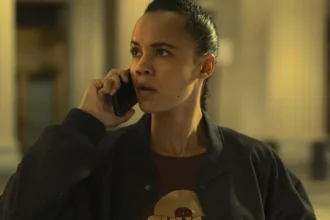
Phia Saban, the actor behind Queen Helaena Targaryen in HBO’s House of the Dragon, recently offered a nuanced perspective on her character’s tragic finale twist, acknowledging the profound sadness of Helaena’s demise while also finding a unique sense of accomplishment in portraying such a pivotal moment. The season three conclusion saw Helaena take her own life, a devastating event that executive producers and fellow cast members describe as a critical turning point for the series. This shocking development has sent ripples through the narrative, solidifying the grim path ahead for the warring Targaryen factions.
Helaena Targaryen, the quiet and often prophetic queen, met her end by falling from a window in the Red Keep, an act echoing King Tommen Baratheon’s fate in the predecessor series, Game of Thrones. Her body was discovered impaled on spikes below, a haunting image that underscores the escalating brutality of the civil war known as the Dance of the Dragons. This final act of desperation was spurred by a stark warning from the newly ousted Mysaria, who informed the imprisoned Helaena that her unborn child was a hostage, a tool for Queen Rhaenyra to wield power.
The Moral Heart of the Dragon’s House
Before her death, Helaena confronted Rhaenyra, delivering searing truths about the queen’s actions and motivations. Emma D’Arcy, who portrays Rhaenyra, reflected on Helaena’s significance, stating that she served as the "moral heart" of the show. D’Arcy emphasized Helaena’s unique position of proximity to power without succumbing to its corruption. Her death, D’Arcy suggested, "condemns Rhaenyra to the path she’s chosen," marking a point of no return for the narrative.
Helaena’s character had always been distinct within the cutthroat world of Westeros. Known for her enigmatic pronouncements and deep connection to dragons and the natural world, she often seemed to exist on a different plane than her scheming relatives. Her visions, frequently dismissed or misunderstood, often foreshadowed the dark events to come, positioning her as a Cassandra-like figure in the Targaryen saga. Her tragic end, therefore, strips the nascent monarchy of its last vestiges of innocence and moral clarity.
Phia Saban on Anticipating a Tragic Finale Twist
Saban revealed that Helaena’s ultimate fate was not a secret to her, even before taking on the role. Upon being cast, she delved into fan wikis and historical accounts of George R.R. Martin’s universe, quickly learning of the character’s tragic trajectory. The immense popularity and established lore of the Game of Thrones universe make it nearly impossible for actors to remain unspoiled about their characters’ destinies.
"It was never an option not to know," Saban explained, expressing contentment with having made it through three seasons. This foreknowledge allowed her ample time to contemplate Helaena’s end, shaping her performance with an underlying awareness of the inevitable. The objective sadness of Helaena’s story, a character she grew to love and empathize with, was a constant companion throughout her portrayal.
Finding a "Bright Side" in On-Screen Demise
Despite the profound sorrow associated with Helaena’s storyline, Saban found a personal silver lining in the experience. She described dying on screen as a "bucket list" item for an actor, particularly the challenge of keeping her eyes open during the final shot. This professional milestone offered a unique counterpoint to the character’s heartbreaking narrative.
Saban also contemplated Helaena’s internal state leading up to the fall, suggesting that the queen might have felt "killed already in many ways." This interpretation offers a glimpse into Helaena’s profound sense of entrapment and loss of autonomy, making her final act a desperate bid for a different kind of freedom. The physical spectacle of her death, while horrific, was handled with meticulous detail by the production team.
Crafting the Visuals: Prosthetics and Practicalities
The creation of Helaena’s death scene involved extensive and intricate prosthetics work, which Saban lauded as a testament to the talent of the House of the Dragon crew. She described the process of having a lifelike spike crafted and painted onto her neck, an experience she found "so fun" and inspiring for future roles. The dedication to realism extended to other challenging scenes, such as the force-feeding sequence.
For the force-feeding, the team conducted "gruel meetings" where Saban sampled various slops to determine which she would prefer to be force-fed. The chosen concoction was a "low spice level dal," a detail that highlights the show’s commitment to practical effects and immersive storytelling, even for less glamorous moments. These behind-the-scenes efforts underscore the collaborative artistry that brings the world of Westeros to life.
Helaena’s Final Confrontation and Mantras
One of Helaena’s most potent final moments was her confrontation with Rhaenyra. Saban felt a strong sense of ownership over the character and engaged in discussions with executive producers Ryan Condal and Sara Hess to ensure Helaena’s core beliefs were articulated. Drawing inspiration from figures like Joan of Arc, Saban infused the scene with the idea that "there’s more to life than not being dead."
Helaena’s words to Rhaenyra, describing "things in the world that you’ll never know how beautiful they are, and they’re not even beautiful," encapsulated her yearning for an existence beyond the confines of power and political machinations. This deeply personal philosophy reflected Helaena’s desire to reclaim her relationship with the world, free from being "kept and silenced and used" as a pawn in the ongoing power struggle.
Symbolism of Freedom and Confinement in the Tragic Finale Twist
This theme of yearning for freedom was subtly underscored in earlier scenes, notably one where Helaena observes caged birds being taken away in the courtyard. Saban revealed a personal touch to this scene: she held a dead caterpillar while filming, a detail that, even if edited out, profoundly influenced her portrayal. For Saban, this moment was about Helaena’s profound connection to nature and her mourning for lost freedom, striking a chord with the fate of creatures unable to live and fly again.
Helaena’s character arc, from a gentle, prophetic queen to a trapped and despairing figure, is a poignant commentary on the cost of power and the erosion of individual autonomy within the Targaryen dynasty. Her visions, initially a source of fascination and concern, ultimately became another burden, isolating her further from a world she struggled to comprehend and influence.
The Narrative Impact of Helaena’s Death
Helaena’s death serves as a major narrative inflection point for House of the Dragon. As Emma D’Arcy noted, her passing eliminates the show’s "moral heart," plunging the conflict deeper into moral ambiguity and unforgivable actions. For Rhaenyra, the death of her step-sister and former friend’s wife represents a significant escalation, likely solidifying her resolve and hardening her against any further appeals to mercy or reconciliation.
The psychological impact on other characters, particularly Queen Dowager Alicent Hightower and King Aegon II Targaryen, will be immense. Helaena was Alicent’s only daughter and Aegon’s sister and wife, and her suicide is guaranteed to fuel their grief and rage, intensifying the brutal Dance of the Dragons. This event is not merely a personal tragedy but a political catalyst, pushing both Team Green and Team Black further down a path of mutual destruction.
Phia Saban’s Farewell to a Defining Role
Saban’s final day on set fittingly involved shooting Helaena’s death scene. Surrounded by the production team and the prosthetic spikes, she felt a sense of pride in her work. Ryan Condal, the showrunner, was present to offer kind words, marking the culmination of five years of dedication to the character. Saban described the mix of emotions: pride, excitement, and the difficulty of fully grasping the finality of the moment.
The true weight of her departure, she anticipates, will likely settle in upon viewing the full episode or when the cast and crew return to production without her. Helaena Targaryen’s journey, though tragically concluded, leaves an indelible mark on the narrative of House of the Dragon, cementing her legacy as a character who embodied both the fragile innocence and the profound suffering inherent in the world of Westeros. Her death ensures that the civil war will only grow more unforgiving, pushing the surviving characters to ever-darker extremes.